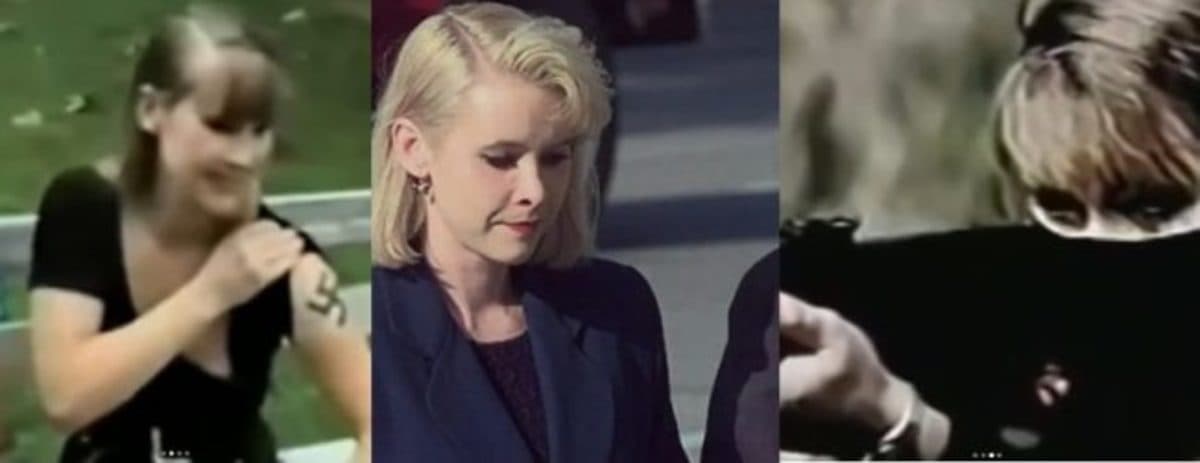
ATF informant Carol Howe infiltrated Elohim City and filed a report in January 1995 warning that Andreas Strassmeir had spoken about destroying a federal building and had visited the Murrah building. Despite multiple witnesses describing a second suspect ('John Doe #2') with McVeigh, the government claimed the sketch was a case of mistaken identity and never pursued additional conspirators.
“I reported to the ATF that Strassmeir had discussed plans to blow up a federal building and had visited the Murrah building in Oklahoma City.”
From “crazy” to confirmed
The Claim Is Made
This is the moment they called it crazy.
On April 19, 1995, Timothy McVeigh detonated a truck bomb outside the Alfred P. Murrah Federal Building in Oklahoma City, killing 168 people including 19 children. What remains contested nearly three decades later is whether the government had advance warning and whether McVeigh acted alone.
An ATF informant named Carol Howe had infiltrated Elohim City, a white separatist compound in Oklahoma, months before the bombing. In January 1995, Howe filed a report warning that Andreas Strassmeir, a resident of the compound, had discussed destroying a federal building. Her report also noted that Strassmeir had visited the Murrah building itself. Despite this specific intelligence, the report was not acted upon before the attack.
The official response was dismissive. Government agencies maintained that Howe's information was vague and that Strassmeir was merely talking, not planning. After the bombing, federal investigators focused exclusively on McVeigh and his co-conspirator Terry Nichols. The case was presented as a tidy narrative: two men, clear motives, clear evidence.
But eyewitness testimony complicated this narrative. At least a dozen witnesses reported seeing McVeigh with another man, described consistently enough to produce a composite sketch known as "John Doe #2." Gas station attendants, motel clerks, and other observers gave descriptions that didn't match Nichols. The FBI pursued John Doe #2 briefly, generating considerable media attention, then abruptly shut down that line of investigation.
The government's explanation was that witnesses had simply misidentified someone else or that collective memory had created a false composite. No additional suspects were ever charged. The sketch was filed away. John Doe #2 was never found.
Democracy Now! and other investigative outlets have examined this gap between witness statements and official conclusions. While no definitive proof emerged that a third conspirator existed, the lack of aggressive follow-up investigation contrasts sharply with how thoroughly the government pursued other aspects of the case. The sudden pivot away from John Doe #2 raised questions about whether investigators encountered information they chose not to pursue.
Get the 5 biggest receipts every week, straight to your inbox — plus an exclusive PDF: The Top 10 Conspiracy Theories Proven True in 2025-2026. No spam. No agenda. Just the papers they couldn't hide.
You just read "An ATF informant warned of the Oklahoma City bombing months …". We send ones like this every week.
No one's said anything yet. Be the first to drop your take.
The Carol Howe story adds another layer. If an ATF informant had warned of potential violence involving federal buildings, and if that warning was ignored or buried, it raised uncomfortable questions about institutional accountability and whether the attack might have been preventable. Howe herself reported difficulties with the FBI after the bombing, suggesting her prior warnings made her an inconvenient witness rather than a valued source.
This case matters because it sits at the intersection of documented facts and unanswered questions. Carol Howe's report is real. The John Doe #2 sketches are real. Eyewitness accounts are documented. Yet the official narrative closed around McVeigh and Nichols without fully explaining these discrepancies.
Whether John Doe #2 was real remains unclear. Whether advance warning could have stopped the bombing is unknowable. What is clear is that serious questions were asked and then quietly shelved. Public trust depends on institutions answering such questions thoroughly, not dismissing them because the answers might be complicated or damaging. The Oklahoma City bombing demanded better.
Unlikely leak
Only 6.1% chance this would come out. It did.
Conspirators
~500Large op
Secret kept
31.3 years
Time to 95% exposure
500+ years