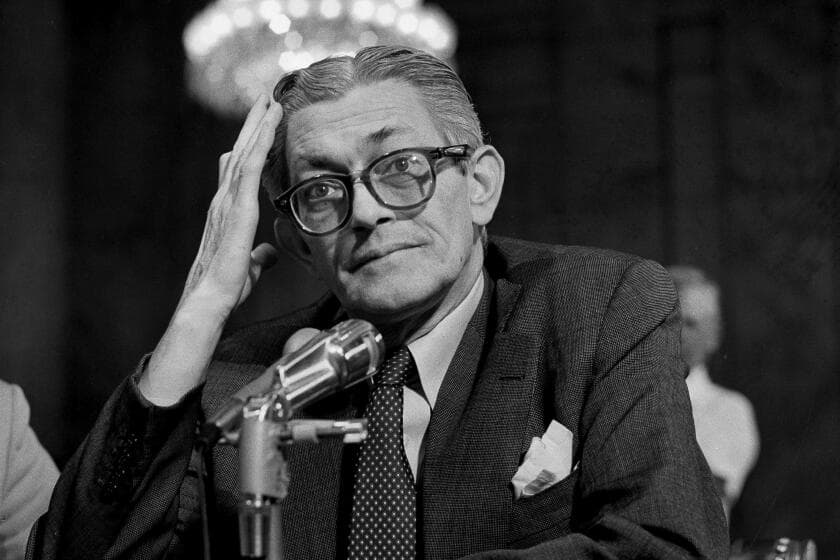
Operation CHAOS (1967-1974) was a CIA domestic espionage program that compiled files on over 300,000 Americans and cataloged 7,200 individual files despite the CIA's charter explicitly forbidding domestic operations. CIA Director Richard Helms informed President Johnson in 1967 that they had 'uncovered no evidence of foreign influence' on peace movements - yet the program expanded for seven more years under Nixon.
“In its domestic mail opening programs from 1953 to 1973, the CIA screened 28 million pieces of mail, opened 215,000, and photographed them.”
From “crazy” to confirmed
The Claim Is Made
This is the moment they called it crazy.
For years, Americans who questioned government policy during the Vietnam War faced a troubling accusation: they were suspected of being foreign agents. The government suggested that massive antiwar movements, which had grown to millions by the late 1960s, couldn't possibly represent genuine American dissent. There had to be external influence, the logic went. What we now know is that this suspicion was manufactured to justify something far worse than any foreign plot—a systematic spying operation on the American people themselves.
Operation CHAOS began in 1967 under CIA Director Richard Helms, ostensibly to uncover evidence of foreign powers manipulating American protest movements. The program would ultimately compile files on more than 300,000 Americans and create 7,200 individual dossiers before it ended in 1974. Yet from the beginning, the premise was fraudulent. When Helms briefed President Johnson in 1967, he delivered a clear finding: the CIA had "uncovered no evidence of foreign influence" on peace movements.
This should have been the end of it. The stated justification for the operation—finding foreign interference—had been investigated and disproven. The obvious course of action would have been to shut down domestic surveillance and return to the CIA's actual mandate. Instead, the opposite happened. The program expanded under President Nixon and continued for seven more years after Helms's own investigation found nothing.
What this reveals is that Operation CHAOS was never really about discovering foreign influence. It was about monitoring Americans exercising their constitutional right to protest government policy. The antiwar movement wasn't a puppet of foreign governments—it was a genuine expression of popular opposition to the Vietnam War. But rather than accept this, intelligence officials decided to investigate the protesters themselves, building secret files on hundreds of thousands of citizens.
Get the 5 biggest receipts every week, straight to your inbox — plus an exclusive PDF: The Top 10 Conspiracy Theories Proven True in 2025-2026. No spam. No agenda. Just the papers they couldn't hide.
You just read "The CIA illegally compiled files on 300,000 Americans and in…". We send ones like this every week.
No one's said anything yet. Be the first to drop your take.
Confirmed: They Were Right
The truth comes out. Officially documented.
Confirmed: They Were Right
The truth comes out. Officially documented.
The mechanism was sophisticated. The CIA infiltrated antiwar organizations, compiled intelligence files, and shared information with other government agencies. For most of those under surveillance, the targets never knew they were being watched. They were simply Americans attending rallies, organizing demonstrations, or writing letters to Congress. Many were never suspected of any crime. They were flagged simply for exercising rights that the Constitution explicitly protects.
The program remained classified and unknown to the public for years. Congress didn't investigate until the mid-1970s, when the Church Committee finally exposed the scope of domestic intelligence abuses. Even then, many details remained hidden behind classification barriers. It took decades for the full picture to emerge.
Today, Operation CHAOS stands as a documented example of what happens when national security agencies operate without meaningful oversight. The initial justification was false, yet the operation continued anyway. Officials prioritized investigating Americans over protecting the Constitution they claimed to serve. There were no foreign agents pulling strings—just American citizens expressing dissent, and government agencies treating that dissent as a security threat.
This history matters because it establishes a pattern. It shows that when officials believe a threat exists, they may investigate it long after evidence proves otherwise. It demonstrates how institutional momentum can keep programs running even after their stated purpose disappears. Most importantly, it reminds us that claims about threats to national security—whether from foreign powers or domestic groups—deserve skepticism and transparency, not blind trust in official assurances.
Beat the odds
This had a 0% chance of leaking — someone talked anyway.
Conspirators
~200Network
Secret kept
0.5 years
Time to 95% exposure
500+ years