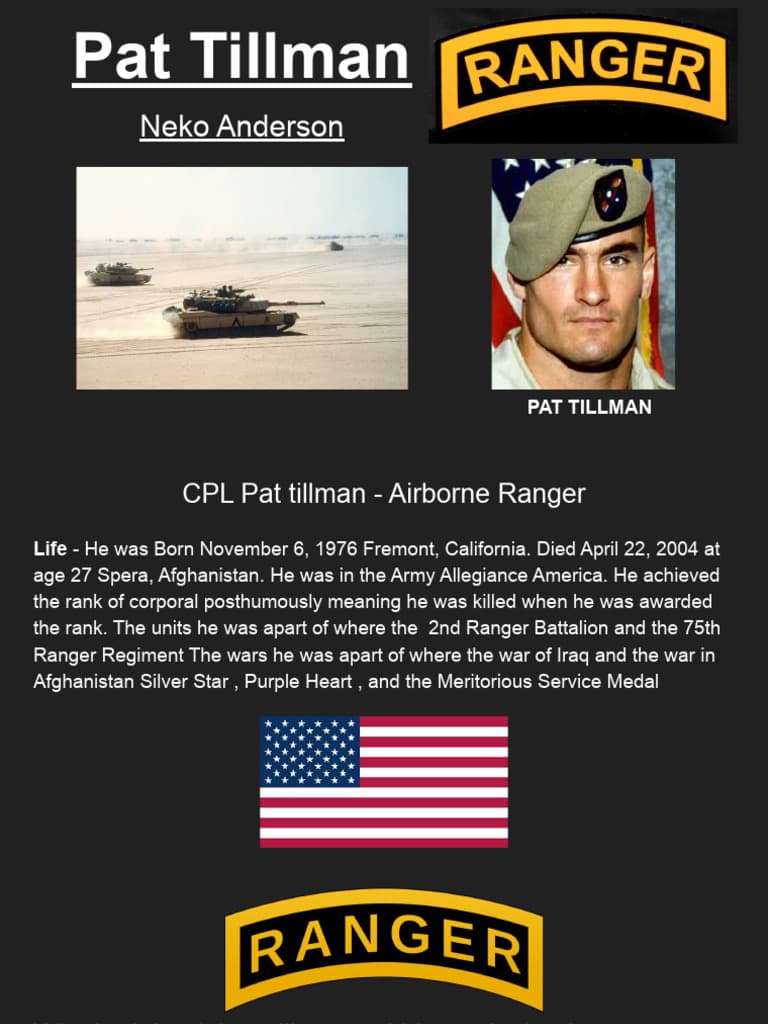
NFL star Pat Tillman left a $3.6M contract to enlist after 9/11 and was killed in Afghanistan on April 22, 2004. The Army immediately knew it was friendly fire but told his family and the public he died charging enemy positions, awarding him a posthumous Silver Star for valor under 'devastating enemy fire.' Gen. Stanley McChrystal approved the Silver Star despite suspecting friendly fire days earlier. Tillman's uniform and body armor were burned, his weapon and helmet disappeared, and a piece of his brain that fell during the attack vanished. Army attorneys sent congratulatory emails for keeping criminal investigators away. His mother testified to Congress: 'The deception was an insult to the family but more importantly its primary purpose was to deceive a whole nation.'
“Pat Tillman was killed by his own troops and the entire military establishment — from field officers to the Pentagon — conspired to hide the truth and use his death as propaganda.”
What they said vs. what the evidence shows
“Corporal Tillman was killed in action while leading his team during an enemy ambush. He displayed exceptional courage under devastating enemy fire.”
— US Army Public Affairs · Apr 2004
SourceFrom “crazy” to confirmed
The Claim Is Made
This is the moment they called it crazy.
When Pat Tillman's parents received the knock on their door in April 2004, Army officials delivered a story of heroic sacrifice. Their son, the NFL linebacker who had walked away from a $3.6 million contract to enlist after 9/11, had died charging enemy positions in Afghanistan, they were told. He would receive a Silver Star for valor under devastating enemy fire.
It was a compelling narrative for a nation still reeling from the attacks three years prior. A professional athlete giving up wealth and comfort to defend his country, dying in combat the way soldiers are supposed to die. The story made headlines. It inspired. It was also a lie that senior military officials knew within days was false.
The Army's own investigation determined almost immediately that Tillman had been killed by friendly fire from his own platoon on April 22, 2004. Yet the official story of enemy engagement persisted for weeks. General Stanley McChrystal, who would later become commander of U.S. forces in Afghanistan, approved the Silver Star citation despite suspecting friendly fire as early as April 24—two days after Tillman's death. The citation described "devastating enemy fire" that never existed.
What followed was a systematic effort to conceal the truth. Tillman's uniform and body armor were burned. His weapon and helmet vanished. A piece of his brain that fell during the shooting incident disappeared from the evidence chain. Army attorneys sent congratulatory emails celebrating their success in keeping criminal investigators away from the case.
The cover-up unraveled slowly. Tillman's family, particularly his mother Mary, pressed for answers. Congressional testimony and subsequent investigations revealed the deliberate deception. Mary Tillman's statement to Congress cut to the heart of the matter: "The deception was an insult to the family but more importantly its primary purpose was to deceive a whole nation."
Get the 5 biggest receipts every week, straight to your inbox — plus an exclusive PDF: The Top 10 Conspiracy Theories Proven True in 2025-2026. No spam. No agenda. Just the papers they couldn't hide.
You just read "The military fabricated a heroic combat death story for Pat …". We send ones like this every week.
No one's said anything yet. Be the first to drop your take.
Confirmed: They Were Right
The truth comes out. Officially documented.
Confirmed: They Were Right
The truth comes out. Officially documented.
This wasn't negligence or a misunderstanding in the fog of war. The military had a heroic narrative it wanted the American public to consume, and it was willing to fabricate the circumstances of a soldier's death to serve that narrative. Senior commanders made conscious decisions to award medals for actions that didn't occur, to suppress investigations, and to let a false story circulate for weeks while they knew the truth.
Twenty years later, the Tillman case remains instructive not because it was unique, but because it was exposed. How many other stories from conflict zones go unchallenged? How many official accounts remain unverified? The case demonstrates that even in the modern era of documentation and oversight, military institutions can control information when institutional interests are at stake.
The damage extends beyond one family's grief. Public trust in official accounts of military operations depends on basic honesty about what happened. When senior officers deliberately construct false narratives around a soldier's death—especially a celebrated soldier whose story captures national attention—they undermine the credibility of every subsequent official statement about combat operations.
Pat Tillman deserved to be remembered for what actually happened, not for a manufactured story designed to serve strategic messaging. That his family had to fight for the truth, and that it took years to emerge, reveals something troubling about how institutions manage inconvenient facts.
Beat the odds
This had a 1.2% chance of leaking — someone talked anyway.
Conspirators
~1,000Large op
Secret kept
2.9 years
Time to 95% exposure
500+ years