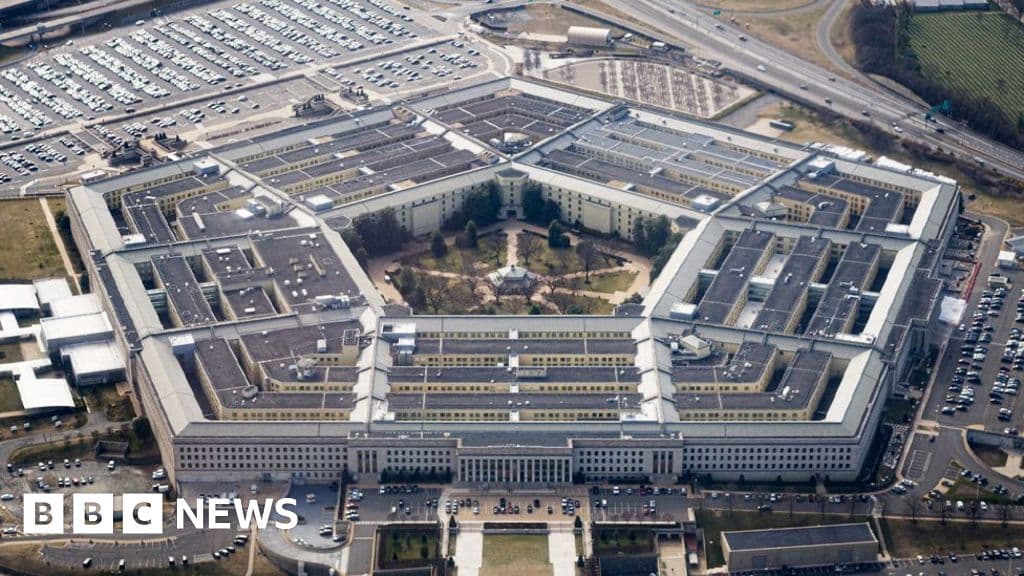
The Bureau of Investigative Journalism revealed in 2016 that the Pentagon paid UK PR firm Bell Pottinger over $540 million from 2007-2011 to produce three types of propaganda: anti-al-Qaeda TV commercials, fake Arabic news segments designed to look like real broadcasts, and fake al-Qaeda recruitment videos embedded with tracking code to monitor who watched them. Bell Pottinger employed 300 staff. The output was signed off by General David Petraeus, and on some occasions, the White House approved the false-flag videos.
“The US government is spending hundreds of millions of dollars paying a private PR firm to create fake terrorist propaganda videos as part of a covert information warfare campaign in Iraq.”
What they said vs. what the evidence shows
“Bell Pottinger's work was undertaken in line with all relevant laws and regulations and was approved by senior military officials.”
— Bell Pottinger (prior to exposure) · Oct 2016
SourceFrom “crazy” to confirmed
The Claim Is Made
This is the moment they called it crazy.
For nearly a decade, the U.S. military denied it. Then, in 2016, investigative journalists found the receipts.
The Pentagon had paid a British public relations firm more than half a billion dollars to create fake propaganda videos—including fabricated al-Qaeda recruitment content—and distribute them across Iraq during the height of the insurgency. The operation ran from 2007 to 2011, employed 300 staff members, and operated with explicit approval from military leadership, including General David Petraeus.
The claim first surfaced publicly when the Bureau of Investigative Journalism obtained internal documents and conducted interviews revealing the scope of what the Pentagon had contracted Bell Pottinger, a London-based PR agency, to produce. The output included three distinct categories of propaganda: anti-al-Qaeda television commercials, fake Arabic news broadcasts designed to appear as legitimate news programming, and counterfeit al-Qaeda recruitment videos embedded with tracking code to identify and monitor viewers.
When pressed, Pentagon officials initially offered vague explanations or deflections. The operation was classified as a defensive information campaign, they claimed—a legitimate component of counter-insurgency strategy. Some officials suggested the scale and methods described by journalists were exaggerated or mischaracterized. The narrative presented was that this was routine military communications work, nothing extraordinary or ethically problematic.
The evidence, however, told a different story. The Bureau obtained contracts, payment records, and internal communications showing Bell Pottinger's work was commissioned directly by the U.S. military and approved at senior levels. Some operations, particularly the fake-flag videos, required White House sign-off. The tracking code embedded in fake recruitment videos wasn't a defensive measure—it was surveillance infrastructure designed to identify individuals interested in extremist content.
Get the 5 biggest receipts every week, straight to your inbox — plus an exclusive PDF: The Top 10 Conspiracy Theories Proven True in 2025-2026. No spam. No agenda. Just the papers they couldn't hide.
You just read "The Pentagon paid British PR firm Bell Pottinger $540 millio…". We send ones like this every week.
No one's said anything yet. Be the first to drop your take.
Confirmed: They Were Right
The truth comes out. Officially documented.
Confirmed: They Were Right
The truth comes out. Officially documented.
The financial scale alone raised questions. Five hundred and forty million dollars over four years wasn't allocated to routine advertising. It represented a sustained, sophisticated operation with significant institutional commitment. The fact that 300 staff members were employed suggests this wasn't a small pilot program but rather an extensive infrastructure dedicated to creating and distributing false information.
What made this particularly significant was the breakdown of the categorical wall between foreign intelligence operations and domestic information management. The techniques pioneered in Iraq—fake news broadcasts, counterfeit extremist media, embedded tracking—represented tactics that could theoretically be adapted for use anywhere, including within the United States. The operational model suggested that creating false-flag propaganda had become an institutionalized capability rather than an exceptional measure.
The implications extend beyond Iraq. This operation demonstrated that a democratic government, with proper institutional authorization, had created an elaborate apparatus for producing and distributing deliberately false information to foreign populations. Whether framed as counter-insurgency or public diplomacy, it was state-sponsored disinformation at scale.
The episode matters for a fundamental reason: public trust in information requires some baseline assumption that institutions aren't systematically lying. When governments operate billion-dollar propaganda programs, that assumption becomes difficult to maintain. Citizens cannot reliably distinguish between authentic and artificial information environments. The documented fact that this happened—that it was planned, funded, and implemented—changes the conversation about what kinds of information operations are possible and which institutions might conduct them.
Beat the odds
This had a 0% chance of leaking — someone talked anyway.
Conspirators
~100Network
Secret kept
0.5 years
Time to 95% exposure
500+ years