Daniel Ellsberg's leaked documents showed officials privately knew the war was unwinnable while publicly claiming progress. Court cases confirmed authenticity of the classified documents.
“We are making steady progress in Vietnam and victory is achievable”
From “crazy” to confirmed
The Claim Is Made
This is the moment they called it crazy.
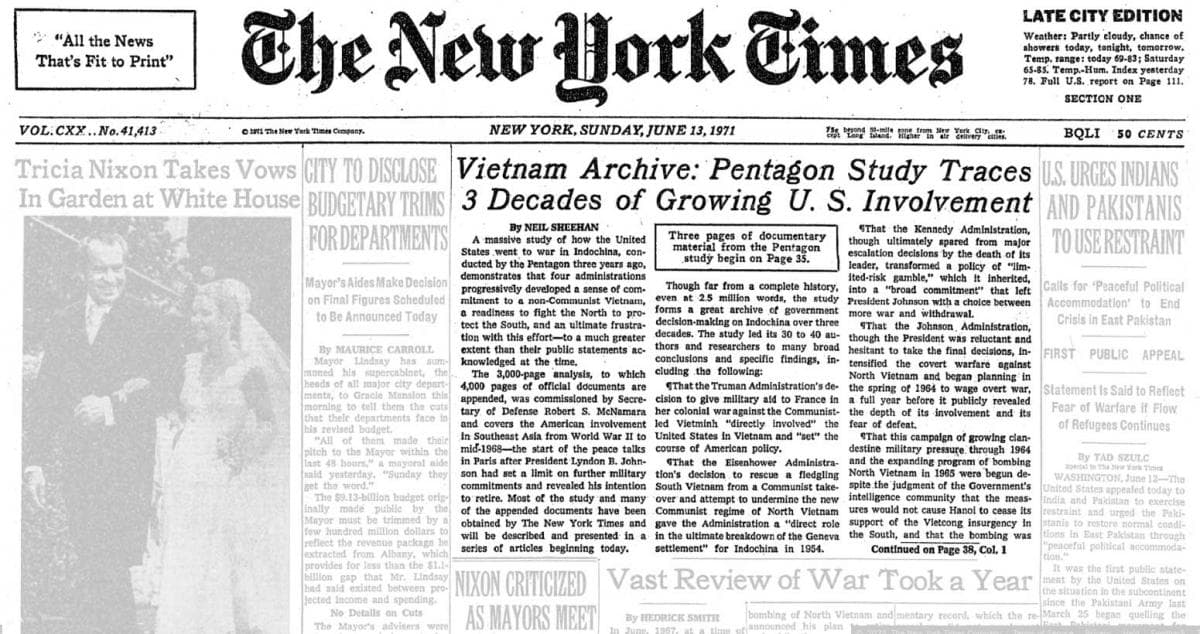
For years, the American public heard one story about the Vietnam War. Military commanders and civilian officials insisted the war effort was progressing, that victory was within reach, that American troops were making measurable gains against North Vietnamese forces. Newspaper headlines reflected this official narrative, and citizens voted based partly on these claims. But in 1971, Daniel Ellsberg changed everything by releasing thousands of pages of classified documents that revealed a stunning contradiction.
The Pentagon Papers, officially titled the "History of U.S. Political-Military Relations with Vietnam," showed something the government had been hiding: top officials knew the war was likely unwinnable. Worse, they knew this privately while lying publicly about progress. These weren't opinions or interpretations—they were the government's own classified assessments, written in real time by the people making decisions about the war. Ellsberg, a military analyst who had worked on the study itself, made photocopies and gave them to the New York Times and other major newspapers.
The government's response was immediate and dismissive. Officials claimed the documents were old news, that they didn't reveal anything surprising, that releasing them endangered national security. The Nixon administration moved quickly to get courts to block publication, arguing that printing classified material would harm ongoing military operations and intelligence sources. Attorney General John Mitchell warned newspapers that publishing could result in criminal charges. The message was clear: ignore what these documents say, and forget about reading them yourself.
Get the 5 biggest receipts every week, straight to your inbox — plus an exclusive PDF: The Top 10 Conspiracy Theories Proven True in 2025-2026. No spam. No agenda. Just the papers they couldn't hide.
You just read "Pentagon Papers revealed systematic government deception abo…". We send ones like this every week.
No one's said anything yet. Be the first to drop your take.
But the courts and historical record tell a different story. After legal battles that reached the Supreme Court, the Pentagon Papers were eventually published in full. Legal examination confirmed the documents were authentic—these were genuine government records, not fabrications or misinterpretations. The leaked study covered the period from 1945 to 1967 and showed that successive administrations, from Eisenhower through Johnson, had consistently misled the public about the war's progress and likelihood of success.
The specific deceptions were damning. Officials had known for years that American strategy wasn't working, yet they publicly claimed momentum. They knew the enemy wasn't weakening, yet told Americans victory was coming. They understood the war's fundamental problems were unresolvable through military means alone, yet they continued escalating. Some documents even showed officials questioning the war's morality while voting to expand it.
What happened to Ellsberg illustrates another aspect of this story. Rather than engaging with the substance of what the documents revealed, authorities prosecuted him on espionage charges—until the case fell apart due to government misconduct during the investigation. The focus on prosecuting the messenger, rather than reckoning with the message itself, revealed how threatened the establishment felt by public knowledge of these deceptions.
Today, the Pentagon Papers stand as the clearest historical example of systematic government deception about military conflict. The documents themselves became the evidence that proved what critics had been saying all along: officials were lying about the war. This matters because it shows that public trust in government institutions isn't eroded by cynics or conspiracy theorists—it's eroded by officials who lie to citizens about matters of life and death, and only get caught when someone risks everything to tell the truth.
Beat the odds
This had a 2.2% chance of leaking — someone talked anyway.
Conspirators
~100Network
Secret kept
54.9 years
Time to 95% exposure
500+ years