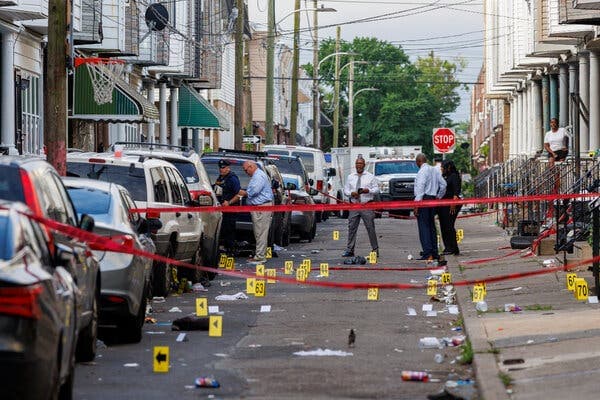
Philadelphia PD officers systematically planted drugs on suspects and filed false police reports from 2006-2014. Federal investigations led to convictions of multiple officers and dismissal of hundreds of drug cases.
“Philadelphia Police officers follow proper procedures in all arrests and evidence collection”
From “crazy” to confirmed
The Claim Is Made
This is the moment they called it crazy.
For years, residents of Philadelphia's neighborhoods complained that drugs were being placed on them during traffic stops and street encounters. Police denied it. Prosecutors dismissed the allegations as standard criminal defense tactics. The system moved forward as if nothing was wrong.
Then, in 2013 and 2014, federal agents began arresting narcotics officers from the Philadelphia Police Department's 39th District. Six officers were charged with federal corruption crimes including civil rights violations, conspiracy, and filing false reports. What emerged from court documents and investigations was a documented pattern of systematic misconduct spanning at least eight years.
The accusations initially came from individual defendants claiming they were innocent victims of planted evidence. A single person making this claim against police is easy to dismiss—they have every incentive to deny wrongdoing. But when dozens of cases began showing similar patterns, when multiple independent sources told the same story, and when officers' own communications and actions contradicted official reports, the narrative shifted.
Federal prosecutors built their case methodically. They reviewed hundreds of drug arrests made by these officers. They examined the circumstances surrounding seizures that suddenly appeared during searches. They found instances where the amount of drugs allegedly recovered didn't match the severity of charges initially filed. Most damaging were the internal contradictions: officers' contemporaneous notes diverged from formal police reports, and video evidence sometimes contradicted written accounts of what transpired.
The officers eventually pleaded guilty. Several received prison sentences. Just as important, the Philadelphia District Attorney's office was forced to acknowledge that hundreds of convictions secured through these officers' testimony and evidence were now unreliable. Many cases were dismissed. Some defendants, already imprisoned for years, were released.
This wasn't a few bad apples making isolated mistakes. The pattern suggested institutional knowledge and systematic practice. Officers who worked in the same unit, under the same supervisors, repeatedly used similar tactics. Nobody stopped them for eight years. Nobody questioned the statistical anomaly of certain officers consistently recovering large drug quantities compared to their peers.
What makes this case significant isn't that police corruption happened—law enforcement misconduct is unfortunately not rare. What matters is that ordinary people claiming they were framed were initially treated as liars by institutions supposedly designed to protect truth and justice. Their claims were dismissed automatically. Defense attorneys making these arguments were viewed skeptically. Judges accepted police testimony at face value.
Only federal intervention eventually created accountability. Local systems didn't self-correct. Supervisors didn't investigate when patterns emerged. The institution protected its own until outside pressure became impossible to ignore.
For Philadelphia residents, particularly those in neighborhoods where these officers operated, the implications were profound. How many convictions in other units might involve similar misconduct? How many people remain imprisoned based on evidence that nobody properly scrutinized? Can people trust police reports from officers who were never caught?
This case demonstrates why transparency, oversight, and taking credible accusations seriously matter. Citizens claiming evidence was planted weren't paranoid—they were describing something that actually happened. The failure wasn't in their claims. It was in a system that refused to listen until federal law enforcement arrived.
Get the 5 biggest receipts every week, straight to your inbox — plus an exclusive PDF: The Top 10 Conspiracy Theories Proven True in 2025-2026. No spam. No agenda. Just the papers they couldn't hide.
You just read "Philadelphia Police Department Planted Evidence and Filed Fa…". We send ones like this every week.
No one's said anything yet. Be the first to drop your take.