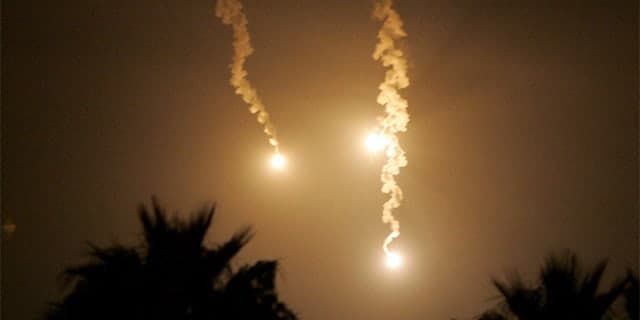
The military initially denied any operations during the 1997 Phoenix Lights incident, later claiming they were flare drops from Barry Goldwater Range after public pressure mounted.
“We have no military operations scheduled in that area for that time period”
From “crazy” to confirmed
The Claim Is Made
This is the moment they called it crazy.
On March 13, 1997, thousands of people across Arizona witnessed an enormous object moving silently across the night sky. The event, now known as the Phoenix Lights, became one of the most documented UFO sightings in American history, with multiple witnesses including pilots, police officers, and ordinary citizens. What happened next reveals how official narratives can shift dramatically under public pressure.
When inquiries began pouring in, military officials at Luke Air Force Base and the Barry Goldwater Range initially provided a straightforward answer: they had no operations scheduled that night. This denial came not as a minor statement but as an official military position. For weeks, this remained the public record. Military spokespersons stood firm, leaving the explanation for thousands of sightings completely unaddressed. The lack of a mundane explanation only fueled public speculation and media attention.
By August 1997—five months after the incident—the military's story changed entirely. They now claimed that flares dropped from aircraft training exercises over the Barry Goldwater Range were responsible for the sightings. This explanation had not been discovered through investigation; it emerged only after sustained public pressure and media scrutiny made the original denial untenable. The timing of this reversal matters considerably.
The credibility problem is substantial. When officials claim no operations occurred, then later produce an explanation involving operations at the exact location in question, the question becomes unavoidable: why wasn't this information available immediately? Military records should be accessible, and commanders should know what exercises their units are conducting. The five-month delay suggests either gross incompetence or deliberate withholding of information.
Critics of the flare explanation point out that the original sightings description didn't match conventional flare behavior. Witnesses reported a massive, solid object moving at unusual speeds and angles. Flares drift downward in predictable patterns. Some skeptics argue the military explanation was crafted to close the file rather than to explain what people actually saw. Others maintain that eyewitness accounts are unreliable and that flares could reasonably produce the reported effects under certain conditions.
What makes this case relevant to broader questions about institutional honesty is this: the military didn't volunteer the flare explanation when first asked. They only provided it when silence became politically costly. This pattern—deny, then explain when forced to do so—undermines public confidence regardless of whether the final explanation is accurate. Citizens cannot assess official credibility when statements change based on pressure rather than emerging facts.
The Phoenix Lights incident illustrates why tracking these reversals matters. It's not simply about what happened in Arizona on a spring night in 1997. It's about how institutions communicate with the public when unexpected events occur. If officials deny activities they later admit to, how are citizens supposed to evaluate what they're being told about other classified or sensitive operations?
The incident remains disputed because the original explanation is still questioned by researchers and witnesses. But the documented shift from denial to admission is undisputed. That shift itself—the five-month gap, the absence of immediate transparency—tells us something important about how official denials function in real time, and why public skepticism toward initial institutional responses deserves serious consideration.
Get the 5 biggest receipts every week, straight to your inbox — plus an exclusive PDF: The Top 10 Conspiracy Theories Proven True in 2025-2026. No spam. No agenda. Just the papers they couldn't hide.
You just read "Phoenix Lights Military Flares Explanation Came Five Months …". We send ones like this every week.
No one's said anything yet. Be the first to drop your take.