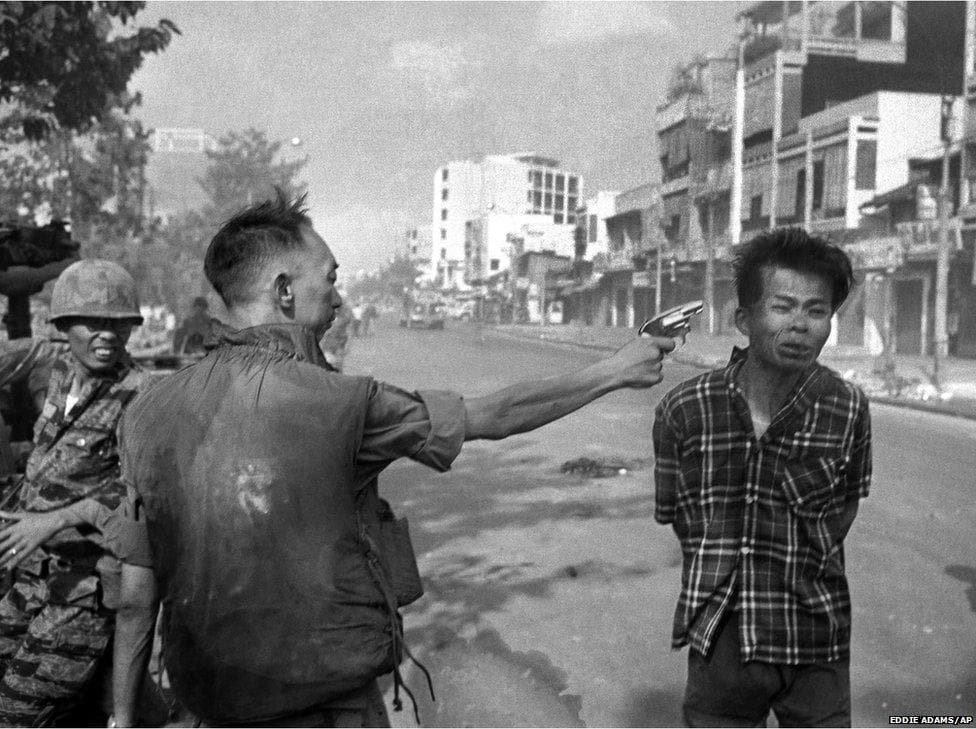
The Phoenix Program (1968-1972) was a CIA-coordinated operation designed to 'neutralize' the Viet Cong infrastructure through infiltration, torture, capture, and assassination. The program officially neutralized 81,740 people, of whom 26,369 were killed. Congressional hearings revealed widespread torture, execution of civilians, and use of the program for personal vendettas. CIA Director William Colby testified before Congress in 1971, and the program was shut down under intense public pressure.
“The Phoenix Program was designed to identify and destroy the Viet Cong via infiltration, assassination, torture, capture, and interrogation.”
What they said vs. what the evidence shows
“The Phoenix Program is a legitimate intelligence-gathering operation targeting enemy infrastructure, not an assassination program.”
— MACV (Military Assistance Command Vietnam) · Jun 1969
SourceFrom “crazy” to confirmed
The Claim Is Made
This is the moment they called it crazy.
For nearly a decade, the U.S. government systematically hunted, tortured, and executed tens of thousands of Vietnamese civilians and suspected combatants. By the time the full scope of the operation became public, the death toll had already climbed past 26,000. This wasn't a rogue operation or a theoretical possibility—it was a CIA-coordinated program with official sanction, congressional awareness, and detailed documentation.
The Phoenix Program, operational from 1968 to 1972, emerged from a straightforward premise: to dismantle the Viet Cong's political and military infrastructure in South Vietnam. But what started as an intelligence collection effort evolved into something far darker. The CIA, working alongside South Vietnamese forces and American military advisors, built an apparatus explicitly designed to "neutralize" targets through infiltration, torture, capture, and assassination.
During the program's early years, officials insisted it was a legitimate counterinsurgency tool—necessary, proportionate, and carefully controlled. They claimed that targets were selected through rigorous intelligence and that civilian casualties were minimal and incidental. When critics raised concerns, the response was familiar: deny, minimize, reframe. The program's architects maintained that every person neutralized was a genuine Viet Cong operative or infrastructure supporter. Critics were either naive about the realities of wartime intelligence or actively rooting against American interests.
The verification came from the government's own records and testimony. The Phoenix Program CIA Reading Room contains declassified documents detailing the operation's scope and methods. These aren't allegations or journalistic reconstructions—they're contemporary internal memoranda, training materials, and operational summaries created by the organizations that ran the program.
Get the 5 biggest receipts every week, straight to your inbox — plus an exclusive PDF: The Top 10 Conspiracy Theories Proven True in 2025-2026. No spam. No agenda. Just the papers they couldn't hide.
You just read "The CIA ran a systematic assassination and torture program i…". We send ones like this every week.
No one's said anything yet. Be the first to drop your take.
Confirmed: They Were Right
The truth comes out. Officially documented.
Confirmed: They Were Right
The truth comes out. Officially documented.
The numbers themselves tell a story the government had tried to contain. Official CIA tallies documented that the program "neutralized" 81,740 people between 1968 and 1972. Of these, 26,369 were killed. The remaining 55,371 were captured or otherwise removed from operation. Congressional hearings in 1971, prompted by growing public alarm, forced CIA Director William Colby to testify about the program's practices. Under questioning, he acknowledged that the program had indeed involved torture and that civilians had been killed—contradicting earlier assurances that the operation was surgical and precise.
What emerged from those hearings was a picture of systematic abuse. Detainees were tortured to extract information. Village informants, sometimes with questionable reliability, were used to identify targets. Personal grudges became grounds for assassination. The line between "Viet Cong operative" and "suspected sympathizer" to "civilian in the wrong place" blurred into meaninglessness. The program became a tool for local grudge-settling as much as strategic warfare.
Public pressure and congressional scrutiny eventually forced the program's closure in 1972. By then, the damage was measured not just in casualty figures but in the credibility of American institutions. Here was a documented case where official denials had proven false, where classified operations violated stated principles, and where the government's own paperwork contradicted its public claims.
The Phoenix Program matters because it represents a particular type of conspiracy we must acknowledge: not a hidden secret whispered in shadows, but a systematic program operating under official authority, documented in government files, and defended by government officials—until the documentation became impossible to ignore. It reveals how easily democratic oversight can fail when operations remain classified and how bureaucratic accountability mechanisms function only when external pressure forces them to work. Public trust doesn't erode because people imagine conspiracies. It erodes when documented ones are finally acknowledged years too late.
Beat the odds
This had a 1.4% chance of leaking — someone talked anyway.
Conspirators
~1,000Large op
Secret kept
3.5 years
Time to 95% exposure
500+ years