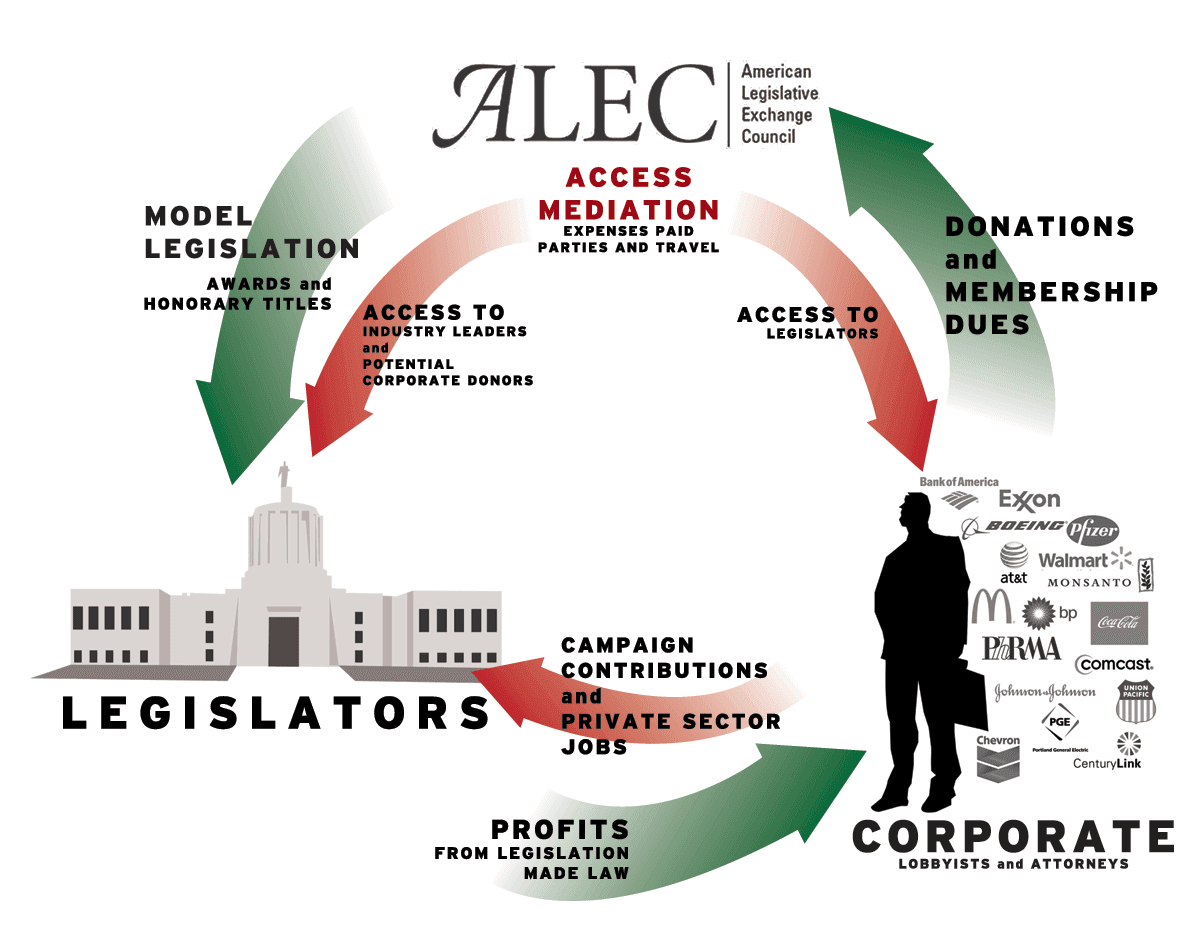
CoreCivic (formerly CCA) and GEO Group spent over $25 million on lobbying and campaign contributions. Through ALEC (American Legislative Exchange Council), private prison companies literally co-authored model legislation including mandatory minimum sentencing, three-strikes laws, and truth-in-sentencing laws. Some contracts include 'lockup quotas' guaranteeing 80-90% occupancy rates, meaning states must keep prisons full or pay for empty beds. Arizona's SB 1070 immigration law was drafted at an ALEC meeting attended by CCA.
“The companies making money from incarceration wrote the laws that put people in prison. They guaranteed 90% occupancy in their contracts.”
From “crazy” to confirmed
The Claim Is Made
This is the moment they called it crazy.
When CoreCivic and the GEO Group began their aggressive expansion in the 1990s, they faced an obvious problem: prisons needed prisoners to be profitable. What followed was one of the most direct examples of corporate influence on criminal justice policy in American history—and it happened largely in plain sight.
For years, critics argued that private prison companies were actively shaping the laws that guaranteed their business model would succeed. They weren't just lobbying for tougher sentencing; they were literally writing the legislation themselves. When these claims surfaced, the private prison industry and their allies dismissed them as conspiracy theories. How could corporations actually draft laws? That wasn't how legislation worked. These were independent policy decisions made by elected officials responding to their constituents' demands for public safety.
But the evidence told a different story.
Through the American Legislative Exchange Council, a nonprofit organization that brings together corporate sponsors and state legislators, private prison companies didn't just influence policy—they co-authored it. Documents obtained by organizations like the ACLU and In the Public Interest showed that CoreCivic and GEO Group employees sat at the same table as state lawmakers, drafting model legislation on mandatory minimum sentencing, three-strikes laws, and truth-in-sentencing provisions. These weren't suggestions or talking points. They were complete bills, ready to be introduced in state legislatures.
The financial incentive was staggering. Between lobbying efforts and campaign contributions, CoreCivic and GEO Group spent over $25 million to shape criminal justice policy. But money alone doesn't explain the scope of their influence. The real leverage came through ALEC membership, which gave corporations direct access to the legislative process itself.
What made this arrangement particularly damaging was the contractual terms involved. Many states didn't just hire private prisons to house inmates—they guaranteed occupancy rates. Arizona's contracts with CoreCivic required 80-90% prison capacity. If the state failed to keep prisons sufficiently full, it had to pay for the empty beds anyway. This created a perverse incentive: the state was financially obligated to maintain high incarceration rates, and the companies that drafted the laws ensuring those rates had a direct financial stake in the outcome.
Get the 5 biggest receipts every week, straight to your inbox — plus an exclusive PDF: The Top 10 Conspiracy Theories Proven True in 2025-2026. No spam. No agenda. Just the papers they couldn't hide.
You just read "Private prison companies spent $25M lobbying and co-wrote ma…". We send ones like this every week.
No one's said anything yet. Be the first to drop your take.
Confirmed: They Were Right
The truth comes out. Officially documented.
Confirmed: They Were Right
The truth comes out. Officially documented.
The connection became impossible to ignore when investigative reporters traced the origins of Arizona's controversial SB 1070 immigration law back to an ALEC meeting where CoreCivic representatives were present. The law's provisions would dramatically increase immigration-related arrests and incarceration—directly benefiting private prison operators.
This wasn't a shadowy conspiracy that required connecting dots or accepting unverified claims. It was documented through legislative records, corporate filings, and internal communications. The system worked exactly as critics had described: corporations wrote laws that criminalized behavior, states passed those laws partly because they were presented as legitimate policy solutions, and private companies profited from the incarceration that followed.
Understanding that this happened matters because it fundamentally challenges how we think about criminal justice reform. For decades, mass incarceration was treated as a policy failure or an unintended consequence of being tough on crime. But when the laws driving incarceration were literally authored by the companies profiting from it, it becomes harder to call it unintended. It raises serious questions about whose interests are actually served by our criminal justice system, and what it means when we discover that corporate profit motives shaped decades of American criminal law.