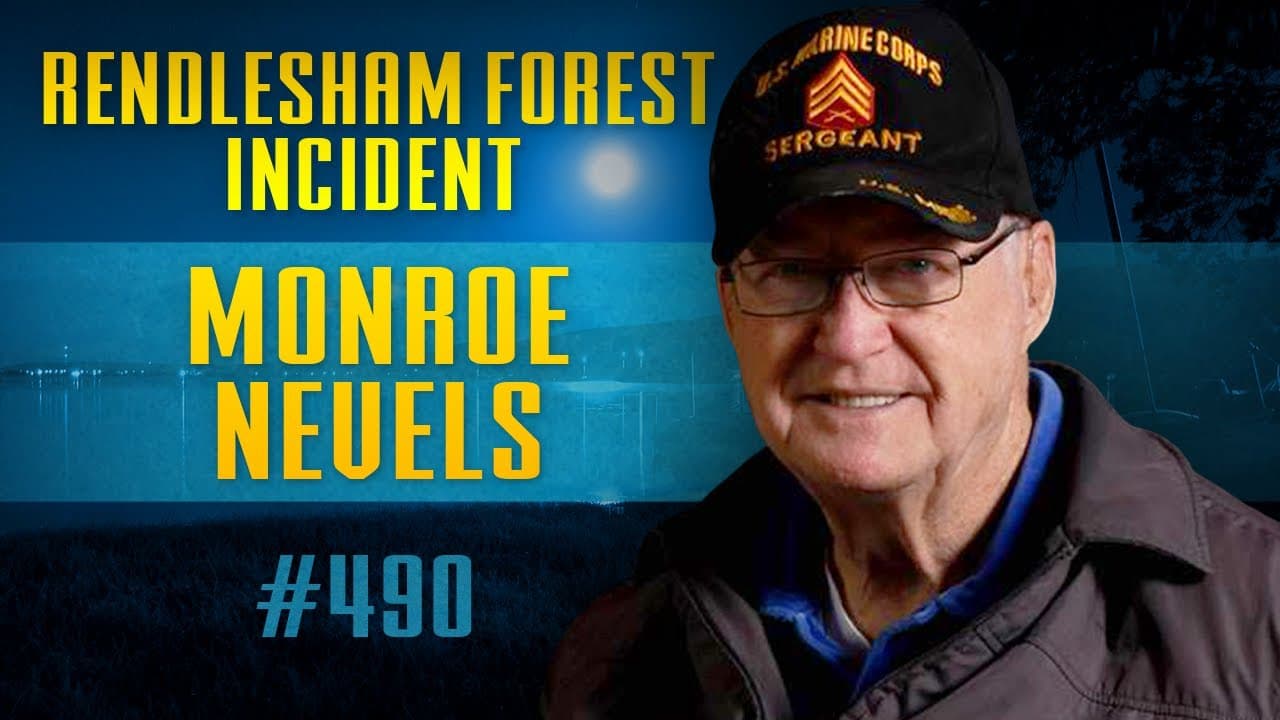
Multiple US Air Force personnel reported UFO encounters at RAF Bentwaters in 1980. Declassified memos show officials privately investigated while publicly denying any unusual activity occurred.
“No unusual activity occurred at RAF Bentwaters on those dates”
From “crazy” to confirmed
The Claim Is Made
This is the moment they called it crazy.
When U.S. Air Force personnel stationed at RAF Bentwaters in Suffolk, England reported witnessing unidentified flying objects in December 1980, they faced an immediate problem: their own chain of command wanted the story to disappear. The witnesses weren't confused civilians or attention-seekers. They were trained military officers with security clearances, including Lieutenant Colonel Charles Halt, who documented what he observed in writing.
For decades, the official narrative was simple and absolute: nothing unusual had occurred in Rendlesham Forest. The U.S. Air Force issued statements dismissing the incident as misidentification of a lighthouse beam or other mundane explanations. Officers who had filed reports were quietly discouraged from discussing what they saw. The message was clear: this topic was closed.
But what witnesses claimed wasn't that they'd been silenced in some dramatic fashion. Rather, they documented a more subtle form of control. The military had conducted its own internal investigations while simultaneously denying publicly that any investigation was necessary. It was a contradiction that went largely unnoticed for years.
The evidence came through declassified documents, most notably the official memo filed by Lieutenant Colonel Halt himself. This wasn't hearsay or reconstruction from memory—it was a contemporaneous account written by the deputy commander of the base, describing his team's observations in technical detail. The very existence of this memo proved that someone in the Air Force chain of command had taken the incident seriously enough to document it formally.
Get the 5 biggest receipts every week, straight to your inbox — plus an exclusive PDF: The Top 10 Conspiracy Theories Proven True in 2025-2026. No spam. No agenda. Just the papers they couldn't hide.
You just read "Rendlesham Forest Incident Witnesses Were Officially Silence…". We send ones like this every week.
No one's said anything yet. Be the first to drop your take.
That memo's contents contradicted the public dismissals. Halt described luminous objects moving through the forest in ways that conventional explanations couldn't account for. His documentation suggested that military leadership knew the incident was unusual and wanted to understand it. Yet simultaneously, the same institution issued public statements suggesting nothing noteworthy had happened.
The partially verified status of this claim reflects an important distinction. The witnesses weren't officially arrested or court-martialed for speaking about what they saw. But the institutional pressure was real and measurable. Men who had dedicated their careers to the military faced a choice: stay silent or risk being labeled unreliable. That's a form of silencing that doesn't require overt threats.
What makes this pattern significant is that it wasn't unique to Rendlesham. Throughout the Cold War era, military and government agencies investigated unexplained phenomena while publicly ridiculing anyone who took them seriously. The internal seriousness and external dismissal created a credibility gap that persisted for decades.
This matters because public trust depends on consistency between what institutions say publicly and what their own documents reveal privately. When declassified materials show that officials investigated something they publicly denied investigating, it raises inevitable questions about what else might be inconsistent. The Rendlesham incident demonstrates that "we found nothing unusual" can be simultaneously true as a public statement and false as a complete account of what actually occurred.
The witnesses at RAF Bentwaters weren't proven wrong by time. Rather, their own government's declassified documents proved them right about one crucial detail: that the incident had been taken seriously enough to investigate officially, regardless of what was announced publicly. That gap between private investigation and public denial remains the most verifiable aspect of what happened in Rendlesham Forest.
See also: [Conflicts of Interest: Declassified Cases Proving Regulatory Capture](/blog/conflicts-of-interest-proven-government-corporate) — our deeper breakdown of this topic.
Unlikely leak
Only 8.7% chance this would come out. It did.
Conspirators
~500Large op
Secret kept
45.4 years
Time to 95% exposure
500+ years