Deputy Base Commander Charles Halt documented UFO encounters at RAF Bentwaters in 1980 near nuclear weapons storage. Both US and UK authorities denied the incident's significance for decades.
“No unusual activity occurred at RAF Bentwaters and no nuclear weapons were involved”
From “crazy” to confirmed
The Claim Is Made
This is the moment they called it crazy.
When Deputy Base Commander Charles Halt picked up his tape recorder on the night of December 26, 1980, he had no way of knowing his voice would become one of the most scrutinized pieces of evidence in UFO history. What unfolded over three nights at RAF Bentwaters, a joint US-UK military installation in Suffolk, England, would challenge official narratives for decades and raise uncomfortable questions about what governments actually know—and whether they're willing to tell us.
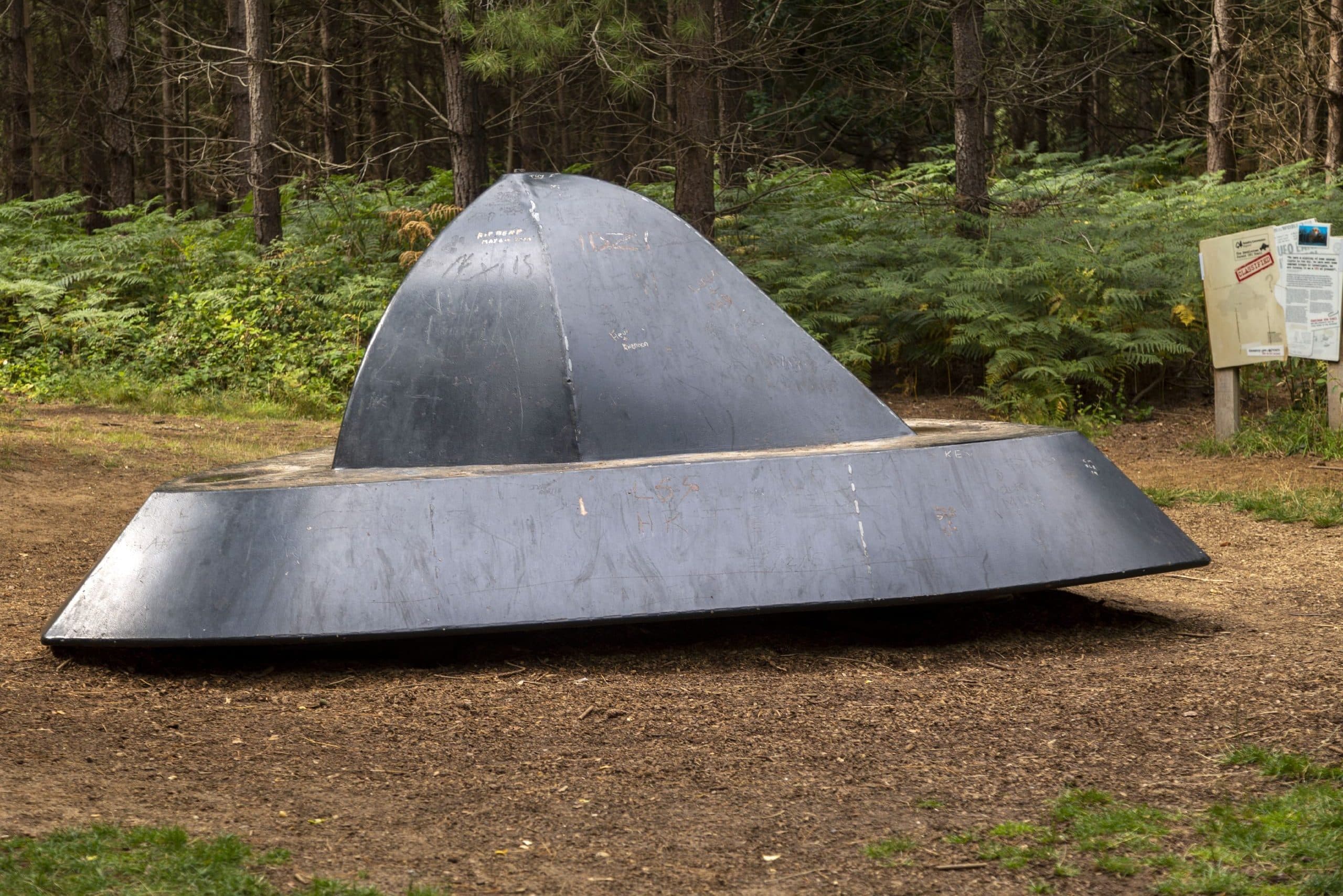
Halt and his personnel reported seeing unidentified lights moving through Rendlesham Forest, an area adjacent to the base. More significantly, the forest bordered the perimeter where the United States stored nuclear weapons. This wasn't some remote sighting dismissed as weather balloons or swamp gas. This was documented by a high-ranking American military officer at an active nuclear weapons facility, recorded in real time, and reported through official channels.
The initial response from both American and British authorities was swift and dismissive. The incidents were downplayed, explained away as misidentifications of a nearby lighthouse, and buried under layers of official denial. For years, the military establishment maintained that nothing unusual had occurred. Declassified files would later show that officials were far more concerned than their public statements suggested, but that information remained hidden from scrutiny.
What makes the Rendlesham Forest incident significant isn't just that military personnel witnessed something unexplained. It's that the incident occurred in proximity to nuclear weapons storage during an era of heightened Cold War tensions. Halt's audio recordings captured his genuine confusion and concern in real time—these weren't retrospective accounts filtered through memory or interpretation. His contemporaneous notes, preserved in the record, document specific observations: unusual lights, apparent physical effects on the environment, and a level of official activity that suggested the phenomenon was taken seriously behind closed doors.
Get the 5 biggest receipts every week, straight to your inbox — plus an exclusive PDF: The Top 10 Conspiracy Theories Proven True in 2025-2026. No spam. No agenda. Just the papers they couldn't hide.
You just read "Rendlesham Forest UFO Incident Involved US Nuclear Weapons S…". We send ones like this every week.
No one's said anything yet. Be the first to drop your take.
The partial verification of this claim rests on established facts. Multiple credible witnesses—military officers with security clearances—documented their observations. The incidents occurred at a documented location with documented personnel. The initial official denial was documented. What remains unverified is the nature of what was actually witnessed. That ambiguity is precisely why Rendlesham Forest matters.
This case illustrates a pattern that repeats throughout government records: When something genuinely unusual occurs at sensitive locations, officials face a choice between transparency and institutional protection. They typically choose the latter. The stated reason is often national security, but the practical effect is that the public loses its ability to assess what actually happened.
The Rendlesham incident demonstrates why documented claims of official denial deserve our attention. Whether or not the phenomenon was extraterrestrial, unconventional, or terrestrial in origin, the public was systematically misled about the incident's significance. A Deputy Base Commander's contemporaneous testimony was treated as less credible than anonymous official denials.
This matters because it reveals how institutional credibility erodes. Governments maintain authority partly through the assumption that they'll be forthright about unusual events. Rendlesham Forest shows what happens when that assumption proves unfounded. We're left with a partial truth: something happened, authorities knew it was significant enough to investigate seriously, and they decided the public wasn't entitled to know what they'd learned.
Unlikely leak
Only 8.7% chance this would come out. It did.
Conspirators
~500Large op
Secret kept
45.4 years
Time to 95% exposure
500+ years