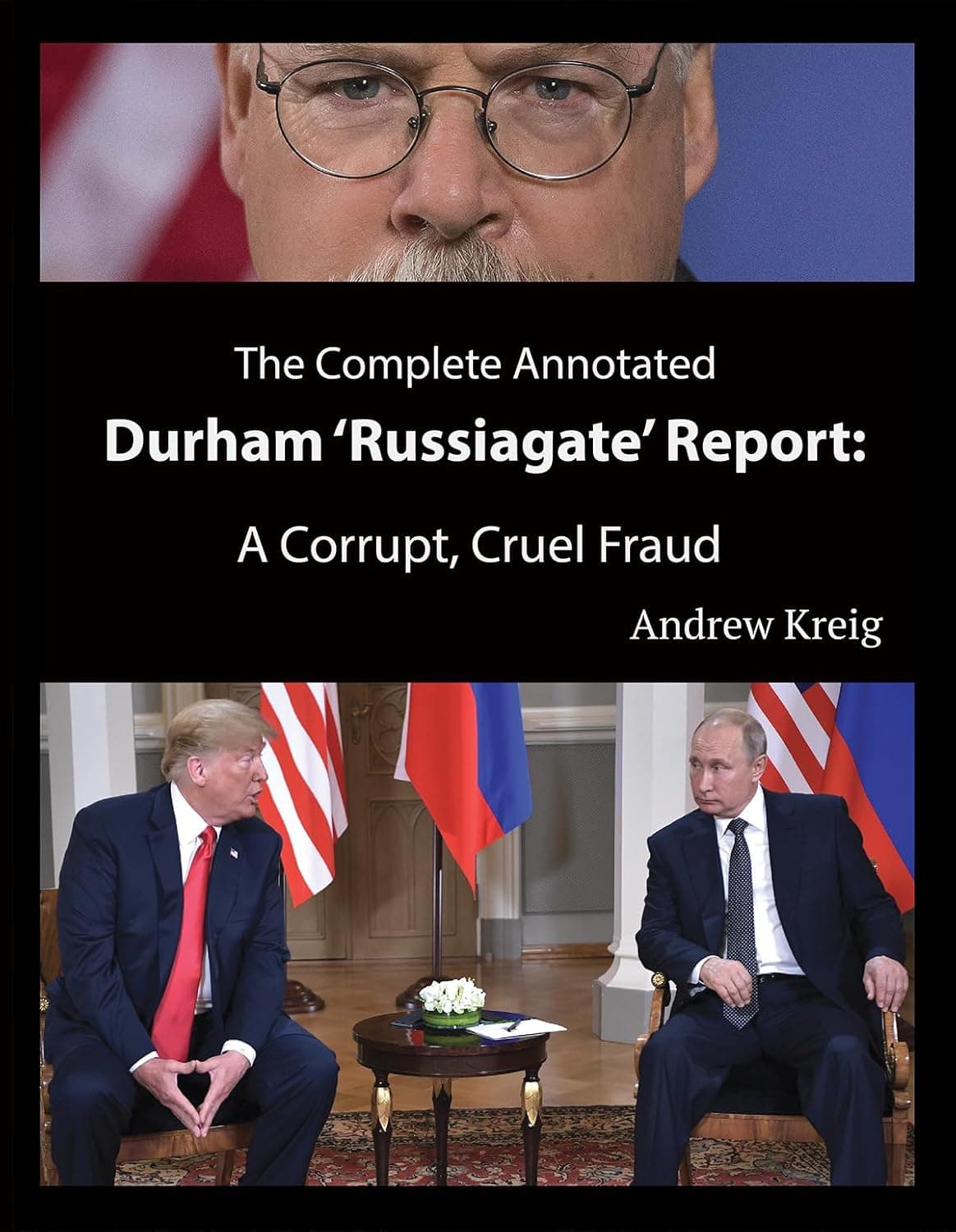
For four years (2017-2021), mainstream media promoted the narrative that Trump colluded with Russia, winning Pulitzer Prizes for coverage. The 2023 Durham Report concluded the FBI 'did not and could not corroborate any of the substantive allegations' in the Steele Dossier. The FBI offered Steele $1 million if he could verify his claims — he couldn't. Bob Woodward said viewers were 'cheated' by the coverage. The NYT's 'Daily' podcast called the Dossier 'profoundly flawed.' Despite years of wall-to-wall coverage, no conspiracy was proven.
“The Russiagate story is based on an unverified opposition research document. The media is promoting a narrative they cannot substantiate, and it will be one of the biggest journalistic failures in modern history.”
What they said vs. what the evidence shows
“The evidence of Russian interference and potential Trump campaign cooperation is overwhelming and continues to mount. Those who deny it are engaged in a cover-up.”
— CNN / MSNBC / Washington Post · Jul 2018
SourceFrom “crazy” to confirmed
The Claim Is Made
This is the moment they called it crazy.
For nearly five years, a narrative dominated American newsrooms with the intensity of breaking war coverage. Major news outlets reported extensively on claims that Donald Trump's 2016 presidential campaign had colluded with Russia, producing investigative pieces that won Pulitzer Prizes and shaped national conversation. The foundation of much of this reporting rested on a single document: the Steele Dossier, a collection of unverified allegations compiled by former British intelligence officer Christopher Steele.
The claims were extraordinary. The dossier alleged coordination between Trump associates and Russian officials, personal compromising material held by Moscow, and systematic interference designed to benefit Trump. Cable news networks covered these allegations repeatedly from 2017 through 2021. Major newspapers published detailed investigations. The story consumed the national conversation and influenced political outcomes, including impeachment proceedings.
When skeptics questioned the evidence, they were often dismissed or marginalized. Defenders of the coverage pointed to the seriousness of the allegations and the intelligence background of some sources. The FBI itself appeared to validate the dossier by reportedly using it to justify surveillance applications. For millions of Americans following mainstream news, the collusion narrative seemed credible precisely because it was reported so ubiquitously by institutions they trusted.
Then came the Durham Report.
In May 2023, Special Counsel John Durham released his final report on the origins of the Russia investigation. What it documented was stark: the FBI "did not and could not corroborate any of the substantive allegations" contained in the Steele Dossier. Durham found that the bureau's leaders had proceeded with investigations into Trump despite lacking verified evidence. The report detailed how the FBI had even offered Steele $1 million if he could provide verification for his claims. He could not.
Get the 5 biggest receipts every week, straight to your inbox — plus an exclusive PDF: The Top 10 Conspiracy Theories Proven True in 2025-2026. No spam. No agenda. Just the papers they couldn't hide.
You just read "Russiagate was the biggest media failure in a generation — t…". We send ones like this every week.
No one's said anything yet. Be the first to drop your take.
Confirmed: They Were Right
The truth comes out. Officially documented.
Confirmed: They Were Right
The truth comes out. Officially documented.
The implications were severe. Major outlets that had built their Russiagate coverage on the dossier's allegations faced a reckoning. Even journalists who had championed the narrative began acknowledging the problem. Bob Woodward, the legendary investigative reporter, stated that viewers of news coverage had been "cheated." The New York Times's own "Daily" podcast eventually called the dossier "profoundly flawed."
Yet here's what matters most: despite years of intensive, high-profile coverage by the nation's largest news organizations, the central claim—that Trump colluded with Russia—was never proven. The Durham Report did not exonerate Trump; rather, it confirmed that the evidence supporting the original allegations was nonexistent from the beginning.
This represents more than a journalistic error. It reveals a failure of institutional accountability at scale. News organizations won professional accolades for reporting based on unverified information. Careers were built. Political momentum was generated. Public understanding was shaped. All of this occurred while the underlying evidence remained absent.
The Russiagate episode matters because it demonstrates how even respected institutions can amplify unproven claims when those claims align with prevailing narratives or serve institutional interests. The question now is whether this failure will produce meaningful changes in how major news organizations handle contested political claims. Without systematic reform, the mechanisms that enabled this four-year episode remain in place. Public trust, once eroded, does not rebuild easily. And the cost of that erosion extends far beyond the 2016 election.
Beat the odds
This had a 0.3% chance of leaking — someone talked anyway.
Conspirators
~100Network
Secret kept
6.3 years
Time to 95% exposure
500+ years