When Tarana Burke, the founder of the #MeToo movement, stepped in front of cameras to discuss Jeffrey Epstein's arrest and conviction, she said something that made many people uncomfortable: there are more Epsteins out there. Her warning wasn't hyperbole or activist rhetoric—it was grounded in the uncomfortable reality that Epstein's network of abuse hadn't been fully dismantled, and similar systems of exploitation were likely operating in plain sight across industries.
The initial claim was straightforward but troubling. Burke argued that the Epstein case represented not an isolated instance of depravity, but rather a symptom of broader institutional failures and networks that enabled wealthy, powerful men to exploit vulnerable people. She suggested that similar rings of exploitation existed in corporate America, entertainment, politics, and other sectors where power imbalances created opportunities for abuse.
When this claim circulated, particularly in online communities tracking Epstein's connections, the official response was predictable. Media outlets and institutional voices downplayed the suggestion, framing it as conspiracy thinking or the inevitable overcorrection of the #MeToo era. Critics argued that Epstein was a unique criminal case, not representative of systemic patterns. Some suggested that invoking his name to describe other exploitation networks was irresponsible sensationalism that diluted the specific horror of his documented crimes.
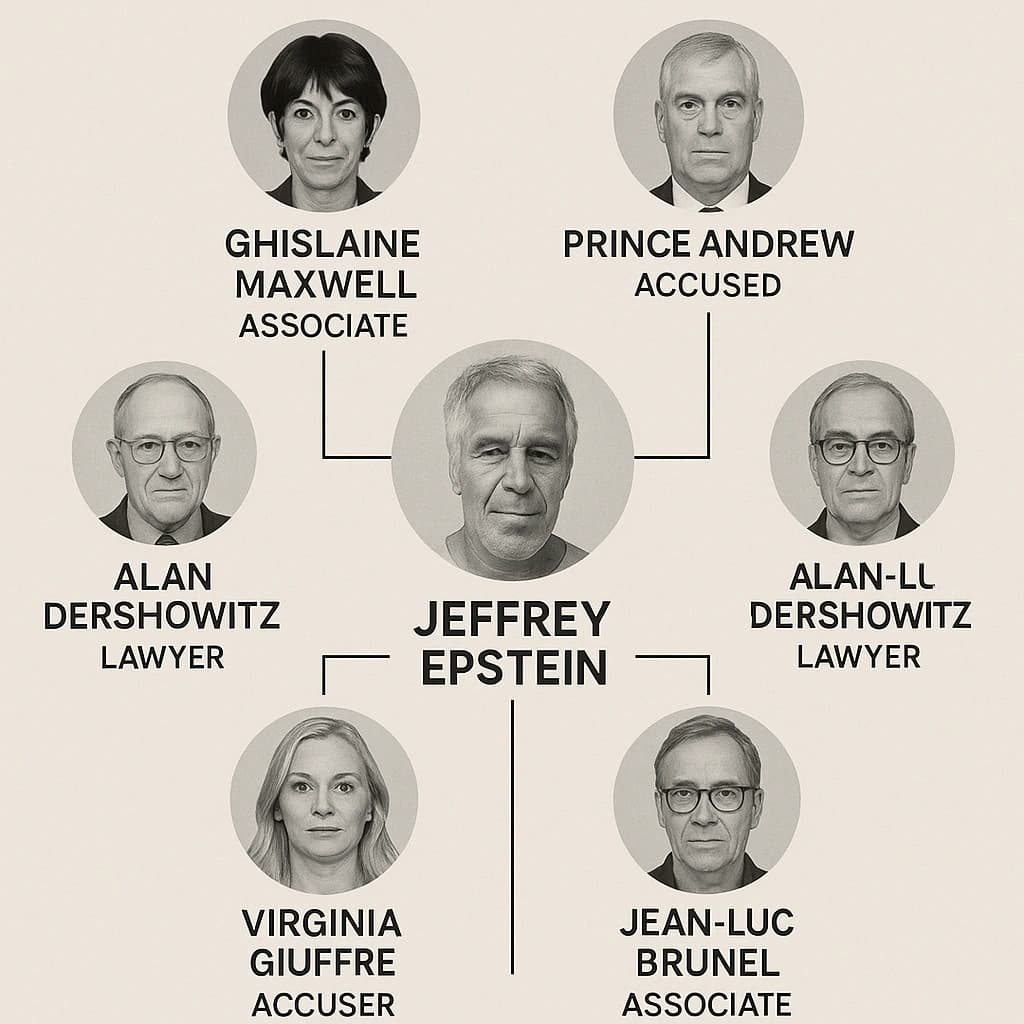
But the evidence has steadily accumulated. Court documents unsealed from Epstein's cases revealed an extensive network of enablers, recruiters, and conspirators—not just in his immediate circle, but throughout institutions that should have caught him. More significantly, investigations in subsequent years uncovered eerily similar exploitation networks operating independently. The cases against R. Kelly revealed a structured ring of abuse. Investigations into Harvey Weinstein's conduct exposed not just personal predation, but institutional knowledge and protection. Reports on various corporate environments, from tech companies to pharmaceutical firms, documented systematic abuse enabled by power structures nearly identical to those that protected Epstein.
Get the 5 biggest receipts every week, straight to your inbox — plus an exclusive PDF: The Top 10 Conspiracy Theories Proven True in 2025-2026. No spam. No agenda. Just the papers they couldn't hide.
You just read "'There Are More Epsteins': #MeToo Founder Warns Of Rampant E…". We send ones like this every week.
No one's said anything yet. Be the first to drop your take.
Perhaps most tellingly, survivor advocacy organizations began documenting patterns: multiple accusers in the same organizations, institutional silence, powerful men leveraging their positions to access vulnerable populations, and networks of enablers who profited from or facilitated abuse. These weren't isolated incidents—they were recurring patterns across different industries and geographic locations.
The real verification of Burke's claim came not from a single moment of revelation, but from the slow accumulation of documented cases that followed. As more survivors came forward and more investigations were conducted, a picture emerged of exploitation networks that operated with disturbing similarity to Epstein's setup: isolation of victims, leveraging of power imbalances, institutional enablement, and deliberate obscuring of evidence.
This matters because institutional credibility depends on acknowledging uncomfortable truths. When authorities and media dismissed Burke's warning as fearmongering, they were essentially asking the public to believe that Epstein was an anomaly rather than a warning sign. The evidence suggests otherwise.
The broader implication is that safeguarding institutions against exploitation requires more than prosecuting individual bad actors. It requires acknowledging that certain power structures, inadequate oversight mechanisms, and cultural tolerances create environments where "more Epsteins" don't just exist—they thrive. That realization forces uncomfortable questions about which other institutions might be harboring similar networks, and what systemic changes are actually necessary to prevent them.
Beat the odds
This had a 0.1% chance of leaking — someone talked anyway.
Conspirators
~100Network
Secret kept
2.4 years
Time to 95% exposure
500+ years