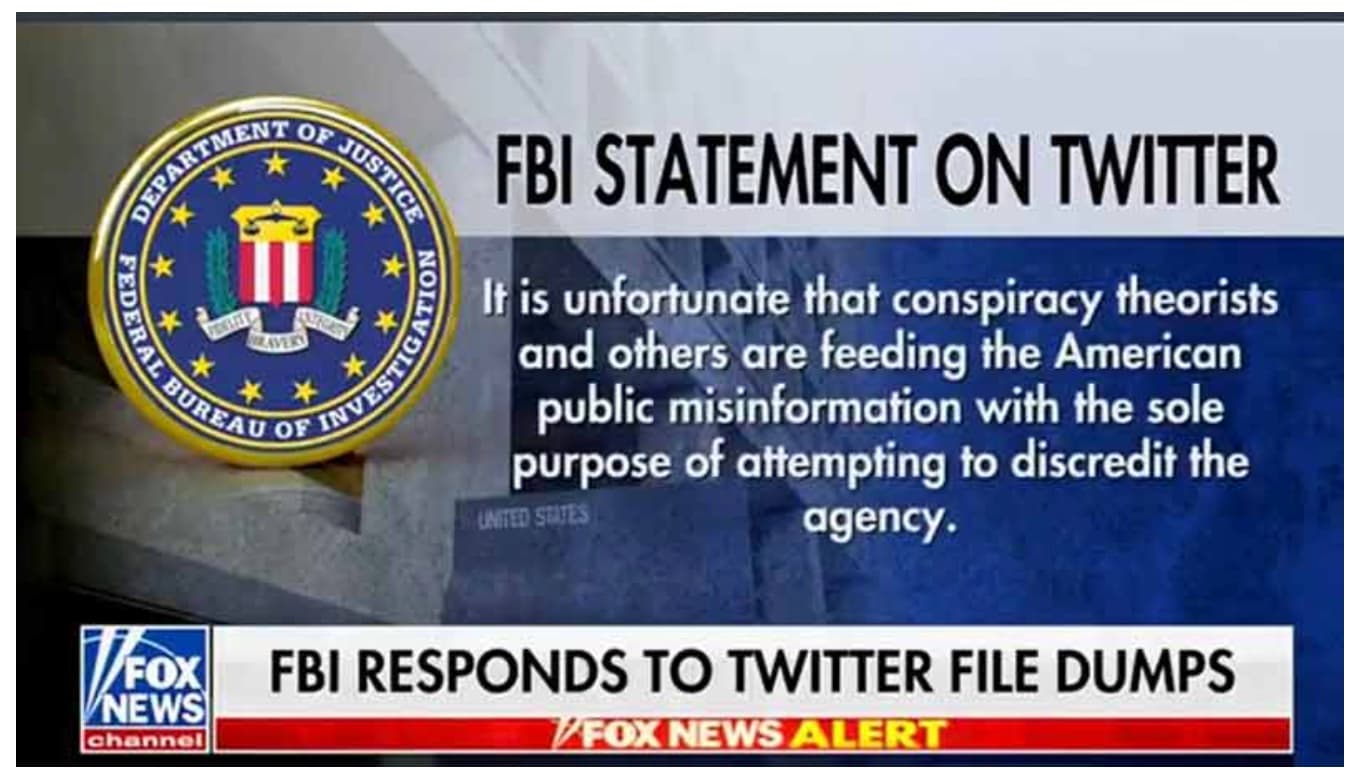
FBI regularly emailed Twitter. Staff: 'government-industry sync.' Stanford: flag 'true vaccine side effects.'
“FBI weekly emails. Stanford: censor TRUE stories.”
What they said vs. what the evidence shows
“Merely suggestions.”
— Twitter lawyers · Jun 2023
SourceFrom “crazy” to confirmed
The Claim Is Made
This is the moment they called it crazy.
When Elon Musk acquired Twitter in October 2022, he granted select journalists access to the company's internal communications. What they found in those archives painted a picture of routine collaboration between federal law enforcement and one of the world's largest information platforms—a relationship Twitter's own employees found noteworthy enough to describe as "government-industry sync."
For years, skeptics had suggested that social media moderation wasn't purely a private matter. Critics pointed to patterns where certain content disappeared, accounts were suspended, and narratives shifted in ways that seemed coordinated rather than organic. Whenever these observations surfaced in public discourse, they were typically dismissed as conspiracy thinking. Mainstream outlets portrayed such concerns as unfounded paranoia, the product of people who didn't understand how content moderation actually worked.
The Twitter Files revealed something different. FBI officials sent weekly emails to Twitter staff flagging accounts and content for review. These weren't occasional requests or crisis management scenarios. This was systematic, recurring communication between a government agency and a private corporation responsible for hosting the speech of hundreds of millions of people.
The flagged content included posts about vaccine side effects. According to the revelations, Stanford researchers had documented genuine adverse reactions to COVID vaccines, yet this information was being flagged through official channels as problematic material. Twitter employees recognized what was happening. In their own communications, they acknowledged the unusual nature of this arrangement, using the phrase "government-industry sync" to describe the relationship—a term that carries the weight of understanding exactly what was occurring.
Get the 5 biggest receipts every week, straight to your inbox — plus an exclusive PDF: The Top 10 Conspiracy Theories Proven True in 2025-2026. No spam. No agenda. Just the papers they couldn't hide.
You just read "Twitter Files: FBI weekly emails flagging accounts, 'governm…". We send ones like this every week.
No one's said anything yet. Be the first to drop your take.
Source: Twitter Files: FBI weekly emails flagging accounts, 'government-industry sync'
Confirmed: They Were Right
The truth comes out. Officially documented.
Confirmed: They Were Right
The truth comes out. Officially documented.
This wasn't a matter of Twitter independently choosing to remove content it believed violated community standards. This was a government agency identifying content and requesting action. The company subsequently took steps to suppress or limit the reach of flagged material, including information about documented medical phenomena.
What made this verification particularly significant was that it contradicted the official narrative maintained for years. During the pandemic especially, anyone suggesting that government agencies were coordinating with tech platforms to control information flow was routinely labeled as engaging in baseless conspiracy theories. Public health authorities insisted they weren't controlling narratives—they were fighting misinformation. Tech companies claimed they made independent moderation decisions.
The Twitter Files demonstrated that the actual situation involved more direct coordination than the public had been told. It wasn't merely that federal health agencies lobbied platforms to remove certain content. It was that the FBI itself was regularly communicating with Twitter staff about specific accounts and material, operating through an informal system that seemed to lack the transparency typical of formal regulatory processes.
The implications extend beyond any single platform or moment in time. If government agencies were coordinating with social media companies on content moderation, what does that mean for the concept of free speech? How did this arrangement affect the public's ability to access and discuss information? Were other platforms operating under similar arrangements?
These questions matter because they concern the infrastructure through which modern society discusses important issues. When that infrastructure operates through undisclosed partnerships between government and private companies, public trust in both institutions suffers. The verification of this claim doesn't resolve those tensions. Instead, it confirms that the skepticism was warranted—and that transparency about these relationships remains necessary.
Beat the odds
This had a 0% chance of leaking — someone talked anyway.
Conspirators
~100Network
Secret kept
0.5 years
Time to 95% exposure
500+ years