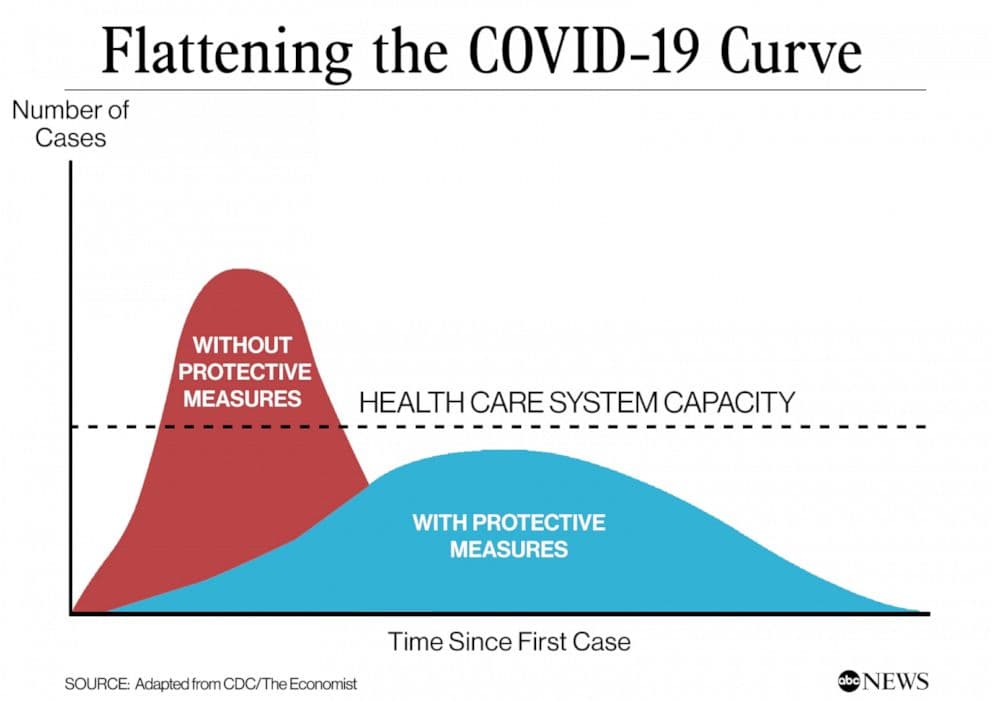
The initial March 2020 messaging promised a 14-day lockdown to prevent hospital overload. In reality, restrictions lasted months to years: Pennsylvania's lockdown ran March to July 2020; schools closed for up to two years. Epidemiologists privately estimated 'a year or two' but the public messaging never reflected this. The goal shifted from 'flatten the curve' to 'eliminate the virus.'
“The two-week lockdown is a lie. Once they lock down, it won't end in two weeks — it will be months or years.”
What they said vs. what the evidence shows
From “crazy” to confirmed
The Claim Is Made
This is the moment they called it crazy.
Confirmed: They Were Right
The truth comes out. Officially documented.
Confirmed: They Were Right
The truth comes out. Officially documented.
In March 2020, Americans were told to stay home for two weeks. That message was simple, concrete, and designed to be psychologically manageable. Flatten the curve, prevent hospitals from being overwhelmed, then life returns to normal. Fourteen days. Two weeks. The language mattered because it shaped expectations about what the public was being asked to sacrifice.
What actually happened was strikingly different. Pennsylvania's lockdown, which began in mid-March 2020, didn't end until July. Schools across the country remained closed for up to two years. Restrictions that were framed as temporary emergency measures became permanent fixtures of daily life for months and, in some cases, years. The question that haunts this period is whether this outcome was always the inevitable result, or whether the initial public messaging deliberately obscured what officials knew or suspected would actually be required.
The claim that "two weeks to flatten the curve" was a misleading simplification deserves serious examination because it cuts to the heart of public trust. When a government communication is later shown to diverge dramatically from reality, it matters whether that divergence resulted from honest miscalculation or from information withheld from the public.
Early epidemiological models, documented in strategy papers reviewed at the time, showed that officials internally estimated lockdowns would be necessary for "a year or two." This assessment existed in March 2020, during the very period when the public was being assured that fourteen days of sacrifice would suffice. The Minnesota Department of Health, for instance, shifted its own public guidance from "two weeks" to "indefinitely" within weeks, revealing the gap between initial messaging and what planners actually believed about the timeline.
Critics immediately pointed out the logical inconsistency. How could a novel virus that required a year or two of restrictions be solved in fourteen days? The response from health authorities was essentially that the "two weeks" applied specifically to the initial surge, after which different measures would continue. But this explanation came too late for many people who had already committed to decisions—canceling family events, closing businesses, making financial arrangements—based on the original fourteen-day framework.
Adam Kucharski's analysis of how "flattening the curve" fell flat documented the moment when the stated objective shifted. The original goal was protecting hospital capacity. But as cases continued after the initial two weeks, the goal post moved to case reduction, then elimination, then prevention of transmission entirely. Each new objective required more restrictions and extended timelines, yet these escalations weren't framed as fundamental changes to the original plan.
The evidence suggests this wasn't a lie exactly, but rather a failure to communicate what officials actually believed. The documents exist showing internal estimates of extended timelines. What's notable is that these estimates weren't widely shared with the public in real time, even as messaging emphasized the temporary nature of restrictions.
This matters because public health policy depends on public compliance. That compliance is easier to secure with honest communication about scope and duration than with overly optimistic timelines that require constant revision. When governments ask citizens to restrict fundamental freedoms, the public has a right to the most accurate information available about how long those restrictions will last.
The credibility gap created during this period hasn't closed. Understanding what happened requires acknowledging that the "two weeks" messaging, even if well-intentioned, failed to match what planners knew or suspected about the challenge ahead. That disconnect has consequences for how people evaluate official information during the next crisis.
Get the 5 biggest receipts every week, straight to your inbox — plus an exclusive PDF: The Top 10 Conspiracy Theories Proven True in 2025-2026. No spam. No agenda. Just the papers they couldn't hide.
You just read ""Two weeks to flatten the curve" became months and years of …". We send ones like this every week.
No one's said anything yet. Be the first to drop your take.