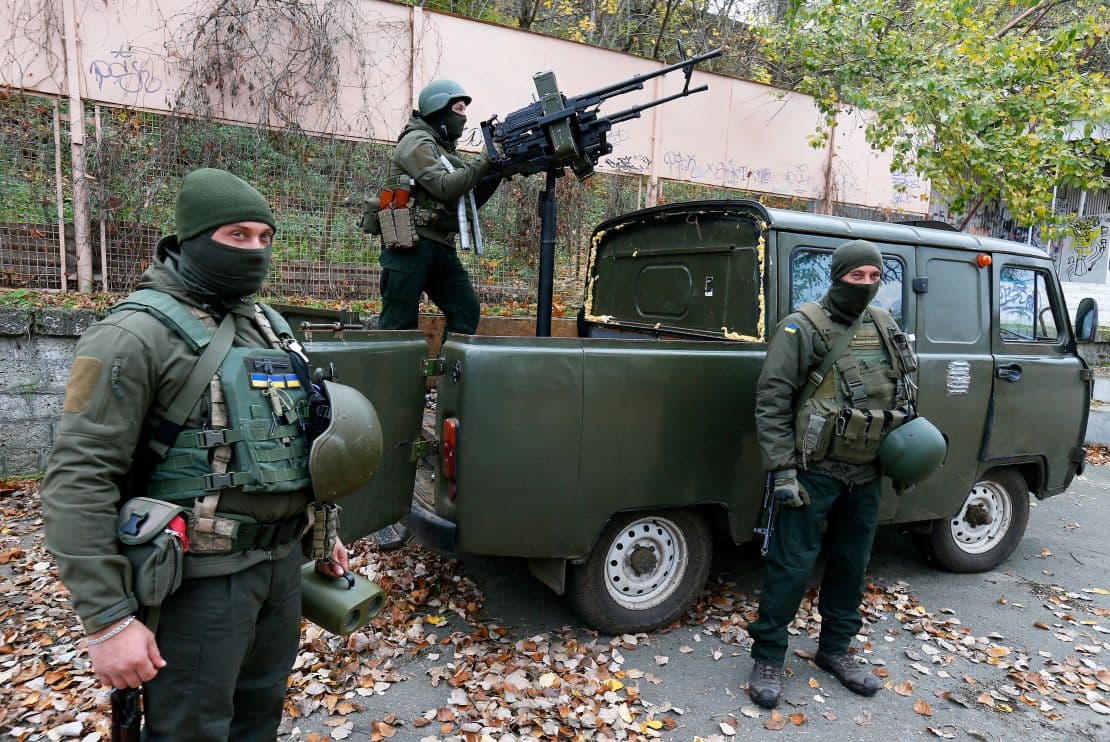
Despite widespread claims on social media, a 2024 Global Initiative Against Transnational Organized Crime report found no confirmed reports of arms trafficking out of Ukraine. While some Western-provided weapons were stolen within Ukraine before being recovered by Ukrainian intelligence services, reports about Finnish gangsters, French rioters, and Mexican cartels obtaining Ukrainian weapons have all been debunked. Soviet/Russian weapons remain the primary items seized on internal black markets.
“Weapons being sent to Ukraine are ending up on the black market, arming cartels and terrorist groups worldwide.”
What they said vs. what the evidence shows
“We have robust tracking systems in place. There is no credible evidence of significant weapons diversion out of Ukraine.”
— Pentagon / Ukrainian Intelligence · Jul 2023
SourceFrom “crazy” to confirmed
The Claim Is Made
This is the moment they called it crazy.
When billions of dollars in military aid began flowing to Ukraine in 2022, a particular worry spread across social media with remarkable speed: Western weapons were disappearing into criminal networks worldwide. Videos circulated. Stories emerged of Ukrainian arms reaching Mexican cartels, French rioters, and Scandinavian gangsters. The narrative was simple and alarming—weapons sent to fight Russian soldiers were being diverted to the world's worst actors before they ever reached the battlefield.
Officials initially dismissed these concerns as unfounded fearmongering. Ukrainian and Western government representatives repeatedly stated they had strict controls over weapons distribution and accountability measures in place. The narrative of missing weapons threatened to undermine public support for aid at a crucial moment in the conflict, so institutions moved quickly to reassure the public that the system was working.
But here's where the story gets interesting: the official reassurance wasn't wrong, it was just incomplete. A 2024 report from the Global Initiative Against Transnational Organized Crime actually found something noteworthy—there were no confirmed reports of weapons successfully leaving Ukraine for international black markets. Not zero suspicions. Zero confirmed cases.
Yet the report also documented that weapons theft was happening. Ukrainian intelligence services recovered stolen Western-provided weapons within Ukraine before they could leave the country. The system designed to prevent diversion had identified vulnerabilities and functioned to catch the problem at the borders rather than worldwide. This is a crucial distinction that got lost in both the alarming social media claims and the initial government dismissals.
The specific stories that circulated all collapsed under scrutiny. Reports of Finnish gangsters acquiring Ukrainian weapons vanished when examined closely. Claims about French rioters wielding Ukrainian arms during urban unrest in 2023 turned out to be baseless. Allegations that Mexican cartels obtained Ukrainian weapons through smuggling networks fell apart when investigated. What did appear on black markets instead were Soviet and Russian weapons—the preexisting arsenal that Ukraine had inherited and that remained vulnerable to theft throughout the conflict.
Get the 5 biggest receipts every week, straight to your inbox — plus an exclusive PDF: The Top 10 Conspiracy Theories Proven True in 2025-2026. No spam. No agenda. Just the papers they couldn't hide.
You just read "Claims of Western weapons sent to Ukraine ending up on inter…". We send ones like this every week.
No one's said anything yet. Be the first to drop your take.
Confirmed: They Were Right
The truth comes out. Officially documented.
Confirmed: They Were Right
The truth comes out. Officially documented.
Harvard International Review's investigation into "Facts or False Alarms" around illicit arms in Ukraine confirmed this troubling detail: the actual security problem wasn't what people feared most. The weapons that were leaving Ukraine through criminal channels were older Russian and Soviet systems, not the precision Western equipment that dominated the narrative.
This case reveals something important about how we assess threats and verify claims. The initial social media panic wasn't entirely baseless—weapons theft did occur. But the specific allegations were false, and the system's actual vulnerabilities were narrower than claimed. Weapons were being diverted, just not internationally. Ukrainian authorities were detecting thefts and recovering materials, just as they said they would.
For public trust, this matters tremendously. When officials say something isn't happening and it turns out something is happening—even something different—credibility suffers regardless of whether they were technically right. Meanwhile, when spectacular false stories saturate social media first, the actual, less dramatic reality struggles to gain traction even when it vindicates the core claim about oversight working.
The lesson isn't that either side was completely wrong. It's that the truth fell somewhere between reassuring dismissal and social media panic, and that gap continues to erode confidence in both official statements and viral claims.
Beat the odds
This had a 1.1% chance of leaking — someone talked anyway.
Conspirators
~1,000Large op
Secret kept
2.7 years
Time to 95% exposure
500+ years