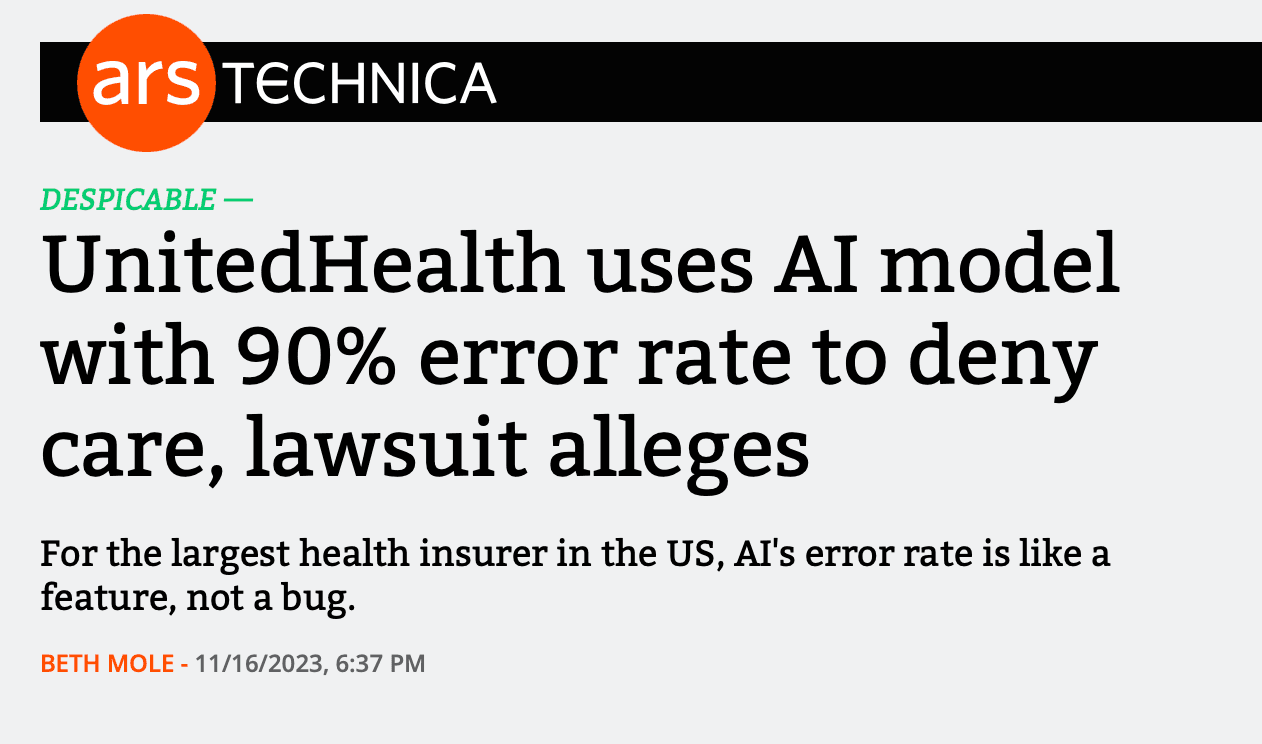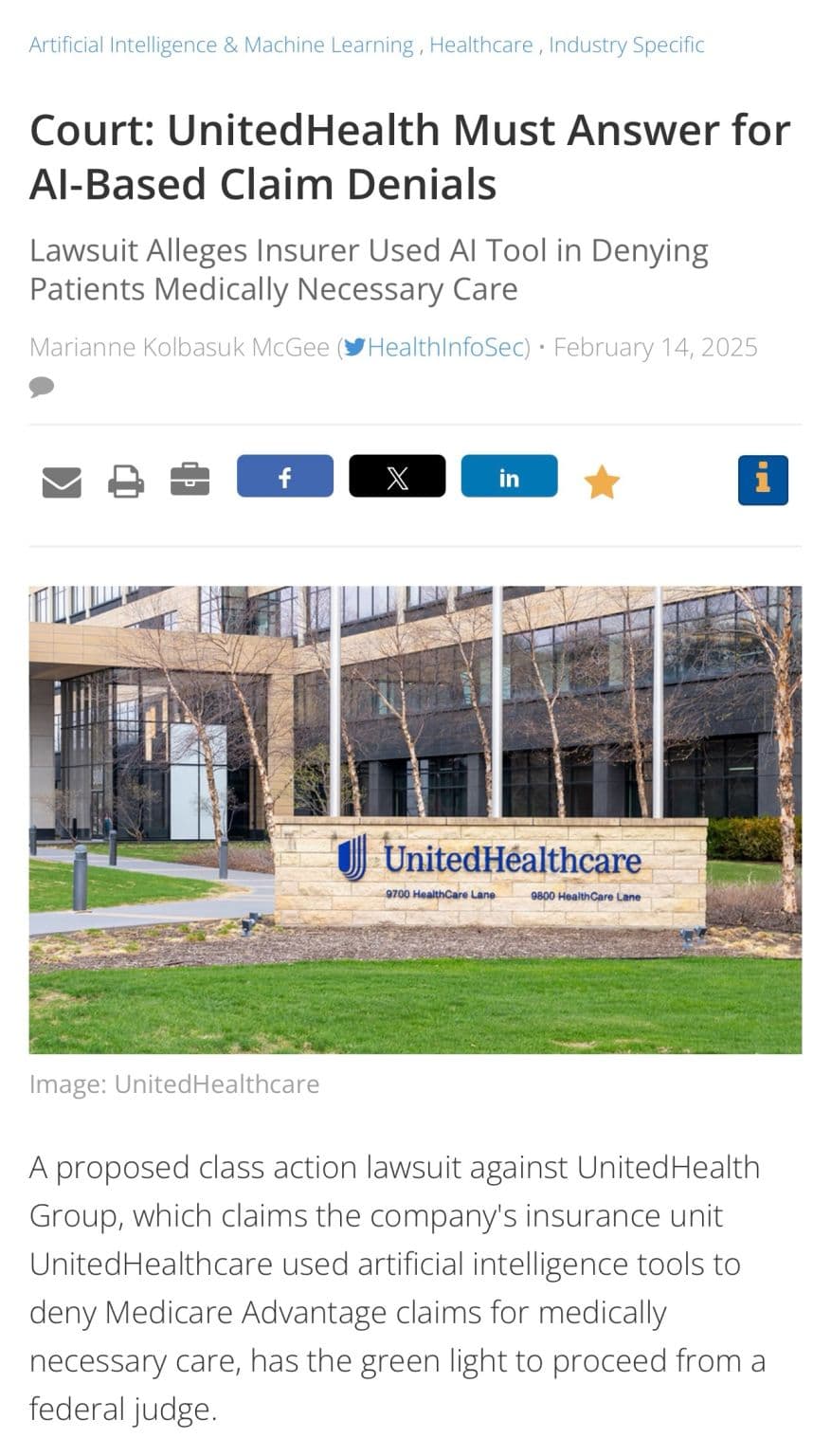
UnitedHealth deployed AI model 'nH Predict' that auto-denied nursing home coverage for Medicare patients, knowing it had a 90% error rate. A 91-year-old paralyzed man was sent home; his family paid $14K/month until he died.
“UnitedHealth deployed AI model 'nH Predict' that auto-denied nursing home coverage for Medicare patients, knowing it had a 90% error rate. A 91-year-old paralyzed man was sent home; his family paid $14K/month until he died.”
UnitedHealth — the largest health insurance company in America — deployed an AI model called nH Predict that automatically denied nursing home coverage for Medicare patients. Internal documents showed the company knew the algorithm had a 90% error rate. They used it anyway because most people don't appeal.
nH Predict analyzed patient records and automatically generated denial decisions for extended nursing home stays. The AI learned to deny coverage at specific time intervals regardless of the patient's actual medical condition. It wasn't making medical decisions — it was making financial ones.
The company's own data showed that 90% of nH Predict denials were overturned when patients or families appealed. Nine out of ten times, the AI was wrong. But UnitedHealth knew that most elderly patients — often confused, grieving, or lacking legal resources — would not appeal. The math worked in their favor.
One case highlighted in the lawsuit: a 91-year-old paralyzed man whose nursing home coverage was denied by the algorithm. His family was forced to pay $14,000 per month out of pocket for his care until he died. The AI said he didn't need the care. He was paralyzed.
Deny first. Know most won't fight back. Pay out only when forced. This isn't a bug in the system — it's the business model. UnitedHealth used artificial intelligence to automate the denial of care to America's most vulnerable people, knowing the AI was wrong the vast majority of the time.
Get the 5 biggest receipts every week, straight to your inbox — plus an exclusive PDF: The Top 10 Conspiracy Theories Proven True in 2025-2026. No spam. No agenda. Just the papers they couldn't hide.
You just read "UnitedHealth's AI denied nursing home care to dying elderly …". We send ones like this every week.
No one's said anything yet. Be the first to drop your take.