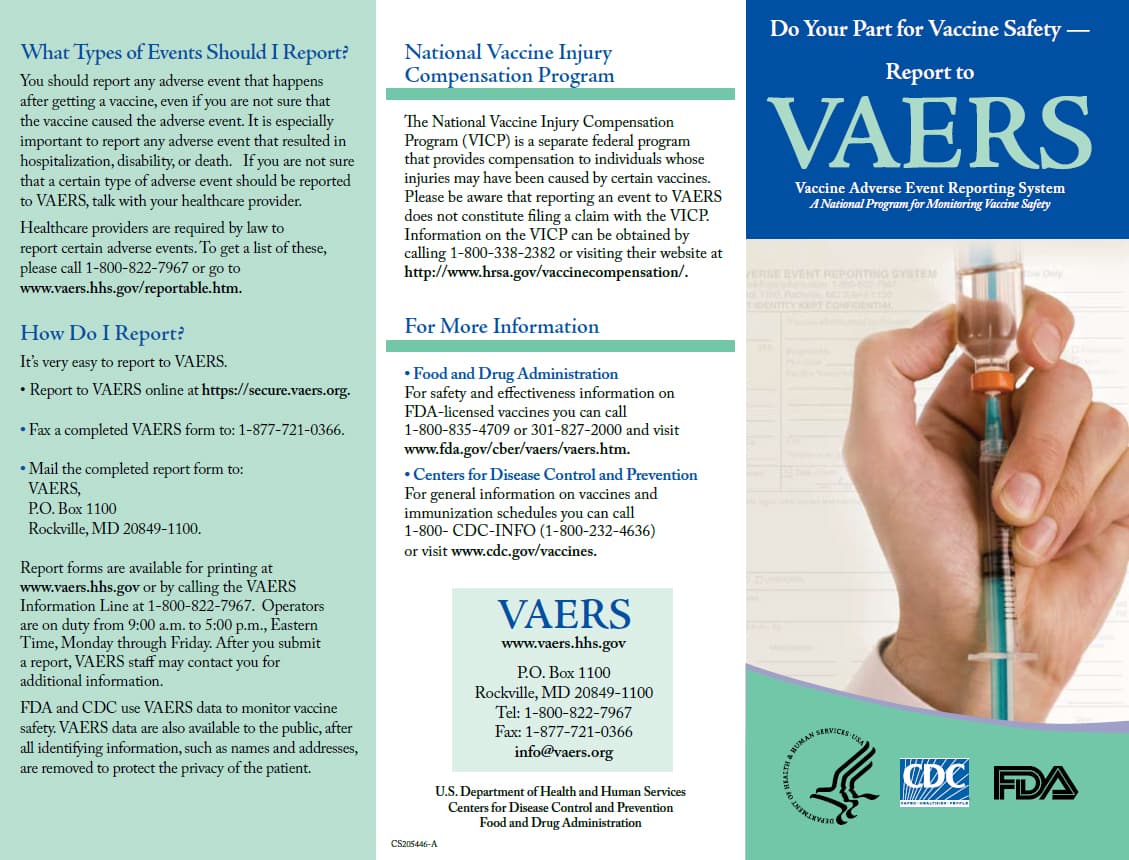
The Electronic Support for Public Health (ESP:VAERS) project, funded by HHS and conducted by Harvard Pilgrim Health Care, found 35,570 possible adverse reactions from 1.4 million vaccine doses (2.6% rate). The project summary stated 'fewer than 1% of vaccine adverse events are reported' to VAERS. The team developed an automated electronic reporting system to fix underreporting, but reported that the CDC stopped cooperating. Despite VAERS being the primary safety monitoring system, its known limitations have never been addressed.
“Fewer than 1% of vaccine adverse events are reported to the FDA. Although 25% of ambulatory patients experience an adverse drug event, fewer than 0.3% of all adverse drug events are reported to the FDA.”
From “crazy” to confirmed
The Claim Is Made
This is the moment they called it crazy.
When Harvard Pilgrim Health Care set out to study vaccine safety, they discovered something the federal government apparently wanted to ignore: the system everyone relies on to catch dangerous side effects was missing the vast majority of problems.
The Electronic Support for Public Health program, known as ESP:VAERS, received funding from the Department of Health and Human Services to investigate a nagging question about the Vaccine Adverse Event Reporting System. VAERS had been the cornerstone of vaccine safety monitoring for decades, but health officials had long acknowledged it suffered from significant underreporting. What they didn't know was how severe the problem actually was.
Harvard Pilgrim's research team analyzed data from 1.4 million vaccine doses and found 35,570 possible adverse reactions. That's a rate of 2.6 percent. The project's final report contained a statement that would become central to ongoing debates about vaccine safety infrastructure: "Fewer than 1% of vaccine adverse events are reported" to VAERS.
The magnitude of this gap should have triggered immediate action. If true, it meant that VAERS—the primary safety monitoring system for vaccines—was capturing perhaps one-hundredth of actual problems. A system designed to cast a wide net was instead catching only the smallest fraction of real-world harm.
But rather than launching a coordinated effort to fix the problem, something unexpected happened. The researchers who had uncovered this critical gap reported that the CDC stopped cooperating with them. The team had developed an automated electronic reporting system specifically designed to address this underreporting crisis. It was ready. The infrastructure existed. Yet the collaboration that might have transformed vaccine safety monitoring simply halted.
Get the 5 biggest receipts every week, straight to your inbox — plus an exclusive PDF: The Top 10 Conspiracy Theories Proven True in 2025-2026. No spam. No agenda. Just the papers they couldn't hide.
You just read "An HHS-funded Harvard study found fewer than 1% of vaccine a…". We send ones like this every week.
No one's said anything yet. Be the first to drop your take.
The ESP:VAERS grant final report documented this development in dry language that masked its significance. The project that was supposed to revolutionize how America detected vaccine injuries never got that chance.
What makes this claim partially rather than fully verified is that the ESP:VAERS findings themselves are genuine and documented, but questions remain about context and causation. The research was legitimate. Harvard Pilgrim was a credible institution. The HHS funding was real. The findings about underreporting were in writing. But the full scope of what happened after—the mechanisms behind the CDC's decision to limit cooperation, the internal discussions, the policy rationale—remains less documented in publicly available form.
This matters because public health depends on trust in safety systems. When citizens are told a monitoring program is comprehensive, they deserve to know if it's actually capturing only a fraction of adverse events. When a solution is developed and then abandoned, people deserve to understand why.
The claim reflects a real tension in how medical systems handle inconvenient data. VAERS was never designed as a perfect system, and its limitations are well-known to epidemiologists. But there's a crucial difference between acknowledging a system's limitations and actively preventing improvements to that system. The ESP:VAERS project represented exactly the kind of improvement that might have strengthened public confidence.
Instead, we're left with a vaccine safety system that everyone—including regulators—knows significantly undercounts problems. And we're left wondering why a solution was developed and then shelved.
Beat the odds
This had a 1.8% chance of leaking — someone talked anyway.
Conspirators
~300Network
Secret kept
15.4 years
Time to 95% exposure
500+ years