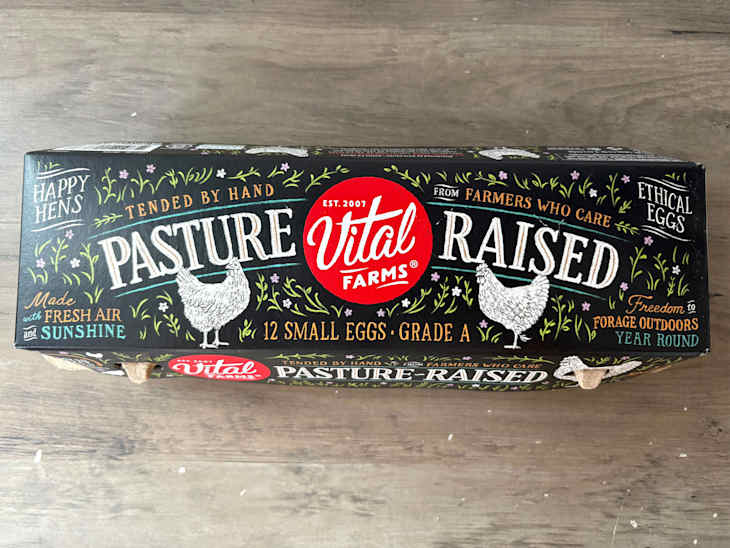
Independent lab tests showed that Vital Farms' $10/dozen 'pasture-raised' eggs contain 23.5% linoleic acid — the same level as canola oil. Investigations reveal up to 90% of their hens are housed indoors despite the 'pasture-raised' label and idyllic branding.
“Independent lab tests showed that Vital Farms' $10/dozen 'pasture-raised' eggs contain 23.5% linoleic acid — the same level as canola oil. Investigations reveal up to 90% of their hens are housed indoors despite the 'pasture-raised' label and idyllic branding.”
Vital Farms charges $10 a dozen for eggs with pictures of happy hens on green pastures. Lab tests just revealed those eggs contain 23.5% linoleic acid — the exact same omega-6 level as canola oil. And up to 90% of their hens never see a pasture.
Independent testing showed Vital Farms eggs have an omega-6 fatty acid profile indistinguishable from industrial seed oils. Real pasture-raised eggs from hens that actually eat grass and bugs have dramatically different fat profiles. The lab numbers don't lie — these hens aren't eating what pasture-raised hens eat.
Investigations revealed that up to 90% of Vital Farms' hens are housed indoors. The "pasture-raised" label requires "access" to outdoor space — but "access" can mean a small door that most hens never use. The pictures of rolling green hills on the carton? Marketing. The reality? Industrial-scale indoor housing with a token outdoor area.
Consumers pay 3-4x the price of conventional eggs because they believe they're getting a healthier, more ethical product. The lab tests suggest they're getting conventional eggs in premium packaging. The extra $7 per dozen isn't buying better nutrition — it's buying better marketing.
After Dr. Mark Hyman and food transparency advocates shared the lab results (5,300+ reactions on Facebook), consumers started calling for a boycott. The "pasture-raised" premium egg market is built on trust — and that trust is collapsing.
Get the 5 biggest receipts every week, straight to your inbox — plus an exclusive PDF: The Top 10 Conspiracy Theories Proven True in 2025-2026. No spam. No agenda. Just the papers they couldn't hide.
You just read "Lab tests reveal Vital Farms 'pasture-raised' eggs contain t…". We send ones like this every week.
No one's said anything yet. Be the first to drop your take.