Internal memos revealed State Department officials regularly censored VOA content and forced journalists to broadcast misleading stories. Congressional investigations found systematic editorial interference.
“Voice of America maintains complete editorial independence”
From “crazy” to confirmed
The Claim Is Made
This is the moment they called it crazy.
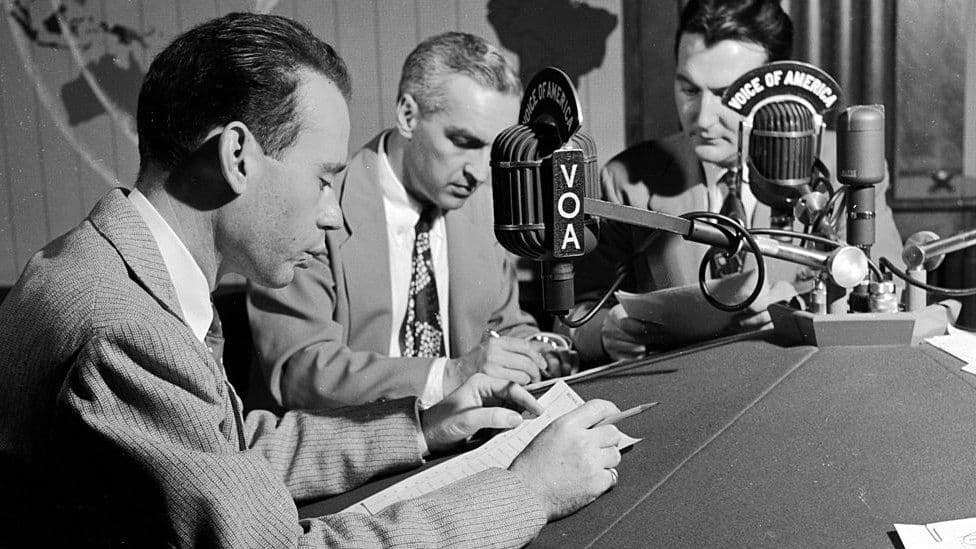
During the Cold War, Voice of America broadcast to millions behind the Iron Curtain, promising them uncensored American news. What listeners didn't know was that much of what they heard had been carefully filtered, rewritten, or fabricated by the very government agency that claimed to stand for free speech.
For decades, VOA journalists operated under the assumption that editorial independence was their birthright. The organization's founding charter explicitly stated that broadcasts should present "news and information about America and the world," delivered with accuracy and without propaganda. It seemed straightforward enough.
But internal memos told a different story. State Department officials didn't merely "suggest" editorial directions—they ordered them. Journalists received directives to downplay American problems, exaggerate Soviet weaknesses, and avoid any reporting that might complicate diplomatic relations. Stories that didn't fit the government's preferred narrative simply didn't air.
The official dismissal came swiftly whenever journalists or outside observers raised concerns. State Department spokespeople insisted that editorial guidance was merely "ensuring consistency with American foreign policy interests." They framed it as national security necessity, not censorship. The public largely accepted this explanation. After all, weren't we fighting communism? Didn't the stakes justify some editorial flexibility?
The evidence that proved this claim true emerged gradually through declassified documents and congressional investigations. What became clear was the systematic nature of the interference. It wasn't occasional or defensive—it was institutionalized. Congressional committees reviewing VOA operations found documented instances where journalists were forced to broadcast stories they knew were misleading, suppress reporting on civil rights abuses, and present American foreign policy decisions as more popular domestically than they actually were.
One particularly telling example involved coverage of American military interventions. Journalists who attempted balanced reporting on U.S. involvement abroad found their stories blocked or heavily edited before broadcast. The goal was clear: present American actions as consistently justified and beneficial, regardless of complexity or controversy.
What made this especially damaging was VOA's audience. These broadcasts reached people living under authoritarian regimes who had no other reliable source of international news. They tuned in specifically because they believed they would hear the truth. Instead, they received a different kind of propaganda—one that came wrapped in the credibility of American journalism.
This revelation matters because it exposes a fundamental contradiction at the heart of Cold War ideology. America claimed to represent freedom of the press against communist repression, yet its own government weaponized one of its most important news organizations. We told the world we believed in uncensored information while systematically censoring our own international broadcasts.
The implications extend beyond historical interest. If a government can pressure journalists during a national security crisis, what prevents it from doing so again? The VOA case demonstrates that institutional pressure, not just crude censorship, can compromise journalism. Officials don't need to shut down newspapers—they can simply control the narrative through selective editing and editorial directives.
For public trust, the lesson is sobering. News organizations that appear independent might still operate under undisclosed pressure from powerful institutions. The VOA case reminds us why transparency about editorial pressure, government access, and institutional relationships remains essential. Without it, we risk becoming what we claimed to oppose.
Get the 5 biggest receipts every week, straight to your inbox — plus an exclusive PDF: The Top 10 Conspiracy Theories Proven True in 2025-2026. No spam. No agenda. Just the papers they couldn't hide.
You just read "Voice of America journalists forced to broadcast State Depar…". We send ones like this every week.
No one's said anything yet. Be the first to drop your take.