In 2015, the EPA revealed that Volkswagen had installed software in diesel vehicles that detected when they were being emissions-tested and reduced NOx output accordingly. In real driving, the cars emitted up to 40 times the legal limit. The fraud affected 11 million vehicles worldwide. VW paid over $33 billion in fines and settlements. Multiple executives were charged, and CEO Martin Winterkorn was indicted for fraud and conspiracy.
“VW's diesel cars don't actually meet emissions standards. The clean diesel marketing is a fraud — they're using software to cheat the tests.”
What they said vs. what the evidence shows
“Volkswagen vehicles meet all emissions standards and regulations. Our clean diesel technology is a breakthrough in environmental engineering.”
— Volkswagen CEO Martin Winterkorn (initially) · Oct 2014
SourceFrom “crazy” to confirmed
The Claim Is Made
This is the moment they called it crazy.
When the Environmental Protection Agency sent a notice of violation to Volkswagen in September 2015, it wasn't just alleging a technical oversight. The agency had uncovered evidence of deliberate deception affecting 11 million vehicles across the globe—a fraud so systematic that it would cost the company more than $33 billion in fines and settlements.
What Volkswagen claimed, or rather, what it had allowed regulators to believe for years, was that its diesel engines could meet strict emissions standards while delivering the performance and fuel economy customers wanted. The company marketed these vehicles as clean diesel alternatives, emphasizing their low environmental impact. In reality, the cars were engineering marvels of a different sort: they were programmed to cheat.
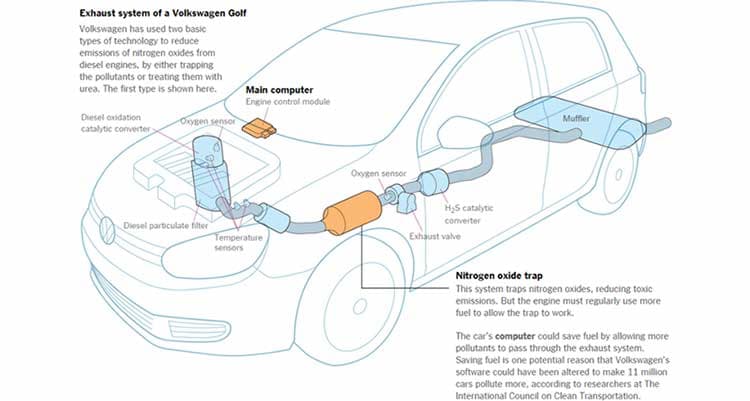
The company installed what became known as "defeat devices"—sophisticated software that detected when a vehicle was undergoing emissions testing. During those tests, the software would reduce nitrogen oxide (NOx) emissions to legal levels. Once back on the road, driving under normal conditions, the software would switch off these pollution controls. The result was staggering: real-world emissions reached up to 40 times the EPA's legal limit.
When confronted with initial evidence, Volkswagen initially characterized the issue as a technical matter affecting a smaller number of vehicles. The company suggested the problem was isolated and related to how the vehicles performed in certain testing conditions. Volkswagen executives and engineers claimed they were working within the bounds of acceptable engineering practice. This response proved insufficient and ultimately false.
The truth emerged through a combination of independent testing and EPA investigation. Researchers at West Virginia University had conducted real-world emissions testing in 2014 that showed massive discrepancies between lab results and actual driving conditions. The EPA followed up with more rigorous testing and direct investigation of Volkswagen's software. The EPA's Notice of Violation, released publicly in 2015, laid out the systematic nature of the deception with technical precision.
Get the 5 biggest receipts every week, straight to your inbox — plus an exclusive PDF: The Top 10 Conspiracy Theories Proven True in 2025-2026. No spam. No agenda. Just the papers they couldn't hide.
You just read "Volkswagen installed defeat devices in 11 million vehicles t…". We send ones like this every week.
No one's said anything yet. Be the first to drop your take.
Confirmed: They Were Right
The truth comes out. Officially documented.
Confirmed: They Were Right
The truth comes out. Officially documented.
What made this scandal particularly significant was not just the environmental impact—though the excess pollution from these vehicles contributed meaningfully to air quality problems—but the revelation of institutional fraud. This wasn't an accident or an unintended consequence of a design choice. Internal investigations revealed that multiple engineers and executives knew about the defeat devices and their purpose. The conspiracy had involved people at multiple levels of the organization.
The consequences were severe. CEO Martin Winterkorn faced indictment for fraud and conspiracy. Other executives were charged criminally. The company paid federal penalties, state penalties, and established funds for affected vehicle owners. Volkswagen's reputation, built over decades as a quality manufacturer, sustained damage that persisted for years.
This case matters because it illustrates how comprehensive corporate deception can be when motivated by profit and competitive pressure. Volkswagen had invested significant resources not just in building deceptive software, but in maintaining the deception through regulatory interactions and public statements. It took independent researchers and determined regulators to expose what the company had worked hard to conceal.
The Volkswagen scandal serves as a reminder that institutional claims deserve scrutiny, particularly when financial incentives align with the motivation to deceive. Trust in corporate environmental commitments cannot rest on marketing promises alone.
Beat the odds
This had a 0.1% chance of leaking — someone talked anyway.
Conspirators
~100Network
Secret kept
1.4 years
Time to 95% exposure
500+ years