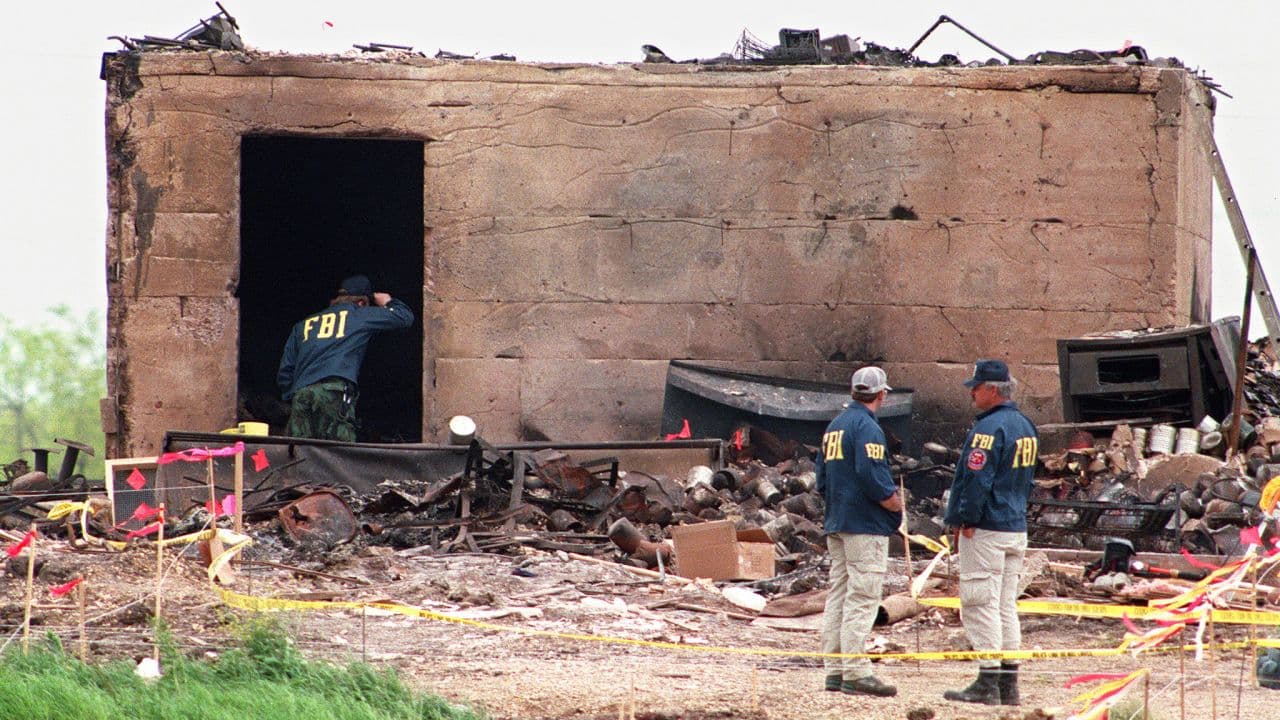
For six years, the FBI, AG Janet Reno, and Director William Sessions swore under oath that only non-incendiary tear gas was used at Waco. In 1999, a pyrotechnic tear gas shell casing was discovered in a government evidence locker. When Reno learned the FBI had withheld taped evidence for four days showing a field commander authorizing pyrotechnic grenades, she ordered US Marshals to seize evidence from the FBI.
“The FBI only used noninflammable tear gas. The grenades will not start or contribute to a fire.”
From “crazy” to confirmed
The Claim Is Made
This is the moment they called it crazy.
For six years, federal officials testified under oath that the siege at the Branch Davidian compound in Waco, Texas involved only non-incendiary tear gas. The FBI, Attorney General Janet Reno, and FBI Director William Sessions were consistent and emphatic on this point across multiple proceedings and statements.
Then in 1999, a pyrotechnic tear gas shell casing turned up in a government evidence locker. What followed was an extraordinary chain of events that exposed not just the initial deception, but an apparent scramble to contain what officials had withheld from the public record.
The original claim was straightforward: federal agents used standard tear gas to end the standoff on April 19, 1993, that resulted in a fire and approximately 76 deaths, including children. This narrative mattered because it suggested the government was not responsible for creating conditions that could have caused the blaze. Incendiary tear gas—also called pyrotechnic tear gas—generates extreme heat and could plausibly ignite materials in an enclosed space. Non-incendiary alternatives do not have this capability.
When journalists and independent investigators began questioning the official account, they were met with denials from the highest levels of government. Congressional inquiries were told the same thing. Families of those who died at Waco heard the same assurances.
The discovery of the shell casing in 1999 opened the door to closer examination. What emerged was more troubling: the FBI had possessed video evidence for years showing a field commander authorizing the use of pyrotechnic grenades. This tape had been withheld for at least four days while Reno and Sessions were making their public statements. When Reno learned about the tape—and that the FBI had not disclosed it—she made an unusual decision. According to Congressional records, she ordered U.S. Marshals to physically seize evidence from the FBI's own evidence locker.
Get the 5 biggest receipts every week, straight to your inbox — plus an exclusive PDF: The Top 10 Conspiracy Theories Proven True in 2025-2026. No spam. No agenda. Just the papers they couldn't hide.
You just read "The FBI lied for 6 years about using incendiary tear gas at …". We send ones like this every week.
No one's said anything yet. Be the first to drop your take.
Confirmed: They Were Right
The truth comes out. Officially documented.
Confirmed: They Were Right
The truth comes out. Officially documented.
This action speaks volumes. An Attorney General directing Marshals to take evidence from federal law enforcement was not routine procedure. It suggested that Reno viewed the FBI's conduct as so problematic that normal channels of internal accountability had failed. The need for outside seizure indicated a breakdown in institutional trust.
The claim is marked as "partially verified" because while evidence of pyrotechnic tear gas use was confirmed, the exact role it played in starting the fire remains disputed. What is not disputed, however, is that federal officials made false statements under oath for years, and that evidence contradicting those statements was deliberately withheld.
This matters for reasons that extend beyond the Waco siege itself. Public trust in government institutions depends on honest testimony, especially when citizens are investigating potential official wrongdoing. When the FBI withholds evidence and senior officials swear falsely to Congress and the public, the system designed to hold power accountable is undermined. Reno's decision to seize the evidence was an acknowledgment of this breach, but it came six years too late for those seeking answers about what actually happened on that April day in 1993.
Beat the odds
This had a 1.3% chance of leaking — someone talked anyway.
Conspirators
~500Large op
Secret kept
6.3 years
Time to 95% exposure
500+ years