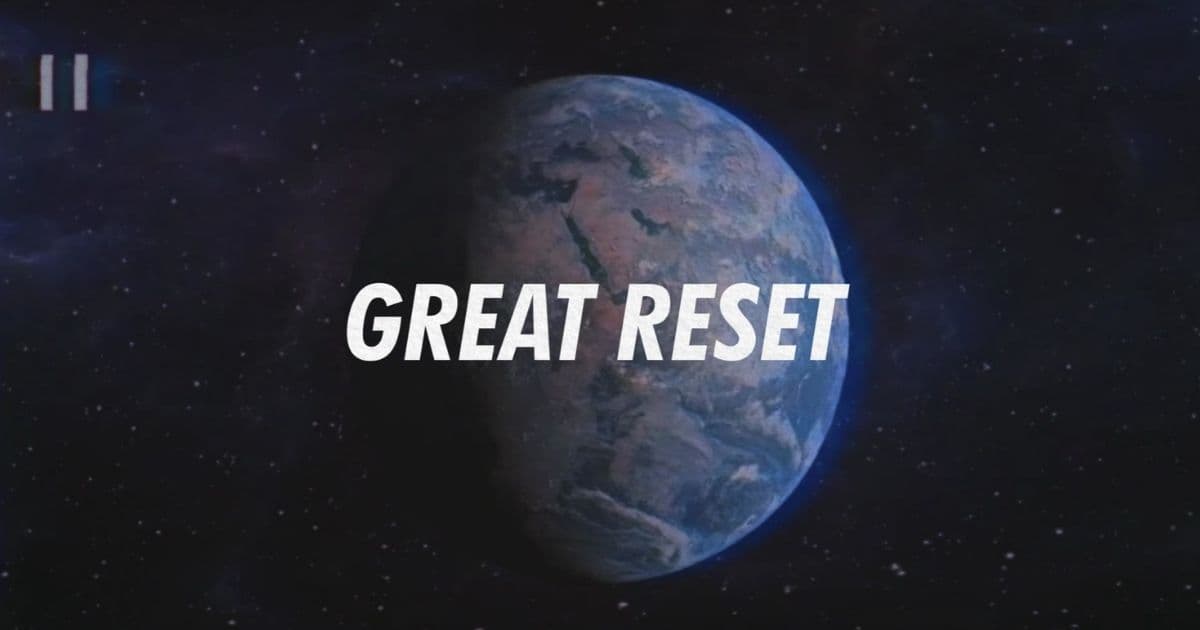
Klaus Schwab and the WEF published 'COVID-19: The Great Reset' in July 2020, openly proposing to use the pandemic to restructure capitalism around stakeholder economics, ESG metrics, and the Fourth Industrial Revolution. The WEF published the proposal on its website. Yet when critics raised concerns about the implications, they were labeled conspiracy theorists. Naomi Klein noted the Great Reset 'turned into a viral conspiracy theory purporting to expose something no one ever attempted to hide.'
“The World Economic Forum is using COVID as a pretext to implement a global economic restructuring they call 'The Great Reset.'”
What they said vs. what the evidence shows
“Claims about 'The Great Reset' are conspiracy theories that distort a legitimate policy discussion into sinister global plots.”
— Various fact-checkers and media outlets · Nov 2020
SourceFrom “crazy” to confirmed
The Claim Is Made
This is the moment they called it crazy.
In July 2020, as the world reeled from the initial shock of the COVID-19 pandemic, Klaus Schwab and the World Economic Forum published a detailed proposal for restructuring global capitalism. It wasn't hidden. It wasn't leaked. It was posted on the WEF's official website for anyone to read. Yet within months, people who referenced this very document faced accusations of peddling conspiracy theories.
This contradiction—between a publicly available policy proposal and its labeling as a conspiracy theory—reveals something crucial about how misinformation works. Sometimes the claim isn't that something was secretly done. Sometimes the claim is simply that something publicly proposed was significant enough to deserve serious scrutiny.
The Great Reset proposal emerged from a specific premise: the pandemic presented an opportunity to fundamentally reshape the global economic system. Schwab and other WEF leaders argued that the crisis could be leveraged to transition away from traditional capitalism toward what they called "stakeholder capitalism," emphasizing ESG metrics (environmental, social, and governance standards) and integration with the Fourth Industrial Revolution. This wasn't aspirational thinking—it was a published policy framework with concrete proposals.
When critics began pointing to this document and raising questions about its implications, the response was swift and dismissive. Rather than engaging with the substance of the proposals, critics were labeled as conspiracy theorists promoting unfounded fears. Naomi Klein, the author and activist, observed the peculiar dynamic: the Great Reset "turned into a viral conspiracy theory purporting to expose something no one ever attempted to hide." Her observation cuts to the heart of what happened.
Get the 5 biggest receipts every week, straight to your inbox — plus an exclusive PDF: The Top 10 Conspiracy Theories Proven True in 2025-2026. No spam. No agenda. Just the papers they couldn't hide.
You just read "The World Economic Forum's 'Great Reset' was a published pol…". We send ones like this every week.
No one's said anything yet. Be the first to drop your take.
Confirmed: They Were Right
The truth comes out. Officially documented.
Confirmed: They Were Right
The truth comes out. Officially documented.
The evidence supporting this claim's legitimacy is straightforward: the WEF's own website. The July 2020 article "Now is the time for a 'great reset'" exists in the historical record. The book "COVID-19: The Great Reset" by Klaus Schwab and Thierry Malleret was published and marketed by major publishers. These aren't debunked sources or misquotations. They're the original material in its unaltered form.
The significance of this case extends beyond the Great Reset itself. It demonstrates how the label "conspiracy theory" can be deployed to discourage examination of legitimate policy proposals, especially when those proposals involve powerful institutions and significant economic restructuring. It shows that a claim's status as fact or fiction isn't always binary—sometimes a claim is factually accurate while remaining politically contentious.
Understanding this distinction matters for public trust. When people raise legitimate questions about visible, documented initiatives and are dismissed rather than engaged, trust erodes. Citizens become more cynical about official institutions. And paradoxically, by dismissing documented claims as conspiracy theories, critics may inadvertently validate the broader skepticism of institutional transparency.
The Great Reset wasn't a secret plot exposed by brave truth-tellers. It was a public proposal that deserved public debate. That it became framed as a conspiracy theory—when the original source material was always available—says less about the critics who cited it and more about the state of institutional communication and public discourse. Dismissing documented claims as conspiratorial doesn't make them go away. It just makes people trust official institutions less.
Beat the odds
This had a 0.1% chance of leaking — someone talked anyway.
Conspirators
~500Large op
Secret kept
0.5 years
Time to 95% exposure
500+ years