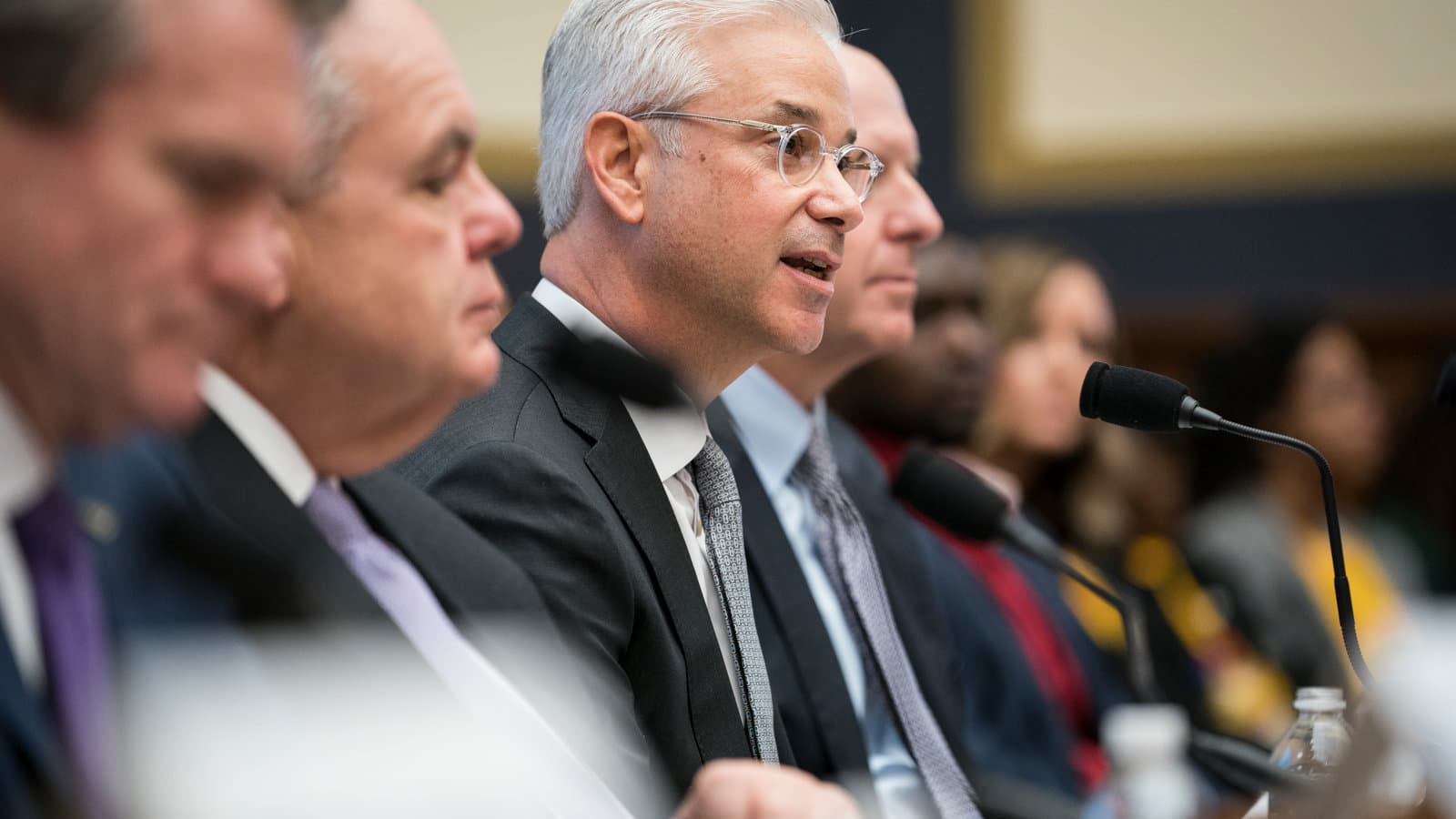
Internal Wells Fargo documents revealed executives created impossible sales quotas knowing employees would forge signatures and open fake accounts. Over 3.5 million unauthorized accounts were created to meet targets.
“We were unaware of widespread unauthorized account opening”
From “crazy” to confirmed
The Claim Is Made
This is the moment they called it crazy.
The question wasn't whether Wells Fargo executives knew. It was how many of them knew, and for how long.
Between 2002 and 2015, Wells Fargo employees opened approximately 3.5 million deposit and credit card accounts without customer authorization. They forged signatures, created fake PIN numbers, and shifted customer funds into accounts customers never requested. The scale was staggering. What made it darker was what internal documents later revealed: executives had designed a system that made this fraud inevitable.
At the heart of the scandal was Wells Fargo's "cross-sell" strategy—an aggressive push to increase the number of products each customer held. The bank set quotas so impossibly high that ordinary sales practices couldn't meet them. Employees at branches across the country faced relentless pressure from managers who threatened termination for missing targets. The quotas weren't mistakes or ambitious goals. They were, according to internal documents, deliberately calibrated to be unachievable through legitimate means.
When the scheme first surfaced in news reports around 2013, Wells Fargo's initial response followed a familiar corporate playbook. The bank blamed low-level employees, portraying the fraud as isolated misconduct by rogue workers. Executives claimed they had no knowledge of widespread account creation. The company fired roughly 5,300 employees—nearly all of them from frontline positions—while senior leadership faced no consequences. CEO John Stumpf insisted the problem was localized and that the bank had fixed it.
The public didn't fully understand what executives actually knew until regulators and investigators examined internal documents. These papers showed that senior management had received reports of suspicious account openings for years. Managers at Wells Fargo branches had flagged the problem. Risk officers had raised concerns. Rather than investigate or shut down the practice, some executives responded by demanding even higher sales targets. Some terminated employees who refused to participate in the scheme.
Get the 5 biggest receipts every week, straight to your inbox — plus an exclusive PDF: The Top 10 Conspiracy Theories Proven True in 2025-2026. No spam. No agenda. Just the papers they couldn't hide.
You just read "Wells Fargo executives incentivized employees to create mill…". We send ones like this every week.
No one's said anything yet. Be the first to drop your take.
By 2016, the narrative collapsed entirely. The Consumer Financial Protection Bureau fined Wells Fargo $100 million. The bank's stock price plummeted. Customers filed lawsuits. Congressional hearings exposed executive testimony that contradicted what internal documents showed. Stumpf eventually resigned. The bank ultimately settled claims for over $3 billion, including a criminal settlement in 2020 that acknowledged the scheme extended further than initially disclosed.
What emerged was evidence of a systemic problem: a corporate structure where impossible quotas, performance incentives, and inadequate oversight created conditions for massive fraud. This wasn't accidental. This was a business model that only worked if employees broke the law.
The Wells Fargo scandal matters because it revealed something uncomfortable about how corporations operate. Executives don't always issue explicit orders to defraud customers. They often create systems where breaking rules becomes the path to survival. When a bank's survival depends on sales numbers that can't be legitimately achieved, fraud becomes rational from the employee's perspective.
What changed? Wells Fargo imposed sales caps and removed executives, but structural issues in banking incentive systems remain. The scandal demonstrated that institutional knowledge can be willfully ignored, that corporate culture can prioritize metrics over ethics, and that "plausible deniability" can shield leadership even when evidence of their awareness exists.
The question wasn't really whether they knew. It was whether anyone in power cared enough to stop it while it was happening.