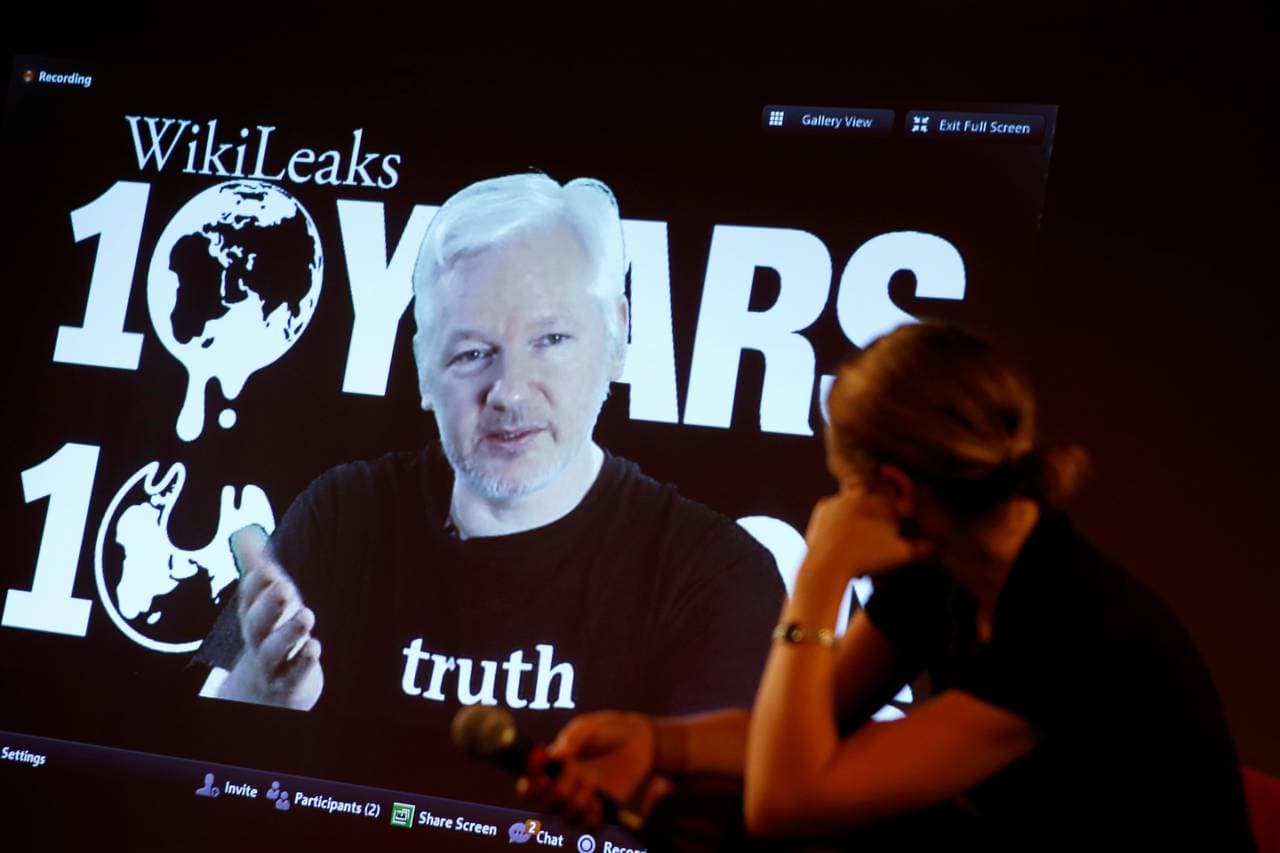
Since 2006, WikiLeaks has published millions of documents including the Iraq and Afghanistan war logs, State Department cables, CIA hacking tools (Vault 7), and DNC emails. Despite intense scrutiny, no document published by WikiLeaks has been shown to be fabricated. The releases revealed civilian casualties in Iraq, US spying on allies, CIA cyber weapons, and diplomatic machinations. Julian Assange was imprisoned for publishing classified material.
“Everything WikiLeaks has published is authentic. Not a single document has been proven false, yet they call us criminals for publishing the truth.”
What they said vs. what the evidence shows
“WikiLeaks' publication of classified documents is an attack on the international community and puts lives at risk. This is not whistleblowing.”
— Secretary of State Hillary Clinton · Nov 2010
SourceFrom “crazy” to confirmed
The Claim Is Made
This is the moment they called it crazy.
When WikiLeaks began publishing classified documents in 2006, government officials and media institutions faced an immediate credibility problem. The organization had released material that contradicted official narratives, and the only effective response seemed obvious: claim the documents were fake, misleading, or dangerously incomplete.
Yet something unexpected happened. Despite years of intense scrutiny from intelligence agencies, journalists, and academics—people with every incentive to find errors—not a single WikiLeaks publication has been proven to contain fabricated documents.
The claim that WikiLeaks publishes only authentic material emerged organically from the organization's early releases. When the Iraq War Logs dropped in 2010, containing nearly 392,000 documents detailing civilian casualties and battlefield incidents, the U.S. military and State Department immediately questioned their authenticity. Officials suggested the documents were selectively curated, taken out of context, or potentially altered to embarrass American forces. These dismissals made sense as a defensive posture—admitting the documents' authenticity would mean acknowledging years of concealed civilian deaths and strategic missteps.
The Guardian, The New York Times, and Der Spiegel, which received copies of the war logs for verification, conducted their own forensic analysis. They cross-referenced dates, locations, unit designations, and casualty counts against military records. Their investigation confirmed the documents' legitimacy and revealed previously unknown details about civilian casualties, including the Granai airstrike that killed dozens of Afghan civilians and was initially denied by NATO forces.
Get the 5 biggest receipts every week, straight to your inbox — plus an exclusive PDF: The Top 10 Conspiracy Theories Proven True in 2025-2026. No spam. No agenda. Just the papers they couldn't hide.
You just read "WikiLeaks published hundreds of thousands of classified docu…". We send ones like this every week.
No one's said anything yet. Be the first to drop your take.
Confirmed: They Were Right
The truth comes out. Officially documented.
Confirmed: They Were Right
The truth comes out. Officially documented.
Similar verification occurred with subsequent releases. The State Department cables published in 2010 contained information that diplomats confirmed as genuine, even as they protested the breach. The 2016 DNC email release matched communications patterns and metadata that cybersecurity experts recognized as consistent with actual email systems. Even the Vault 7 release in 2017, exposing CIA hacking tools, was never disputed by the agency on authenticity grounds—only on the damage its exposure caused.
The absence of proven fabrications matters more than it might initially appear. In an era of deepfakes, doctored images, and deliberate disinformation, the integrity of a document source becomes a fundamental question. WikiLeaks has maintained what might be called perfect authenticity—not because the organization is infallible, but because publishing false documents would immediately destroy its credibility and its entire purpose.
This creates a peculiar situation for public accountability. WikiLeaks forced governments and institutions to defend their actions based on authentic evidence of those actions, rather than denying the evidence itself. The Iraq War Logs didn't create the civilian casualties they documented; they simply exposed what had already happened.
The implications cut deeper than any single scandal. When official institutions cannot challenge the authenticity of leaked documents, they're forced to defend the substance of their decisions and operations. This dynamic has made WikiLeaks simultaneously one of the most valuable and most controversial sources in modern investigative journalism.
The verified track record doesn't resolve debates about whether WikiLeaks acted responsibly in redacting sensitive information, or whether national security was genuinely threatened. But it does establish one indisputable fact: when it comes to authenticity, the organization has maintained a standard that government agencies, despite vast resources and institutional power, have been unable to undermine.
Beat the odds
This had a 0.6% chance of leaking — someone talked anyway.
Conspirators
~200Network
Secret kept
6.9 years
Time to 95% exposure
500+ years