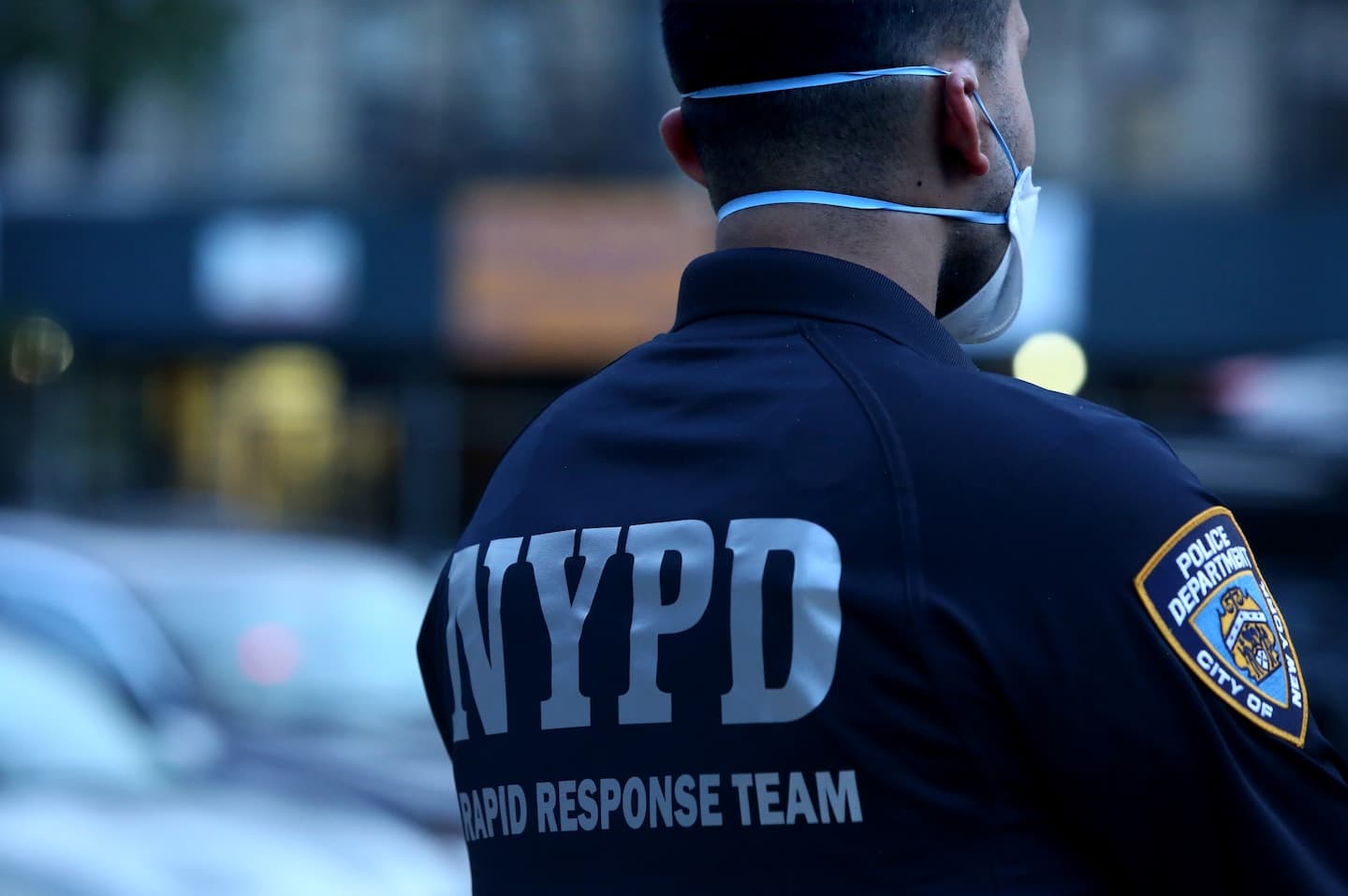
NYPD Officer Adrian Schoolcraft secretly recorded hundreds of hours of roll calls from 2008-2009, documenting supervisors ordering officers to meet arrest and summons quotas and downgrade crimes to improve statistics. When Schoolcraft reported the misconduct to Internal Affairs and the NYPD QAD, he was forcibly removed from his apartment by a dozen officers, handcuffed to a gurney, and committed to the Jamaica Hospital psych ward for six days against his will. He was suspended without pay and placed on 'modified assignment' for years. In 2015, NYC settled for $600,000.
“I recorded everything. The quotas, the pressure to downgrade crimes, the retaliation. They put me in a psych ward for telling the truth.”
From “crazy” to confirmed
The Claim Is Made
This is the moment they called it crazy.
In 2008, an NYPD officer working the night shift at the 81st Precinct in Brooklyn began hitting record on his personal device during roll calls. What Adrian Schoolcraft captured over the next year would become one of the most damaging pieces of evidence against the police department—and lead to his forced hospitalization.
Schoolcraft documented hundreds of hours of conversations in which his supervisors explicitly ordered officers to meet arrest and summons quotas. Sergeants and commanding officers told their teams to write more tickets, make more stops, and find reasons to detain people, regardless of actual criminal activity. The tapes also revealed systematic crime downgrading: supervisors directed officers to reclassify serious crimes as misdemeanors or civilian complaints to artificially lower precinct crime statistics.
When Schoolcraft reported what he'd witnessed to Internal Affairs and the NYPD's Quality Assurance Division, the department's response was swift and severe. In May 2010, a dozen NYPD officers arrived at his apartment. Schoolcraft was handcuffed to a gurney and forcibly transported to Jamaica Hospital, where he was committed to the psychiatric ward for six days without his consent. The official justification: he was a danger to himself.
Schoolcraft was not mentally ill. He was a whistleblower, and the NYPD knew it.
The department suspended him without pay and assigned him to "modified duty" for years—a form of professional limbo designed to squeeze out officers deemed problems. Internal Affairs never seriously investigated his allegations. Instead, the system moved to discredit him by questioning his mental state. The message was clear: report misconduct, and face retaliation.
But Schoolcraft had kept his tapes. He released them to the Village Voice in 2010, which published a landmark investigation titled "The NYPD Tapes: Inside Bed-Stuy's 81st Precinct." The recordings provided unambiguous evidence of what many New Yorkers already suspected but couldn't prove—that policing in the city operated under a numbers game, not a public safety mandate. Sergeants could be heard saying things like, "I don't care if it's a radio job or not, you're going out and you're gonna find stuff."
Get the 5 biggest receipts every week, straight to your inbox — plus an exclusive PDF: The Top 10 Conspiracy Theories Proven True in 2025-2026. No spam. No agenda. Just the papers they couldn't hide.
You just read "An NYPD officer secretly recorded his superiors ordering quo…". We send ones like this every week.
No one's said anything yet. Be the first to drop your take.
Confirmed: They Were Right
The truth comes out. Officially documented.
Confirmed: They Were Right
The truth comes out. Officially documented.
The evidence was overwhelming. These weren't allegations or hearsay. These were the actual voices of NYPD leadership ordering illegal practices that violated officers' rights and citizens' constitutional protections.
After years of fighting and public pressure, New York City settled with Schoolcraft in 2015 for $600,000. The NYPD never admitted wrongdoing in an official capacity, though the settlement itself was a de facto acknowledgment. Schoolcraft's name was eventually cleared, but the damage to his career was irreversible.
What makes Schoolcraft's case significant is what it revealed about institutional accountability. A police officer did everything by the book—documented evidence, reported through proper channels, trusted the system. The system responded with force and institutional punishment. Only because he held onto his recordings and went public did the truth eventually matter.
The tapes proved that quota-based policing wasn't speculation. It was policy. And when someone tried to stop it, they faced the full weight of retaliation. For anyone wondering whether speaking up against authority carries real consequences, Schoolcraft's story is the answer.