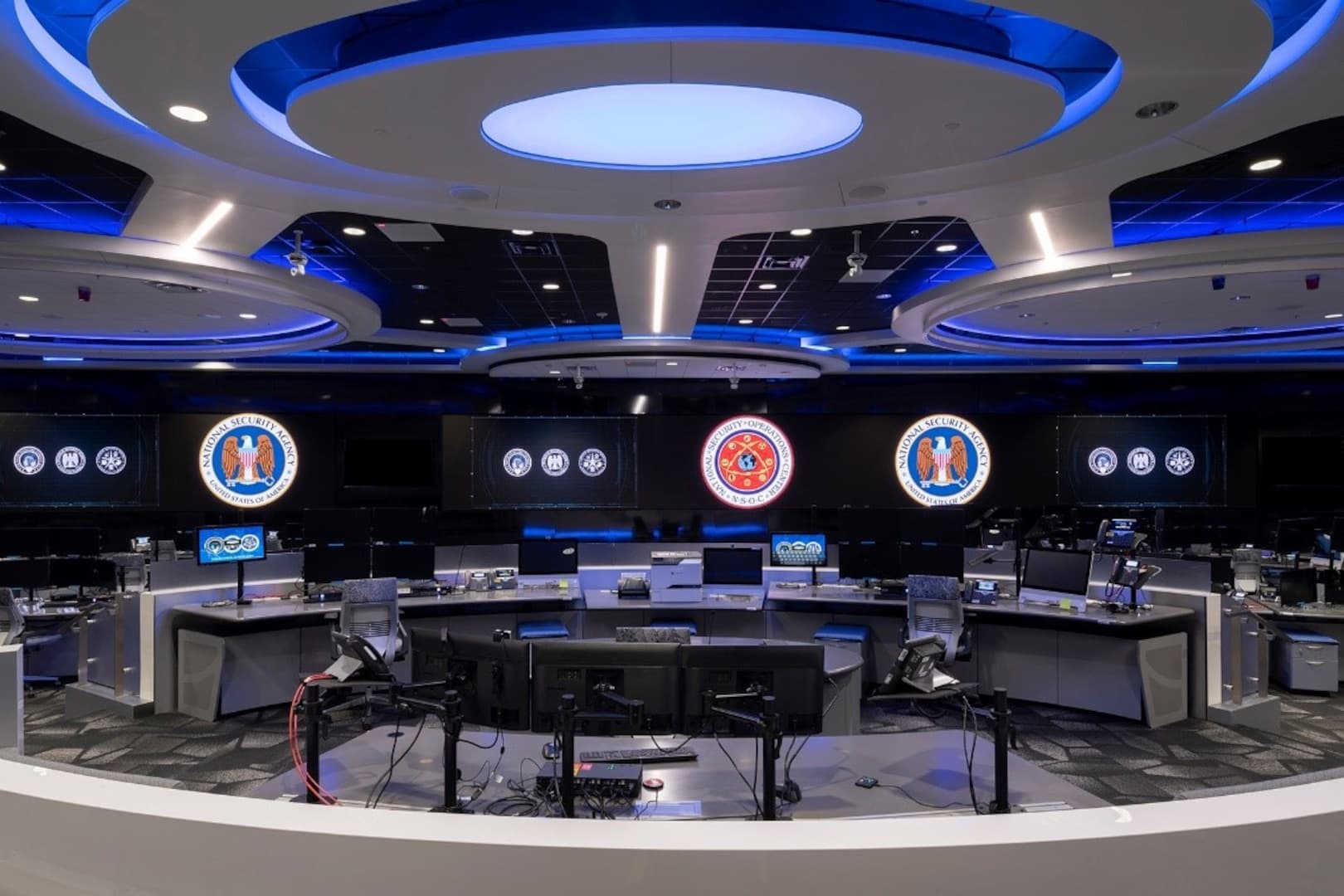
Former AT&T technician Mark Klein revealed that AT&T installed a secret room allowing NSA to intercept all internet traffic. Court documents and technical evidence confirmed the existence of this dragnet surveillance program.
“AT&T does not provide government agencies with access to customer communications without proper legal authorization”
From “crazy” to confirmed
The Claim Is Made
This is the moment they called it crazy.
A technician installing fiber-optic equipment in a San Francisco AT&T facility noticed something that shouldn't have been there. In 2006, Mark Klein discovered Room 641A—a sealed chamber on the 7th floor of 611 Folsom Street containing sophisticated network equipment. What he found inside would eventually prove that mass surveillance of American internet traffic was not theoretical, but operational and systematic.
Klein knew what he was looking at. With nearly two decades of experience at AT&T, he recognized the equipment as a Narus STA 6400—a device capable of copying and analyzing vast amounts of internet traffic flowing through AT&T's network backbone. More troubling was the physical isolation of the room and its connection methodology. The equipment wasn't there to manage AT&T's infrastructure; it was there to siphon copies of data to another location entirely. Everything pointed to federal intelligence agencies.
When Klein first reported his concerns to AT&T management, he was dismissed. The company wasn't interested in his observations. He then contacted the Electronic Frontier Foundation in 2006 with technical documentation that would form the basis of the case Hepting v. AT&T. The lawsuit alleged that AT&T had violated the Wiretap Act and the Stored Communications Act by providing the NSA with direct access to massive volumes of Americans' phone and internet communications.
The government's initial response was predictable—deny and classify. Officials claimed the program was necessary for national security. The Bush administration invoked state secrets privilege, arguing that even discussing the surveillance would compromise intelligence operations. Courts initially sided with the government on these grounds. For years, the case appeared destined for dismissal on technicalities rather than on its merits.
Get the 5 biggest receipts every week, straight to your inbox — plus an exclusive PDF: The Top 10 Conspiracy Theories Proven True in 2025-2026. No spam. No agenda. Just the papers they couldn't hide.
You just read "AT&T Secretly Provided NSA with Room 641A for Mass Internet …". We send ones like this every week.
No one's said anything yet. Be the first to drop your take.
But Klein's evidence was specific and technical, not vague or speculative. He documented the equipment model numbers, the fiber-optic splitters that diverted traffic, and the sealed nature of the room itself. He identified fellow technicians who had worked on the installation. The Electronic Frontier Foundation preserved these details even as the legal case stalled. In 2013, documents released by Edward Snowden confirmed the basic architecture Klein had described years earlier—the NSA had indeed operated a domestic surveillance program that accessed Americans' internet communications en masse through arrangements with telecommunications companies.
Court documents and subsequent revelations made clear this wasn't limited to AT&T. Other carriers had similar arrangements. The scope was breathtaking: not targeted surveillance of suspects, but blanket interception of internet traffic belonging to millions of ordinary Americans who had committed no crime and were suspected of nothing.
What makes this case significant isn't just that Klein was right. It's that he was ignored, marginalized, and ultimately vindicated only because another whistleblower released classified documents years later. The system created no mechanism for his legitimate concerns to be properly evaluated. He reported to his employer—they ignored him. He reported to authorities—they claimed national security. He went to court—the courts upheld government secrecy. Only unauthorized leaks forced accountability.
This pattern should concern anyone who cares about institutional oversight. When whistleblowers cannot be heard through official channels, when courts defer entirely to government claims of secrecy, and when the public has no way of knowing what's being done in their name—the democratic mechanisms that are supposed to constrain power simply fail. Klein's discovery of Room 641A mattered. But his fight to expose it revealed something potentially more important: how little protection exists for those who try to tell uncomfortable truths.
Beat the odds
This had a 1.2% chance of leaking — someone talked anyway.
Conspirators
~150Network
Secret kept
20.1 years
Time to 95% exposure
500+ years