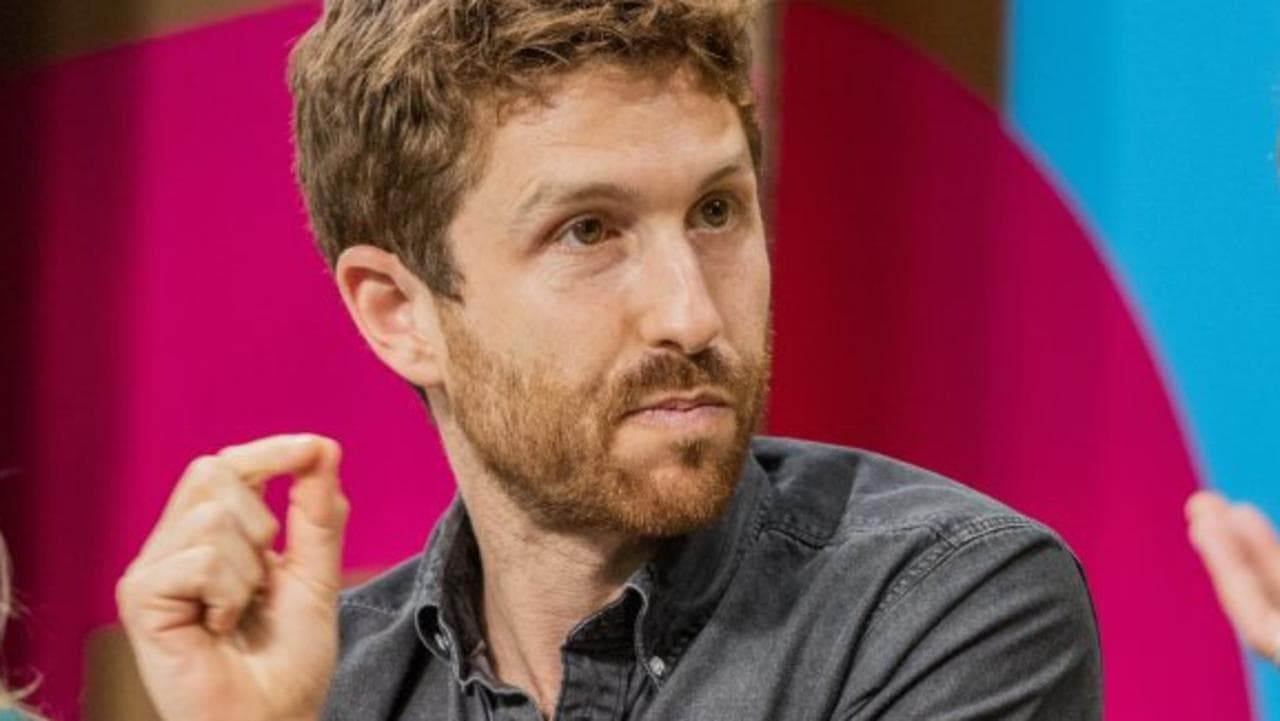
Tristan Harris, a former Google Design Ethicist, became the tech industry's most prominent whistleblower by exposing how tech companies systematically use persuasive design techniques — pull-to-refresh (slot machine psychology), infinite scroll, notification bombardment, and social approval loops — to maximize engagement regardless of user wellbeing. His 2017 presentation 'A Handful of People Working at a Handful of Tech Companies Steer the Thoughts of Billions' became the basis for Netflix's 'The Social Dilemma.' Harris co-founded the Center for Humane Technology.
“Tech companies are using the same psychological tricks as slot machines to hijack our attention. A handful of designers at a few companies are steering the thoughts of billions of people.”
From “crazy” to confirmed
The Claim Is Made
This is the moment they called it crazy.
When Tristan Harris walked away from Google in 2015, he carried with him something tech executives preferred to keep hidden: detailed knowledge of how the industry's best engineers deliberately manipulated billions of people. Harris wasn't a disgruntled employee making vague complaints. He was a design ethicist—someone hired specifically to think about the moral implications of product decisions—and he had watched those concerns get systematically ignored.
Harris began warning that major tech companies had weaponized psychology against their users. They borrowed techniques from slot machines—the pull-to-refresh that mimicked the lever pull, the endless scroll that replaced the mechanical reel spin. They deployed notification badges as social approval mechanisms and timed notifications to hit dopamine receptors at precisely calibrated moments. The goal wasn't to make better products. It was to maximize engagement metrics regardless of whether engagement served users' actual interests.
Tech leadership initially dismissed him as an outlier, a moralist out of step with innovation. When Harris started giving talks about his concerns, the industry's public position remained consistent: we're just building products people love. Critics argued Harris was overstating the deliberateness of design choices, suggesting they were accidental byproducts rather than engineered outcomes. The companies maintained that blaming tech for attention problems ignored personal responsibility.
Then the documentation started arriving. Internal emails, product design presentations, and testimony from other engineers corroborated Harris's central claim: major platforms had specifically optimized for addictiveness. In his 2017 presentation titled "A Handful of People Working at a Handful of Tech Companies Steer the Thoughts of Billions," Harris walked through the mechanics with receipts. Netflix's 2020 documentary "The Social Dilemma" brought his warnings to mainstream audiences, featuring interviews with former engineers and product managers who confirmed the practices Harris had described.
Get the 5 biggest receipts every week, straight to your inbox — plus an exclusive PDF: The Top 10 Conspiracy Theories Proven True in 2025-2026. No spam. No agenda. Just the papers they couldn't hide.
You just read "Former Google ethicist confirmed tech companies use slot-mac…". We send ones like this every week.
No one's said anything yet. Be the first to drop your take.
Confirmed: They Were Right
The truth comes out. Officially documented.
Confirmed: They Were Right
The truth comes out. Officially documented.
The documentary didn't reveal anything Harris hadn't already explained. What it did was make the invisible visible. Viewers saw how the same techniques used to keep people pulling slot machine levers were deployed in their pockets, designed to capture children's developing brains and exploit psychological vulnerabilities in adults. Former Facebook executives described how the platform's engagement algorithm had been knowingly configured to amplify outrage over accuracy.
Harris co-founded the Center for Humane Technology to propose alternatives—design practices that respected user autonomy instead of exploiting it. His work shifted from whistleblowing to advocacy, though the essential message remained unchanged: the current incentive structure of tech companies systematically conflicts with human wellbeing.
What matters now is that Harris's claim moved beyond speculation to documented fact. We have names, dates, and the words of insiders confirming that persuasive technology was not accidental but engineered. This verification matters because it establishes that billions of people's attention, sleep patterns, and mental health weren't destroyed by accident or inevitability. They were shaped by deliberate choices made in offices in Mountain View and Menlo Park.
That knowledge demands a response. It's one thing to accept that technology is addictive; it's another to accept that the addiction was planned.
Beat the odds
This had a 0.2% chance of leaking — someone talked anyway.
Conspirators
~150Network
Secret kept
3.9 years
Time to 95% exposure
500+ years