Bank of Credit and Commerce International served as CIA front for arms deals and drug money laundering. Regulators ignored evidence of criminal activity for years before 1991 collapse.
“BCCI is a legitimate international banking institution subject to proper oversight”
From “crazy” to confirmed
The Claim Is Made
This is the moment they called it crazy.
For years, the Bank of Credit and Commerce International operated as one of the world's largest financial institutions, with offices in 78 countries and assets exceeding $20 billion. What few people knew was that their vaults were allegedly handling something far more valuable than money: secrets that implicated some of the world's most powerful intelligence agencies.
The claim was straightforward but explosive: BCCI functioned as a front for CIA operations, facilitating money laundering for drug trafficking networks and covert arms deals that official channels couldn't touch. Those making the allegation pointed to documented connections between the bank and intelligence operations spanning decades, relationships that continued even as evidence mounted of serious criminal activity.
When the allegations first surfaced, official denials came swiftly and with authority. Regulators in multiple countries insisted they had found no evidence of CIA involvement. The bank's executives claimed innocence. American intelligence officials deflected questions about any institutional relationship. The narrative from Washington was consistent: BCCI was a rogue operation, and any connections to intelligence work were coincidental or unauthorized by rogue actors operating without approval.
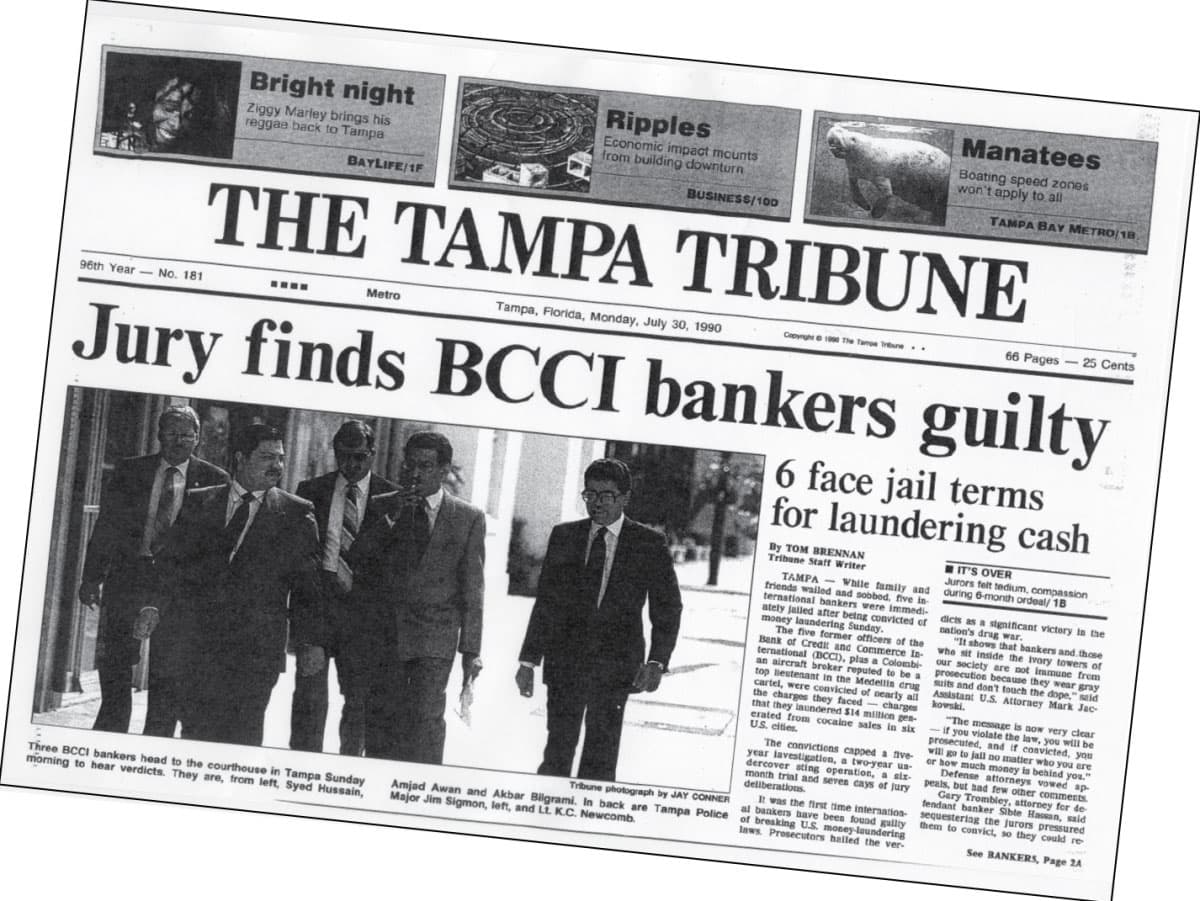
But the documentary record told a different story. The Senate Committee on Foreign Relations launched an investigation in the late 1980s, driven partly by persistent reporting from journalists and partly by the sheer scale of fraud becoming impossible to ignore. What investigators uncovered was damning.
The 1992 Senate Report 102-140, titled "The BCCI Affair," documented that BCCI had indeed maintained institutional relationships with American . More significantly, the report detailed how the bank had been used to facilitate covert financing for operations that couldn't be openly funded. Drug money flowed through the system. Weapons deals that official policy opposed were financed through BCCI accounts. And crucially, federal regulators had evidence of these activities years before the bank's 1991 collapse—evidence they chose not to act upon aggressively.
Get the 5 biggest receipts every week, straight to your inbox — plus an exclusive PDF: The Top 10 Conspiracy Theories Proven True in 2025-2026. No spam. No agenda. Just the papers they couldn't hide.
You just read "BCCI banking scandal involved CIA money laundering and drug …". We send ones like this every week.
No one's said anything yet. Be the first to drop your take.
The report revealed that multiple U.S. agencies, including the CIA, had actual knowledge of BCCI's involvement in drug trafficking and money laundering, yet regulatory action remained limited and delayed. Enforcement efforts that should have occurred in the 1980s didn't materialize with full force until the bank was already collapsing. Some investigators concluded this wasn't bureaucratic incompetence—it was deliberate oversight of an institution serving intelligence purposes that transcended normal banking regulations.
What makes this case significant isn't just that one large bank engaged in criminal activity. Thousands of financial institutions have collapsed due to fraud. What matters is that this particular institution operated with apparent immunity from normal regulatory scrutiny specifically because it served state intelligence purposes. The claim that BCCI was a CIA front wasn't merely true—it was knowingly true to people inside the regulatory system.
This matters profoundly for public trust. It demonstrated that intelligence agencies could and would operate outside normal legal constraints when deemed necessary. It showed that financial regulators would subordinate their mandate to protect the public in favor of national security considerations. Perhaps most importantly, it revealed that the system had mechanisms built in to shield certain institutions from oversight if they served the right purposes. That's not a conspiracy theory that was debunked—it's institutional reality that was eventually documented.
Unlikely leak
Only 6.7% chance this would come out. It did.
Conspirators
~500Large op
Secret kept
34.9 years
Time to 95% exposure
500+ years