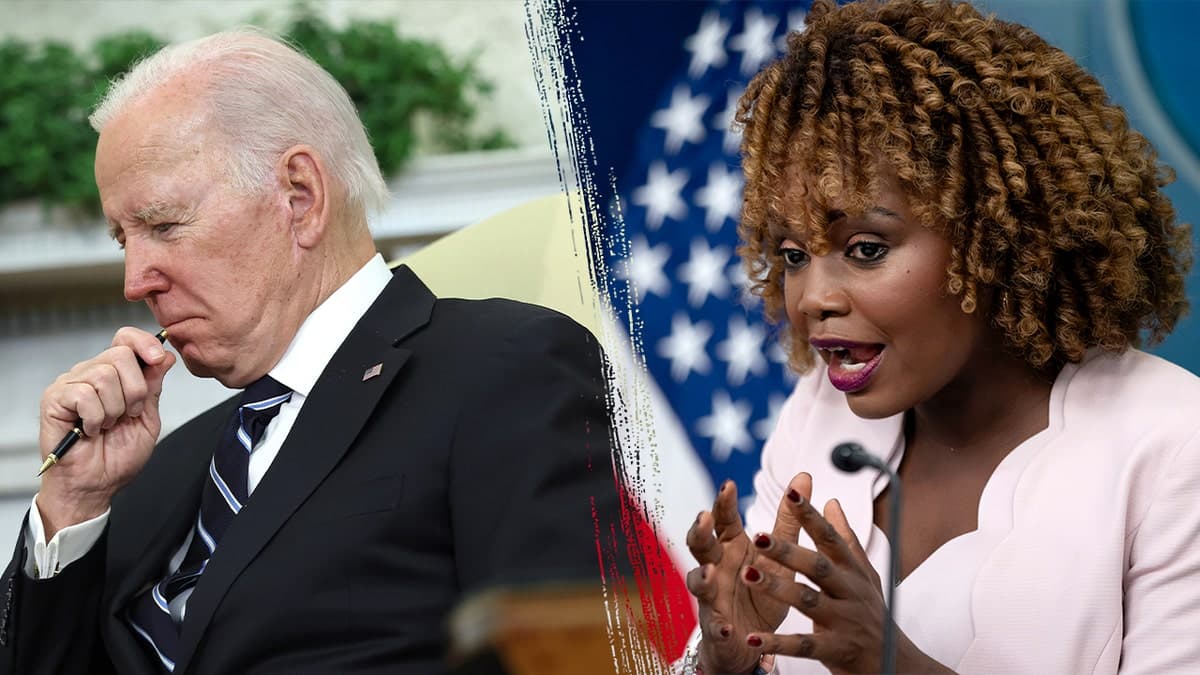
For years, concerns about President Biden's cognitive abilities were dismissed as 'cheap fakes' and right-wing disinformation. White House staff actively managed his schedule to hide signs of decline. After the June 2024 debate performance made denial impossible, multiple outlets reported that insiders had been aware of the president's deteriorating condition for months or years. Biden withdrew from the 2024 race weeks later.
“Biden is clearly experiencing cognitive decline and the White House is covering it up. This is being hidden from the American public.”
What they said vs. what the evidence shows
“These are cheap fakes — manipulated videos designed to paint a false narrative about the President's health.”
— White House Press Secretary Karine Jean-Pierre · Jun 2024
SourceFrom “crazy” to confirmed
The Claim Is Made
This is the moment they called it crazy.
The question of what White House officials knew about President Biden's cognitive decline—and when they knew it—has shifted from partisan speculation to documented fact. What was once dismissed as conspiracy theory or right-wing disinformation is now acknowledged by the very institutions that suppressed the concern.
For years, reports about the president's mental acuity were met with fierce resistance. Critics who raised questions about his verbal stumbles, confusion during public appearances, and difficulty following conversations were labeled as spreading "cheap fakes"—a term White House Press Secretary Karine Jean-Pierre used repeatedly when addressing concerns about doctored or misleading videos. Major media outlets largely declined to investigate the claims seriously, treating them as inherently partisan attacks rather than legitimate questions about a sitting president's fitness for office.
This wasn't coincidence. According to reporting by the New York Times and Wall Street Journal, White House staff had been actively managing the president's schedule to minimize public exposure during periods of visible decline. The strategy was methodical: shorter public events, carefully controlled settings, and limited unscripted interactions with press. These weren't decisions made in real time during a single crisis. They were sustained practices that reflected ongoing, documented concerns among people working directly with the president.
The watershed moment came on June 27, 2024, when Biden's debate performance against Donald Trump made denial untenable. Viewers across the political spectrum witnessed what senior officials had apparently known for some time. Within weeks, the New York Times published interviews with unnamed White House insiders describing their months or even years of worry about the president's condition. The Journal similarly reported on how aides had been managing his decline as an open secret within the administration.
Get the 5 biggest receipts every week, straight to your inbox — plus an exclusive PDF: The Top 10 Conspiracy Theories Proven True in 2025-2026. No spam. No agenda. Just the papers they couldn't hide.
You just read "Biden's cognitive decline was covered up by White House staf…". We send ones like this every week.
No one's said anything yet. Be the first to drop your take.
Confirmed: They Were Right
The truth comes out. Officially documented.
Confirmed: They Were Right
The truth comes out. Officially documented.
Biden withdrew from the 2024 race on July 21, 2024—less than a month after the debate that exposed what officials had been privately managing. His exit statement acknowledged his age and declining abilities, providing the clearest admission that the underlying concern had merit.
The mechanics of how this happened matter. This wasn't simply a case of officials being wrong. It was a coordinated effort to shape public perception using language designed to discredit those asking legitimate questions. "Cheap fake" became the dismissive phrase of choice—implying that anyone concerned was either gullible or malicious. Media outlets largely accepted this framing rather than investigating independently.
What emerges from this documented sequence is a picture of institutional gatekeeping that failed. The people closest to the president knew something was wrong. Rather than allowing democratic processes to function transparently, the system worked to suppress, dismiss, and delegitimize concerns. Only when the evidence became impossible to ignore did the narrative shift.
This has implications beyond Biden's presidency. It reveals how official denials can be coordinated across government and media institutions, and how language—like "cheap fakes"—can be weaponized to shut down legitimate inquiry. The public was told not to trust their own concerns. Insiders knew better but said nothing until congressional testimony and investigative reporting forced the issue.
The question now is whether institutions will acknowledge how this happened and why, or whether this episode will be treated as a unique problem rather than a systemic one. Public trust doesn't recover from being told lies are truths—it recovers only through honest reckoning with how those lies were constructed and who benefited from them.
Beat the odds
This had a 0.8% chance of leaking — someone talked anyway.
Conspirators
~500Large op
Secret kept
3.8 years
Time to 95% exposure
500+ years