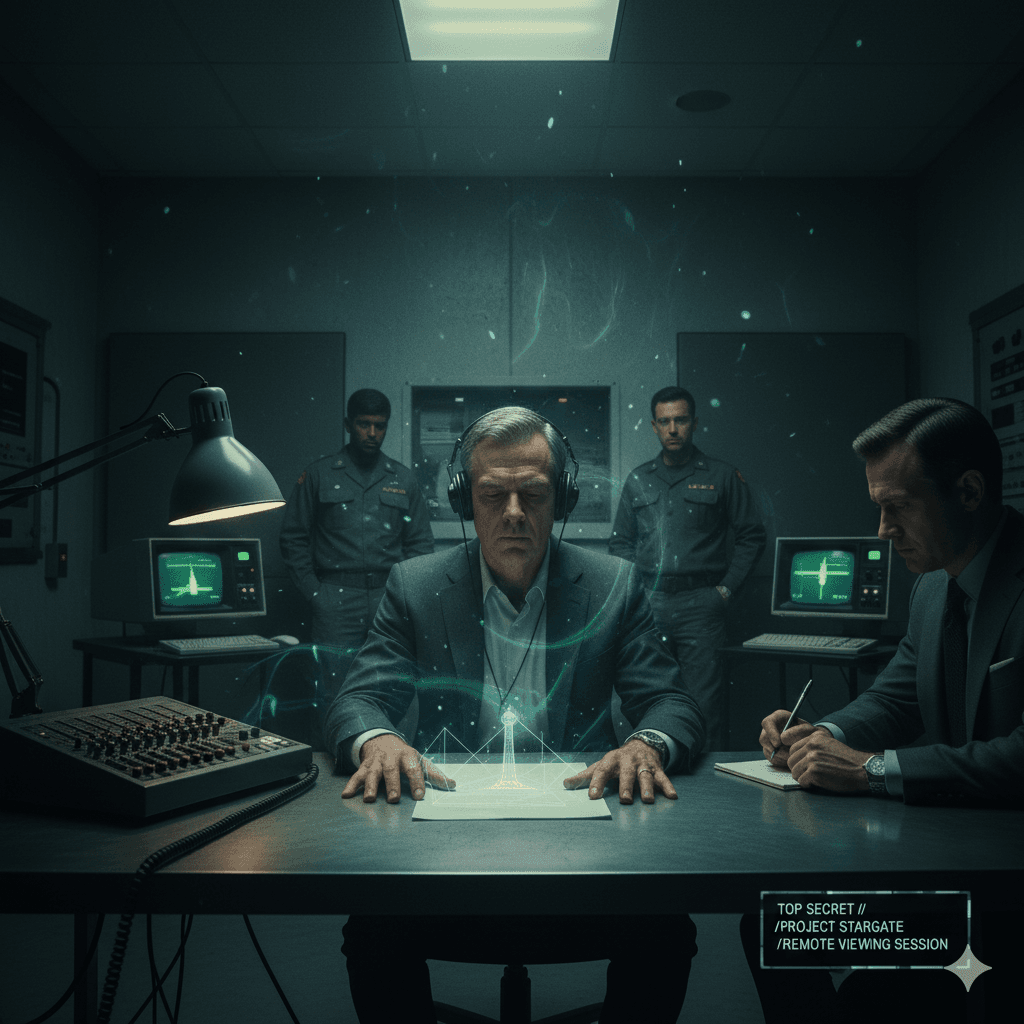
From 1975 to 1995, the CIA, DIA, and Army funded the Stargate Project at Fort Meade, Maryland, spending $20 million to investigate remote viewing — the claimed psychic ability to perceive distant locations. Remote viewers like Ingo Swann and Pat Price claimed to describe Soviet military installations, hostage locations, and submarine deployments with alleged accuracy. Statistician Jessica Utts found results 5-15% above chance and called the effect 'replicable.' However, the CIA terminated the program in 1995 after an independent review concluded that while statistical anomalies existed, remote viewing never produced actionable intelligence for any operation. The full archive of 12,000+ documents was declassified and published by the CIA in 2017.
“Remote viewing is real. We used it operationally for military intelligence purposes. The statistical results were well above chance.”
What they said vs. what the evidence shows
“The claim that ESP has been proven is premature, to say the least. The findings have yet to be replicated independently, and no remote viewing report ever provided actionable intelligence.”
— Ray Hyman (Psychologist / AIR Reviewer) · Sep 1995
SourceFrom “crazy” to confirmed
The Claim Is Made
This is the moment they called it crazy.
For decades, the U.S. government dismissed claims that it had investigated psychic espionage as the stuff of science fiction. Yet between 1975 and 1995, the CIA, Defense Intelligence Agency, and Army quietly spent $20 million funding exactly that—a classified program called Stargate that operated out of Fort Meade, Maryland, tasking remote viewers with describing Soviet military installations and hostage locations using purported psychic abilities alone.
The program existed because officials took the possibility seriously. During the Cold War, American intelligence agencies worried that the Soviet Union might be developing psychic weapons or intelligence capabilities. Rather than cede any potential advantage, they funded research into remote viewing—the claimed ability to perceive distant or hidden locations through consciousness alone. Remote viewers like Ingo Swann and Pat Price claimed they could sketch Soviet facilities, identify submarine deployments, and locate missing hostages with surprising accuracy.
For two decades, this wasn't conspiracy theory whispered in the margins of fringe media. It was government-funded research with institutional backing, classified budgets, and official protocols. The program generated thousands of pages of documentation. Yet publicly, official channels dismissed remote viewing as pseudoscience, offering no acknowledgment that taxpayers were funding its investigation.
The turning point came in 1995 when the CIA terminated Stargate. An independent review acknowledged something remarkable: statistician Jessica Utts, who analyzed the data, found that remote viewing results consistently exceeded chance by 5 to 15 percent. The effect appeared statistically replicable. Yet the same review concluded that despite these anomalies, remote viewing had never produced actionable intelligence that actually guided any operation or prevented any threat.
Get the 5 biggest receipts every week, straight to your inbox — plus an exclusive PDF: The Top 10 Conspiracy Theories Proven True in 2025-2026. No spam. No agenda. Just the papers they couldn't hide.
You just read "The CIA ran a secret $20M psychic spy program (Stargate Proj…". We send ones like this every week.
No one's said anything yet. Be the first to drop your take.
Confirmed: They Were Right
The truth comes out. Officially documented.
Confirmed: They Were Right
The truth comes out. Officially documented.
This distinction matters. The claim that "the CIA ran a secret psychic spy program" is entirely true. The claim that it worked is only partially true. The statistical evidence suggested something unusual was happening, but it wasn't useful. The program was classified not because it represented a breakthrough in human consciousness, but because admitting to its existence seemed more damaging than its results warranted.
In 2017, the CIA declassified over 12,000 documents from the Stargate archive and published them in the CIA Reading Room. Researchers, journalists, and curious citizens could finally examine the full record themselves. The documents confirmed decades of rumors. The program had existed. Money had been spent. Researchers had investigated. The results had been genuinely ambiguous—real statistical anomalies that produced nothing of intelligence value.
What makes Stargate instructive isn't whether psychic abilities are real. It's that governments can fund unusual research, classify it, deny it publicly, and later reveal it without meaningful accountability or transparency. Citizens were kept in the dark not for security reasons, but for institutional ones. The secrecy served the government's preference for unquestioned authority more than it served national defense.
This is why Stargate matters for public trust. It demonstrates that "conspiracy theory" and "documented fact" aren't always opposites. Sometimes fringe claims turn out to be literally true—just not for the reasons believers imagined. The harder lesson is recognizing that official denial doesn't mean something didn't happen. It often just means the truth was kept classified until it seemed safe to release.
Unlikely leak
Only 8.1% chance this would come out. It did.
Conspirators
~500Large op
Secret kept
42 years
Time to 95% exposure
500+ years