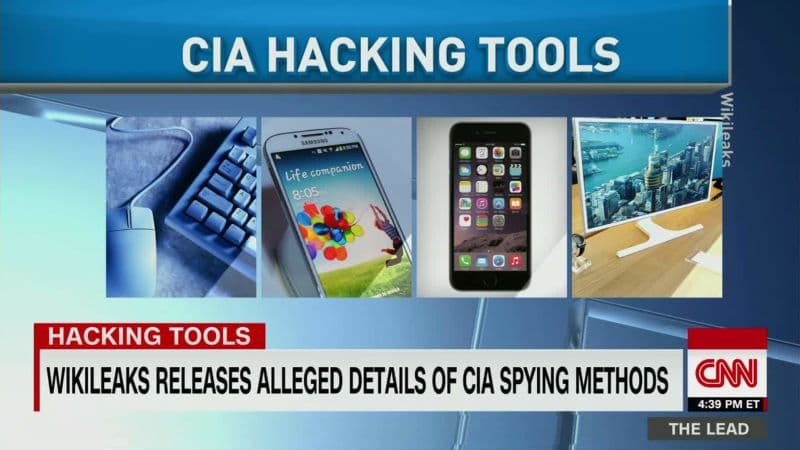
WikiLeaks' 2017 Vault 7 release exposed the CIA's arsenal of cyber weapons. 'Weeping Angel,' co-developed with MI5, turned Samsung smart TVs into covert listening devices using a 'Fake Off' mode that made TVs appear powered down while secretly recording audio. The CIA's Mobile Devices Branch could remotely hack iPhones and Android phones, activating cameras and microphones. Other tools targeted car computer systems, which WikiLeaks noted could be used for 'nearly undetectable assassinations.'
“The CIA can hack your smart TV, your phone, your car — everything with a chip in it is a potential surveillance device.”
From “crazy” to confirmed
The Claim Is Made
This is the moment they called it crazy.
Your television might be watching you. It sounds like the kind of paranoid claim that gets dismissed as conspiracy theory, yet in 2017, WikiLeaks published thousands of pages of classified CIA documents proving exactly that.
The assertion was straightforward: U.S. intelligence agencies had developed sophisticated tools to turn consumer electronics into surveillance devices. Specifically, they claimed the CIA could hack Samsung smart TVs, iPhones, Android phones, and vehicle computer systems to remotely activate cameras, microphones, and tracking capabilities. Most people dismissed this as technical fantasy—the kind of thing that happens only in spy movies.
Government officials and intelligence agencies remained largely silent on the specific claims, which itself spoke volumes. When pressed, representatives neither confirmed nor denied the existence of these capabilities, citing classification concerns. This non-response became the official response—a strategy that allowed the government to neither validate nor refute the allegations. Mainstream media coverage was sparse, and the narrative quickly faded from public consciousness, replaced by the next news cycle.
Then came verification through documentation itself. WikiLeaks' Vault 7 release contained nearly nine thousand pages of classified CIA materials detailing the agency's cyber weapons arsenal. The documents weren't allegations or leaked testimony—they were internal CIA materials describing actual programs with operational names and technical specifications.
Get the 5 biggest receipts every week, straight to your inbox — plus an exclusive PDF: The Top 10 Conspiracy Theories Proven True in 2025-2026. No spam. No agenda. Just the papers they couldn't hide.
You just read "CIA developed tools to hack smart TVs, phones, and cars — tu…". We send ones like this every week.
No one's said anything yet. Be the first to drop your take.
Confirmed: They Were Right
The truth comes out. Officially documented.
Confirmed: They Were Right
The truth comes out. Officially documented.
The evidence was granular and specific. A tool called "Weeping Angel," developed jointly by the CIA and Britain's MI5, could compromise Samsung smart TVs, placing them into a "Fake Off" mode. To the user, the television appeared powered down and harmless. In reality, the device continued recording audio from the room, transmitting the data back to intelligence handlers. The technical documentation explained how the deception worked and why it was effective.
The Mobile Devices Branch of the CIA had separately developed exploits targeting the two dominant smartphone operating systems. iPhones and Android devices could be compromised to activate their built-in cameras and microphones without the user's knowledge. A person could film or record conversations across a room—all while their phone sat in their pocket or on a table.
Perhaps most chilling were the capabilities targeting vehicle computer systems. WikiLeaks noted that these automotive hacking tools could potentially be weaponized to cause accidents that would appear mechanical in nature. The phrase used in internal documents was "nearly undetectable assassinations"—language suggesting the CIA understood and contemplated the lethal implications of these capabilities.
This wasn't theoretical. These were tools the CIA had actually built, tested, and deployed. The 2017 Vault 7 disclosure proved that not only was such surveillance technically possible, it was already operational.
The implications extend beyond violated privacy. Citizens had been told their smart home devices were secure. Manufacturers assured customers their products were safe. Security experts proclaimed that certain hacking scenarios were technically unfeasible. All of this occurred while the government possessed capabilities that contradicted these assurances.
The verification of this claim raises uncomfortable questions about technological trust. If the CIA could do this, could other governments? Could other actors? What other capabilities exist that haven't been leaked? More fundamentally, it asks: how much should we trust institutions when they deny capabilities they've secretly developed? The answer to that question shapes everything—from consumer confidence to democratic accountability.
Beat the odds
This had a 0% chance of leaking — someone talked anyway.
Conspirators
~150Network
Secret kept
0.5 years
Time to 95% exposure
500+ years