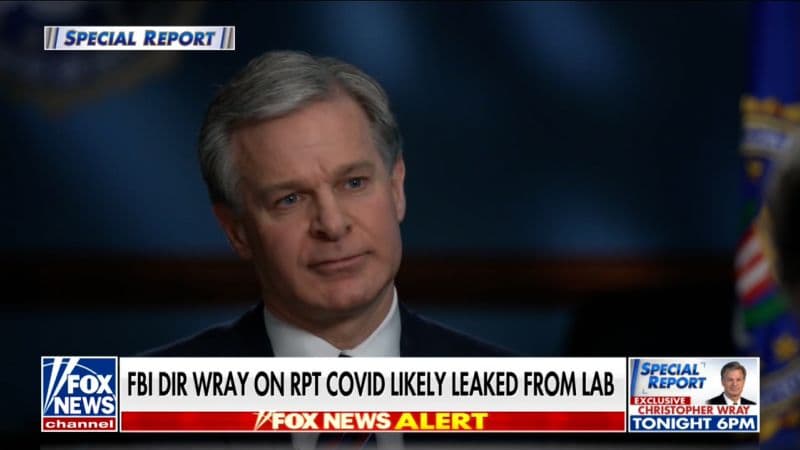
In early 2020, anyone suggesting COVID-19 might have originated in the Wuhan Institute of Virology was censored on social media, called a racist conspiracy theorist, and blacklisted from platforms. Facebook banned the claim outright. NPR called it 'debunked.' Vanity Fair called it a 'right-wing conspiracy.' In 2023, FBI Director Wray said the lab leak was 'most likely' the origin. The Department of Energy reached the same conclusion. WHO chief Tedros admitted the theory had been 'prematurely discarded.'
“COVID-19 likely originated from a lab accident at the Wuhan Institute of Virology. This is being censored and anyone who says it is being called a conspiracy theorist.”
What they said vs. what the evidence shows
“This claim that COVID-19 is man-made or manipulated is false. We will remove content making this claim from our platform.”
— Facebook / NPR / Vanity Fair / Major Media · Feb 2020
SourceFrom “crazy” to confirmed
The Claim Is Made
This is the moment they called it crazy.
In the spring of 2020, a growing number of scientists, intelligence analysts, and public figures began asking a straightforward question: Did COVID-19 originate in nature, or did it escape from the Wuhan Institute of Virology in China? What happened next revealed something troubling about how information flows through our institutions.
Anyone who raised this question faced swift punishment. Facebook removed posts discussing the lab leak possibility. Twitter suppressed content under the banner of fighting "misinformation." NPR published articles declaring the theory "debunked"—a claim later retracted. Vanity Fair called it a "right-wing conspiracy theory." Journalists who entertained the hypothesis found themselves professionally isolated. Scientists who voiced skepticism about the natural origin theory risked their careers. The message was clear: this topic was off-limits.
The suppression was comprehensive. Social media platforms didn't just reduce visibility; they banned accounts outright. Mainstream media outlets actively ridiculed anyone suggesting a lab connection, often framing the question itself as evidence of xenophobia. Powerful voices—from prominent scientists to political figures—declared the matter settled. The natural origin theory became official consensus, and dissent became heresy.
Then, quietly, the institutions that had enforced this consensus began admitting they were wrong.
In 2023, FBI Director Christopher Wray stated that the bureau assessed the as the "most likely" origin of COVID-19. The Department of Energy reached the same conclusion. The Office of the Director of National Intelligence acknowledged serious concerns about the lab. The WHO's Chief Scientist Dr. Soumya Swaminathan admitted the lab leak hypothesis had been "prematurely discarded." Each revelation came with minimal fanfare and no acknowledgment of the people who had been censored for suggesting this years earlier.
Get the 5 biggest receipts every week, straight to your inbox — plus an exclusive PDF: The Top 10 Conspiracy Theories Proven True in 2025-2026. No spam. No agenda. Just the papers they couldn't hide.
You just read "The COVID lab leak theory was censored as 'misinformation' t…". We send ones like this every week.
No one's said anything yet. Be the first to drop your take.
Confirmed: They Were Right
The truth comes out. Officially documented.
Confirmed: They Were Right
The truth comes out. Officially documented.
The actual evidence remained largely unchanged throughout. Intelligence officials, virologists, and journalists noted that the Wuhan Institute of Virology conducted coronavirus research. The facility's safety record raised questions. Early COVID cases clustered near the institute. China's refusal to allow full investigations deepened suspicion. None of this was new information in 2020, yet the same facts that were "misinformation" in 2020 became "plausible" in 2023.
The gap between what was censored and what was later admitted represents more than a simple error. It reflects a system where powerful institutions—tech platforms, media outlets, government agencies—coordinated to suppress a legitimate scientific question. Those who posed it faced professional consequences. Evidence was ignored. Skeptics were silenced.
What matters now is not whether the lab leak happened, though that remains important. What matters is understanding how our information ecosystem failed. When institutions can suppress inconvenient questions and later admit they were wrong without consequence, trust erodes. Citizens reasonably conclude that official dismissals of controversial claims might reflect power rather than evidence.
The COVID lab leak story is a case study in how consensus can be enforced rather than earned. It shows what happens when censorship replaces debate, and when admitting error carries no weight. As new controversies emerge, this history serves as a warning: institutions that suppress questions today may apologize for it tomorrow. But the damage to public trust doesn't apologize. It only grows.
Beat the odds
This had a 0.1% chance of leaking — someone talked anyway.
Conspirators
~100Network
Secret kept
3.1 years
Time to 95% exposure
500+ years