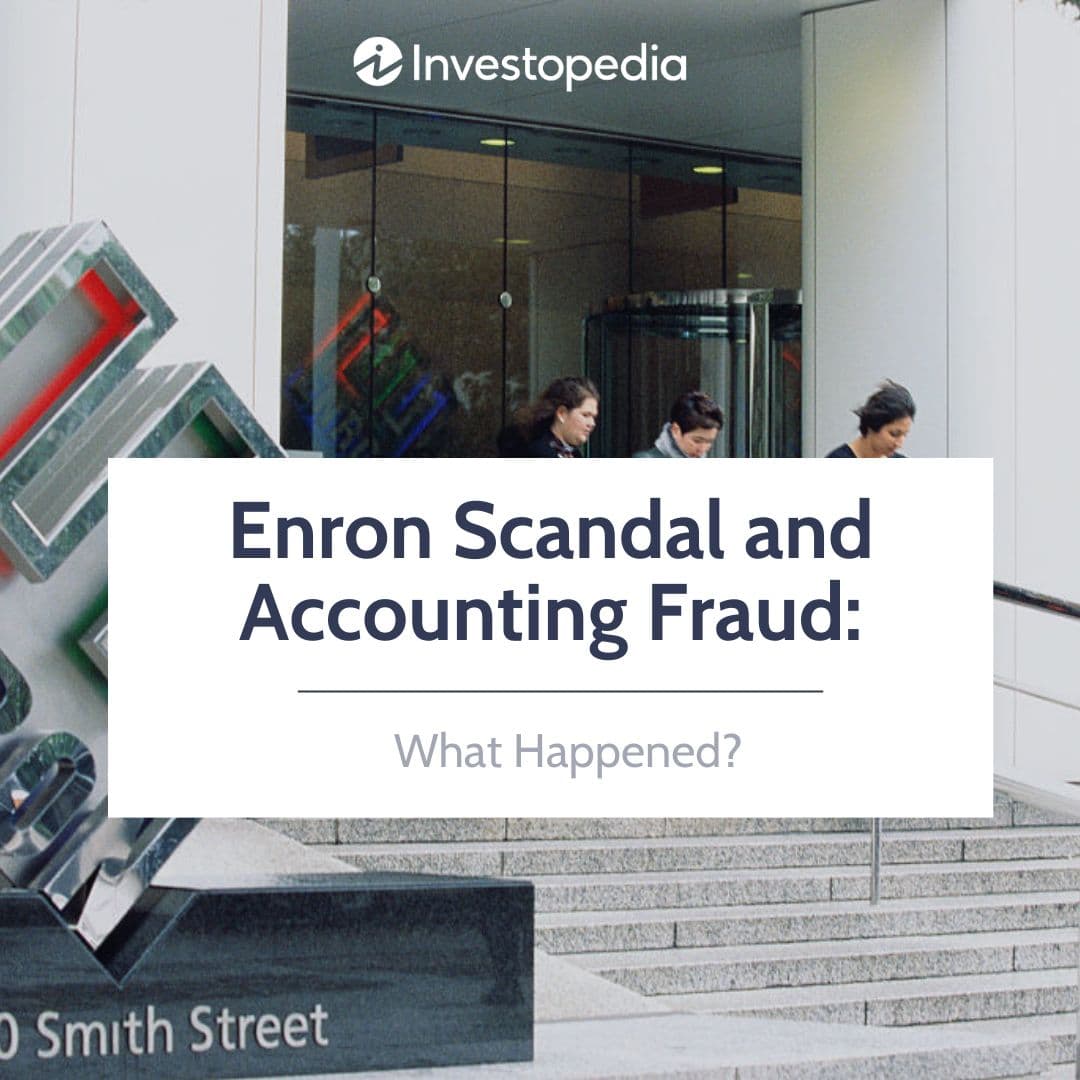
Enron created off-the-books partnerships and used mark-to-market accounting to hide massive losses while executives knew the company was failing and sold their shares.
“Enron executives publicly maintained the company was financially healthy and growing, with CEO Jeff Skilling calling it in excellent shape months before bankruptcy.”
From “crazy” to confirmed
The Claim Is Made
This is the moment they called it crazy.
By the late 1990s, Enron Corporation appeared to be an American success story. The Houston-based energy trading company was lauded by business schools, celebrated on Wall Street, and held up as a model of innovation. Then, in late 2001, it all evaporated. What emerged from the rubble was evidence of one of the most elaborate financial deceptions in corporate history, one that had been hiding in plain sight even as the company's executives cashed out.
The claim itself was straightforward enough: Enron had used complex financial structures to conceal billions in debt while senior management knowingly sold their stock before the company's collapse. This wasn't speculation from short-sellers or activist investors—it was the accusation that would eventually emerge from investigators, journalists, and prosecutors examining the company's collapse.
In the moment, Enron's leadership and their defenders dismissed these allegations as misunderstandings of legitimate accounting practices. When auditors and regulators began asking questions, company executives and their accountants at Arthur Andersen claimed that everything was properly documented and in compliance with accounting standards. The company was simply using sophisticated financial engineering—which was common among energy traders—to optimize returns and manage risk. Nothing to see here, they insisted, just complex business.
But the evidence told a different story. Investigators uncovered a scheme built on two pillars: off-the-books partnerships and aggressive accounting manipulation. Enron created Special Purpose Entities (SPEs), limited partnerships that existed largely on paper. These vehicles allowed the company to move debt off its balance sheet while keeping the profits on record—a mathematical magic trick that made the company appear far more profitable and less leveraged than it actually was.
Get the 5 biggest receipts every week, straight to your inbox — plus an exclusive PDF: The Top 10 Conspiracy Theories Proven True in 2025-2026. No spam. No agenda. Just the papers they couldn't hide.
You just read "Enron used complex financial schemes to hide billions in deb…". We send ones like this every week.
No one's said anything yet. Be the first to drop your take.
The second piece was mark-to-market accounting. Under this method, Enron could record the expected future profits from long-term energy contracts immediately, inflating current earnings. When those contracts inevitably underperformed, the losses were buried in restructuring charges or hidden in the SPE partnerships. The company essentially claimed profits that might never materialize.
Most damning was what executives knew and when they knew it. Documents and testimony revealed that senior managers including CEO Jeffrey Skilling and founder Kenneth Lay had received detailed briefings about the company's deteriorating financial condition. Yet between 1998 and 2001, these same executives sold more than $1 billion in Enron stock while encouraging employees to invest their retirement savings in company shares. The employees watching their 401(k)s evaporate saw executives exit with their fortunes intact.
The collapse came in October 2001 when Enron was forced to restate years of earnings, revealing roughly $586 million in losses that had been hidden. Within weeks, the stock became worthless. Thousands of employees lost their life savings. Investors lost roughly $74 billion in market value.
The Enron scandal validated something many had suspected but few could prove: that financial complexity could be weaponized to defraud investors, regulators, and employees on a massive scale. It demonstrated that prestigious auditors could be compromised, that accounting rules could be exploited, and that even when something doesn't feel right to observers, it can still take years before the truth surfaces.
Today, Enron serves as the template for understanding how corporate fraud operates. It's a reminder that transparency isn't guaranteed by markets or by regulation—it must be actively demanded and vigilantly protected.
Beat the odds
This had a 1% chance of leaking — someone talked anyway.
Conspirators
~100Network
Secret kept
24.6 years
Time to 95% exposure
500+ years