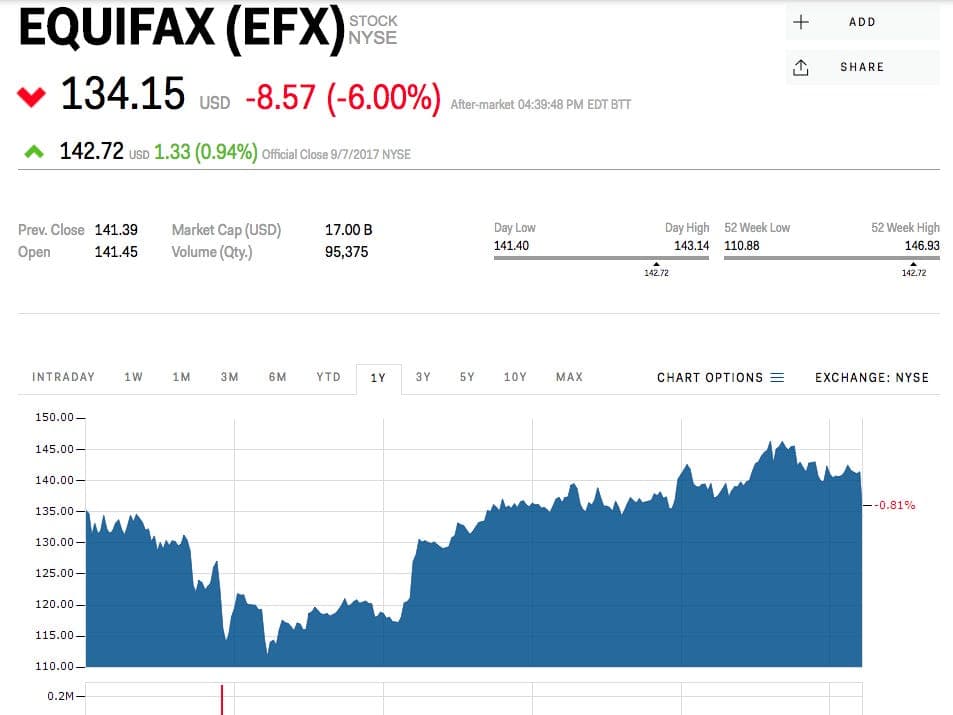
Three Equifax executives sold $1.8 million in company stock after learning of the breach that exposed 147 million Americans' personal data but before informing the public.
“Equifax claimed the executives were unaware of the breach when they sold their stock and that the sales were pre-planned.”
From “crazy” to confirmed
The Claim Is Made
This is the moment they called it crazy.
When Equifax discovered that hackers had stolen the personal information of nearly 150 million Americans, the company faced a choice about how to handle the crisis. What happened next—the timing of certain stock sales by company executives—would raise questions that persist to this day about whether corporate insiders prioritized their own finances over public disclosure.
The claim is straightforward: three Equifax executives sold approximately $1.8 million in company stock after learning of the massive 2017 data breach but before the company made any public announcement. The executives in question were Rodolfo Ploder (Vice President of IT), Joseph Loughran (President of U.S. Information Solutions), and John Gamble (Chief Financial Officer). According to records, these sales occurred in early August 2017, weeks before Equifax notified the public on September 7, 2017.
Equifax's initial response was to argue that the executives had no knowledge of the breach when they sold their shares. The company maintained that the data breach wasn't discovered until mid-July, and the sales that occurred in early August were routine transactions unrelated to any insider knowledge. This explanation centered on the idea that timing was coincidental—that executives regularly traded their stock as part of normal financial management, not as a response to material non-public information.
However, subsequent investigations by Congress and financial regulators revealed a more complicated timeline. According to reports from the House Energy and Commerce Committee, Equifax's forensic analysis suggested the breach began in May 2017, though the company didn't fully understand its scope until later. More significantly, there was evidence that senior management at Equifax had been alerted to security vulnerabilities months before the breach was officially "discovered." Internal communications suggested that concerns about the company's security infrastructure had been flagged to executives, raising questions about what company leadership knew and when they knew it.
Get the 5 biggest receipts every week, straight to your inbox — plus an exclusive PDF: The Top 10 Conspiracy Theories Proven True in 2025-2026. No spam. No agenda. Just the papers they couldn't hide.
You just read "Equifax executives sold stock after discovering massive data…". We send ones like this every week.
No one's said anything yet. Be the first to drop your take.
The real turning point came when financial records showed that the executives' stock sales were unusual in timing and size compared to their typical trading patterns. Trading volume analysis indicated these weren't routine portfolio adjustments but rather concentrated sales during a period when the company was still in crisis-management mode internally. SEC filings and trading data provided by financial databases confirmed the dates and amounts involved.
What makes this case significant isn't just the specific actions of three executives, though insider trading carries serious legal implications. The broader issue is structural: Equifax had a moral and legal obligation to disclose material information to the public and to the market in a timely fashion. If executives traded on information unavailable to ordinary shareholders, that violates fundamental principles of fair dealing.
The 2017 Equifax breach remains one of the largest data breaches in American history. It exposed Social Security numbers, birth dates, addresses, and driver's license numbers of 147 million people. The company eventually paid a $700 million settlement, though critics argued this barely dented a company with billions in revenue.
This case matters because it illustrates how corporate accountability often relies on outsiders—Congress, regulators, journalists—to piece together what happened. Equifax's initial denials created a crucial window where executives could act on information others didn't have. Whether one accepts the official timeline or finds it suspicious, the incident exposes how easily insider advantage can persist long enough to benefit those already in power.
Beat the odds
This had a 0.3% chance of leaking — someone talked anyway.
Conspirators
~100Network
Secret kept
8.7 years
Time to 95% exposure
500+ years