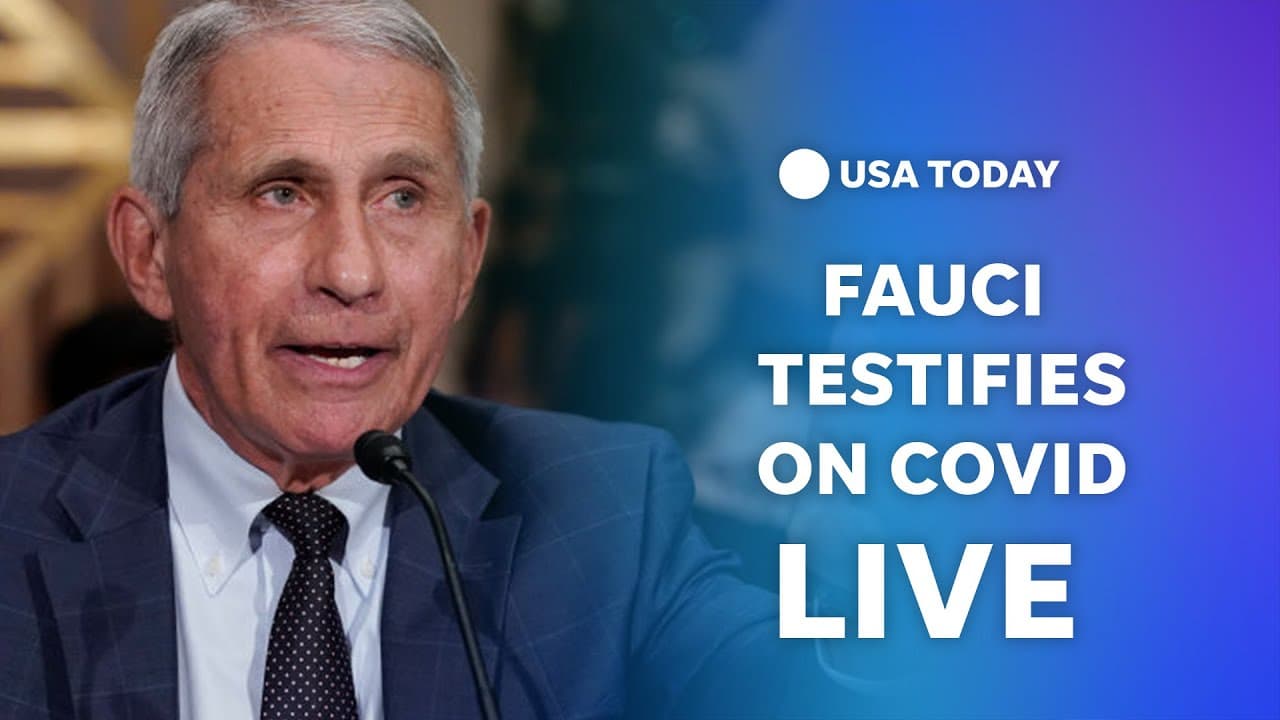
On January 31, 2020, virologist Kristian Andersen emailed Fauci saying COVID-19 features 'potentially look engineered' and were 'inconsistent with expectations from evolutionary theory.' By February 4, after a group call organized by Fauci, Andersen was calling the lab leak a 'crackpot theory.' The resulting 'Proximal Origin' paper published in Nature Medicine concluded the opposite of the scientists' initial private assessments, becoming the most-cited paper dismissing lab origins.
“Some of the features potentially look engineered... Eddie and I... find the genome inconsistent with expectations from evolutionary theory.”
From “crazy” to confirmed
The Claim Is Made
This is the moment they called it crazy.
On January 31, 2020, virologist Kristian Andersen sat down to examine the genetic sequence of the newly emerged coronavirus and fired off an email to Dr. Anthony Fauci. What he described should have dominated headlines: the virus appeared to have features that "potentially look engineered" and were "inconsistent with expectations from evolutionary theory."
Three days later, that same scientist was calling the lab leak hypothesis a "crackpot theory."
This reversal didn't happen in a vacuum. Between Andersen's initial concerns and his sudden change of heart, Fauci had organized a conference call with leading virologists. Whatever was discussed in that call became the inflection point for how the scientific community would publicly address the virus's origins for the next two years.
The story would have remained a curious footnote had it not been for unredacted NIH emails obtained through FOIA requests. These communications revealed the private skepticism that several of Fauci's own advisors held about the official "natural origin" narrative—skepticism that never made it into their public statements or scientific publications.
Most significantly, Andersen became the lead author of the "Proximal Origin" paper, published in Nature Medicine in March 2020. The paper concluded that COVID-19 almost certainly jumped from animals to humans through an intermediate host—a position directly opposite to what the scientists had expressed privately just weeks earlier. Despite its questionable conclusions, the paper became the most-cited reference for dismissing lab origin theories in peer-reviewed literature.
The question becomes: what changed? Not the evidence. The genetic sequence was the same on February 4 as it had been on January 31. No new data arrived to contradict Andersen's initial assessment. The only variable that changed was communication with leadership, followed by a rapid consolidation of public messaging.
Get the 5 biggest receipts every week, straight to your inbox — plus an exclusive PDF: The Top 10 Conspiracy Theories Proven True in 2025-2026. No spam. No agenda. Just the papers they couldn't hide.
You just read "Fauci's own advisors told him COVID looked engineered, then …". We send ones like this every week.
No one's said anything yet. Be the first to drop your take.
This matters for reasons that extend far beyond epidemiology or institutional politics. Scientific credibility depends on the honest communication of uncertainty and preliminary findings. When researchers privately express concerns that contradict their public conclusions, it fractures the social contract between scientists and the public they serve. People trust experts partly because they assume there's integrity in how conclusions are reached and presented.
The documented reversal also reveals how institutional pressure can reshape scientific consensus. Fauci held significant influence over funding, platform access, and career trajectories for many virologists. When a senior official organizes a meeting before a researcher's dramatic position change, it raises questions about whether the change reflects new evidence or new incentives.
To be clear: this doesn't prove the lab leak theory is correct. The "Proximal Origin" paper may reach sound conclusions despite its suspicious origins. But that's not the point. The point is that the public's understanding of this fundamental question was shaped partly by private communications that suggested different conclusions, followed by a sudden alignment of messaging.
Trust in institutions survives disagreement and honest debate. It doesn't survive when reasonable people suspect that public positions don't match private ones. The unredacted emails gave the public access to exactly what they had been denied: the ability to see whether official narratives matched what experts actually believed when nobody was watching.
That gap between private concern and public certainty is what demands explanation.
Beat the odds
This had a 0.7% chance of leaking — someone talked anyway.
Conspirators
~300Network
Secret kept
6.3 years
Time to 95% exposure
500+ years