The FBI conducted illegal surveillance, infiltration, and disruption campaigns against civil rights leaders and organizations for decades. FOIA documents revealed systematic violations of constitutional rights.
“The FBI does not engage in domestic surveillance or harassment of lawful political organizations”
From “crazy” to confirmed
The Claim Is Made
This is the moment they called it crazy.
The FBI's own internal documents proved what civil rights activists had long suspected: the government had waged a systematic campaign to spy on, infiltrate, and sabotage their movements. This wasn't theory or speculation. It was official policy, documented in classified files and later exposed through legal action.
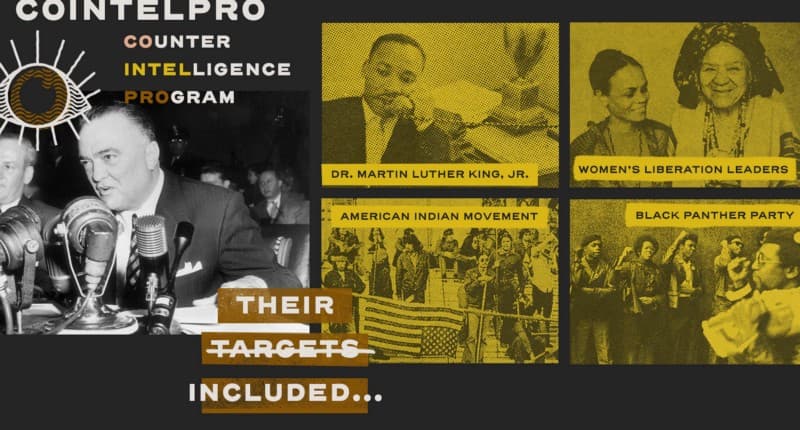
For decades, the Federal Bureau of Investigation ran a covert operation called COINTELPRO—short for Counterintelligence Program. Launched in the 1950s and continuing into the 1970s, it targeted dozens of domestic organizations deemed threats to national security. The list included the NAACP, the Southern Christian Leadership Conference, the Nation of Islam, the Black Panther Party, and American Indian Movement activists, among many others.
The official narrative from law enforcement was straightforward: these groups were security threats, and surveillance was necessary. Any claims of wrongdoing were dismissed as paranoid or exaggerated. When activists complained about harassment, infiltration, or suspicious coincidences, they were often ignored or marginalized. The government maintained that it operated within legal boundaries and that national security justified the methods used.
Everything changed in 1971 when activists broke into an FBI field office in Media, Pennsylvania, and stole classified documents. Those files, later published and distributed, revealed the systematic nature of the surveillance. But the real breakthrough came a decade later. In 1975, the —a Senate Select Committee led by Frank Church—conducted an official investigation into abuses. FOIA documents confirmed what had been suspected.
Get the 5 biggest receipts every week, straight to your inbox — plus an exclusive PDF: The Top 10 Conspiracy Theories Proven True in 2025-2026. No spam. No agenda. Just the papers they couldn't hide.
You just read "FBI COINTELPRO Operations Illegally Surveilled and Disrupted…". We send ones like this every week.
No one's said anything yet. Be the first to drop your take.
The evidence was damning. The FBI didn't simply monitor these groups; it actively disrupted them. Agents posed as members to create internal conflict. The bureau sent anonymous letters designed to turn leaders against each other. They leaked information to hostile media outlets and law enforcement. In some cases, FBI informants infiltrated organizations so deeply that they held leadership positions. The documents showed that J. Edgar Hoover himself approved many operations, and that targets were selected based on ideology rather than criminal activity.
The scale was staggering. FOIA releases revealed files on thousands of individuals and hundreds of organizations. Civil rights leaders like Martin Luther King Jr. were subjects of intense surveillance, with the FBI even attempting to blackmail him with embarrassing information. The operations weren't limited to famous figures—ordinary activists and community organizers were tracked and disrupted as well.
What makes COINTELPRO significant isn't just that illegal activity occurred. It's that these actions violated the Constitutional rights of American citizens engaged in lawful political activity. The surveillance operated without warrants. The disruption campaigns operated without any legal authority. And for years, the government simply lied about it.
The revelation of COINTELPRO fundamentally altered public understanding of law enforcement agencies. It proved that even the highest levels of government would abuse power against domestic political opponents. It showed that official denials could mask systemic misconduct. And it demonstrated why oversight, transparency, and accountability aren't optional features of democracy—they're essential safeguards.
Today, COINTELPRO serves as a cautionary reference point whenever questions arise about government surveillance or law enforcement tactics. Not because the program itself continues in the same form, but because it revealed something troubling about institutional power: without external constraints and transparency, it tends toward abuse. The claim wasn't just verified. It was undeniable.
Beat the odds
This had a 1.1% chance of leaking — someone talked anyway.
Conspirators
~50Network
Secret kept
55.2 years
Time to 95% exposure
500+ years