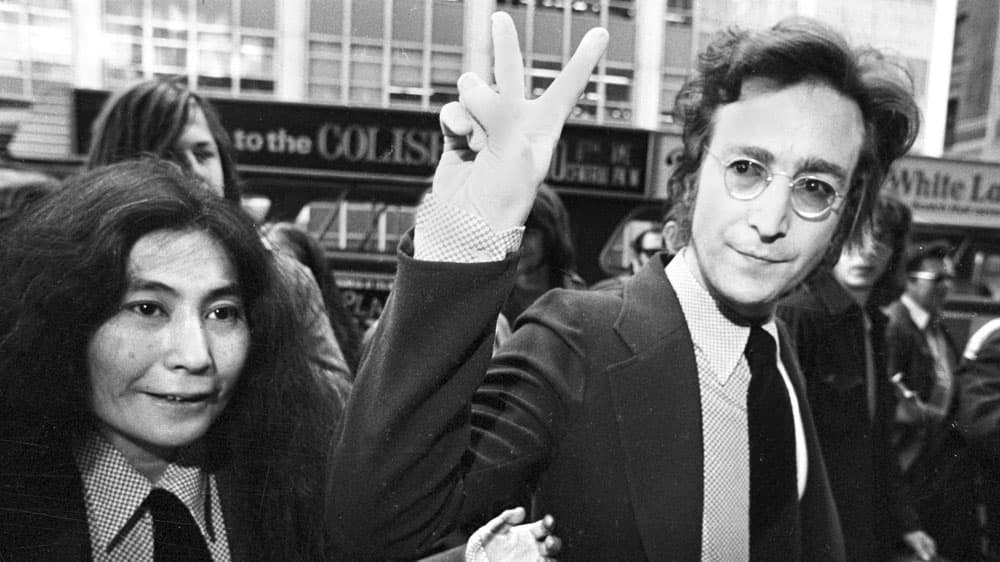
In 1971, the FBI put John Lennon under surveillance due to his anti-war activism, and the Immigration and Naturalization Service attempted to deport him in 1972. Declassified FBI files revealed extensive monitoring of Lennon's activities, phone calls, and associations. The FBI fought for over 25 years to keep the files secret, with historian Jon Wiener suing under FOIA in 1983 and not receiving all files until 2006.
“Lennon is to be arrested if at all possible on possession of narcotics charge... this would make him subject to deportation.”
From “crazy” to confirmed
The Claim Is Made
This is the moment they called it crazy.
When John Lennon sang about imagining a world without governments and borders, he wasn't just making music—he was marking himself as a target. What started as whispered concerns about the former Beatle's political activities in 1971 would become one of the most documented cases of government surveillance against an American artist, a reality that spent decades hidden behind classified files.
The claim emerged gradually over time: the FBI had placed Lennon under surveillance because of his vocal opposition to the Vietnam War and his growing influence as an anti-establishment figure. Lennon wasn't operating in secret—his activism was public, his music was explicit in its messaging, and his celebrity gave him a platform that authorities apparently found threatening. By 1972, the Immigration and Naturalization Service had gone further, attempting to deport him on drug-related grounds, a move many suspected was politically motivated retaliation.
When allegations of FBI surveillance first circulated, the government's response was dismissive. Officials denied any politically motivated targeting, characterizing any monitoring as routine security procedures. The FBI insisted its actions were standard protocol for monitoring potential national security threats, not an effort to silence dissent. This explanation satisfied many people at the time, and without access to the actual files, there was little way to prove otherwise.
The truth remained locked away until historian Jon Wiener decided to fight for it. Starting in 1983, Wiener filed a Freedom of Information Act request to access the FBI files on Lennon. What should have been a straightforward process turned into a 23-year legal battle. The FBI resisted disclosure at every step, arguing that releasing the files would compromise and violate privacy concerns. It wasn't until 2006—long after Lennon's death in 1980—that Wiener finally obtained the full files.
Get the 5 biggest receipts every week, straight to your inbox — plus an exclusive PDF: The Top 10 Conspiracy Theories Proven True in 2025-2026. No spam. No agenda. Just the papers they couldn't hide.
You just read "The FBI conducted a years-long surveillance campaign against…". We send ones like this every week.
No one's said anything yet. Be the first to drop your take.
Confirmed: They Were Right
The truth comes out. Officially documented.
Confirmed: They Were Right
The truth comes out. Officially documented.
What those documents revealed was extensive. The FBI had conducted years-long surveillance of Lennon's phone calls, monitored his associations, tracked his movements, and documented his anti-war statements. The files showed the agency was keenly aware of his celebrity status and his potential to influence public opinion against the war. Rather than monitoring him for legitimate security reasons, the surveillance appeared designed to gather ammunition that could be used against him—ammunition that ultimately fueled the deportation attempt.
The case exposes a pattern that extended beyond Lennon. The declassified files suggested a broader government strategy to neutralize prominent voices of dissent during the Vietnam era. The FBI's quarter-century fight to keep these files secret wasn't about protecting intelligence sources or ongoing investigations—it was about protecting the government's reputation for respecting civil liberties it had clearly violated.
This matters because it established a documented precedent: the American government did, in fact, weaponize law enforcement and immigration proceedings against a citizen primarily for exercising free speech rights. It wasn't a paranoid fantasy or conspiracy theory. It happened, and it was covered up methodically for decades. Understanding this history provides essential context for any conversation about government surveillance, political activism, and the distance between what officials claim they do and what they actually do. When the truth finally emerged, it validated not just Lennon's critics, but anyone who'd ever questioned whether their government might be watching—and whether it might be watching for the wrong reasons.
Beat the odds
This had a 2.2% chance of leaking — someone talked anyway.
Conspirators
~500Large op
Secret kept
11.1 years
Time to 95% exposure
500+ years