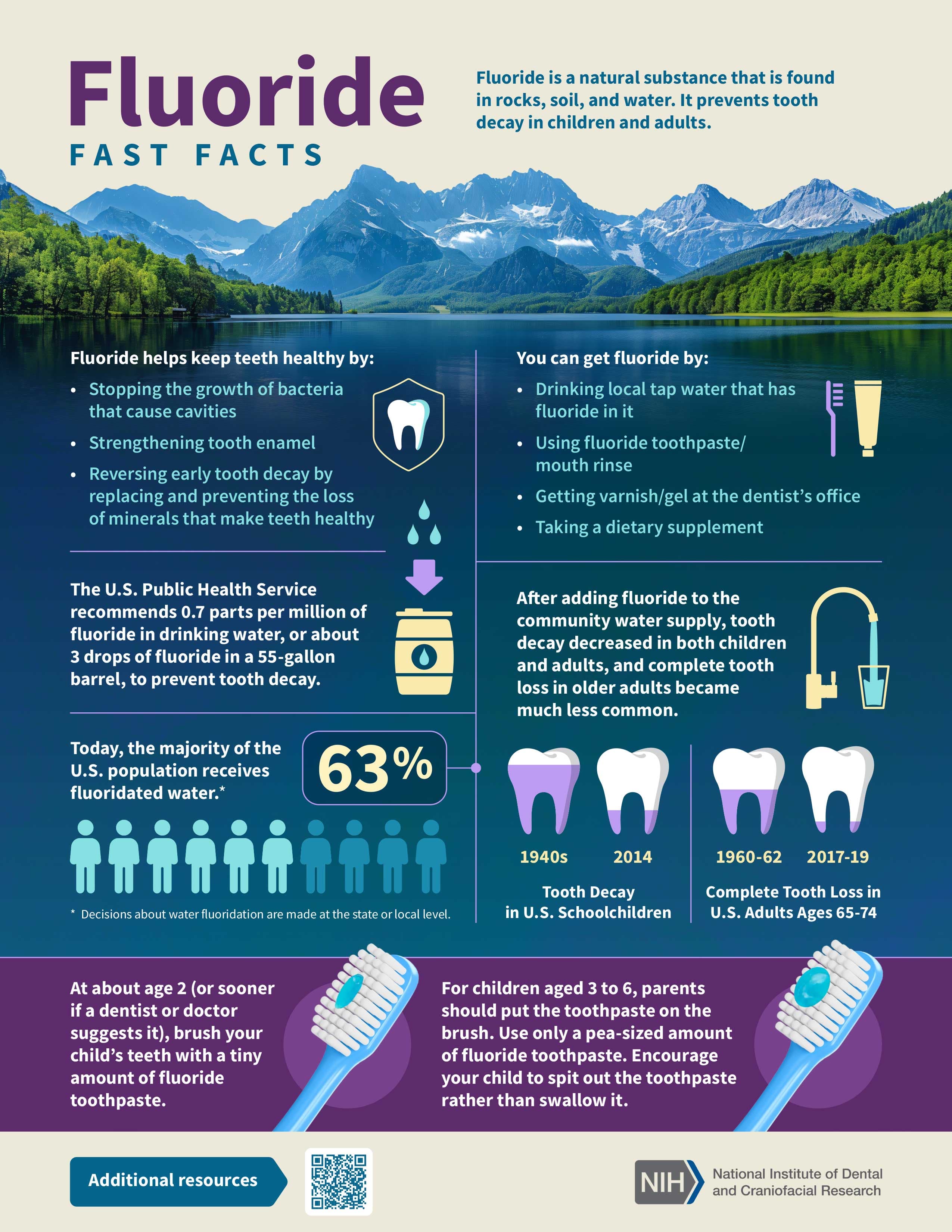
The National Toxicology Program's 2024 systematic review of 72 studies concluded with moderate confidence that fluoride exposure at levels found in some water supplies (above 1.5 mg/L) is associated with lower IQ in children. A federal judge ruled the EPA must take regulatory action. While the optimal fluoridation level (0.7 mg/L) is below the concerning threshold, the finding validated decades of concerns that were dismissed as pseudoscience.
“Fluoride in water is lowering children's IQ. The science showing neurological harm is being suppressed by public health agencies.”
What they said vs. what the evidence shows
“Community water fluoridation is safe and effective. Claims linking fluoride to cognitive harm are not supported by the weight of scientific evidence.”
— American Dental Association · Jan 2015
SourceFrom “crazy” to confirmed
The Claim Is Made
This is the moment they called it crazy.
Confirmed: They Were Right
The truth comes out. Officially documented.
Confirmed: They Were Right
The truth comes out. Officially documented.
For decades, scientists and concerned citizens have raised alarms about fluoride's effects on child development. In 2024, a federal research agency confirmed what many had been saying all along: high levels of fluoride exposure are linked to lower IQ in children. The difference is that this time, the evidence came from the establishment itself.
The National Toxicology Program, a division of the Department of Health and Human Services, released a comprehensive systematic review examining 72 studies on fluoride exposure and neurodevelopmental effects. The conclusion, reached with moderate confidence, was direct: fluoride exposure above 1.5 mg/L in drinking water is associated with reduced IQ in children. This threshold is roughly double the standard fluoridation level of 0.7 mg/L recommended for cavity prevention in American water systems.
For much of the past century, public health officials maintained that water fluoridation at recommended levels was safe and unquestionably beneficial. Critics who questioned this narrative were largely dismissed as conspiracy theorists or anti-science activists. The Environmental Protection Agency, which sets drinking water standards, had long maintained that fluoride posed no neurological risk at standard doses. Academic journals published studies suggesting concerns were overblown. Major health organizations defended fluoridation as one of public health's great achievements.
What changed was the scope and rigor of available research. As studies accumulated—particularly from countries with higher naturally occurring fluoride levels—scientists observed patterns in cognitive outcomes. The NTP systematically cataloged these findings, weighing evidence quality and consistency across multiple research populations. The 2024 monograph represented years of careful analysis by federal scientists tasked with evaluating health risks objectively.
A federal judge took note. In response to litigation, the court ruled that the EPA must take regulatory action regarding fluoride in drinking water, determining that the substance poses an unreasonable risk. This wasn't a fringe judgment—it was a legal recognition that the scientific basis for the status quo had shifted.
The nuance here matters. The standard fluoridation level in American water supplies appears to remain below the concerning threshold identified by the NTP. Public water systems are not necessarily operating unsafely under current EPA standards. However, some naturally fluoridated water sources do exceed 1.5 mg/L, and in those areas, residents face potential exposure risks that health authorities had previously downplayed.
What makes this case significant for public trust is not just that concerns proved partially legitimate. It's that legitimate concerns were systematically characterized as fringe or false for so long. People raising questions about fluoride weren't given credit for reasonable caution—they were dismissed. The information asymmetry between official reassurances and emerging research created the exact conditions that breed distrust.
This is how conspiracy theories take root. When officials insist something is completely safe despite a reasonable scientific question, and years later evidence suggests a more complicated picture, people notice. They remember being told they were wrong to worry. They become skeptical of the next health reassurance.
The lesson isn't that water fluoridation should end or that public health officials are corrupt. Rather, it's that maintaining public trust requires acknowledging uncertainty when it exists, adjusting recommendations based on evidence, and treating questioners as partners in safety rather than obstacles to dismiss. The 2024 NTP review suggests we still have work to do on that front.
Get the 5 biggest receipts every week, straight to your inbox — plus an exclusive PDF: The Top 10 Conspiracy Theories Proven True in 2025-2026. No spam. No agenda. Just the papers they couldn't hide.
You just read "Fluoride exposure linked to lower IQ in children, confirmed …". We send ones like this every week.
No one's said anything yet. Be the first to drop your take.