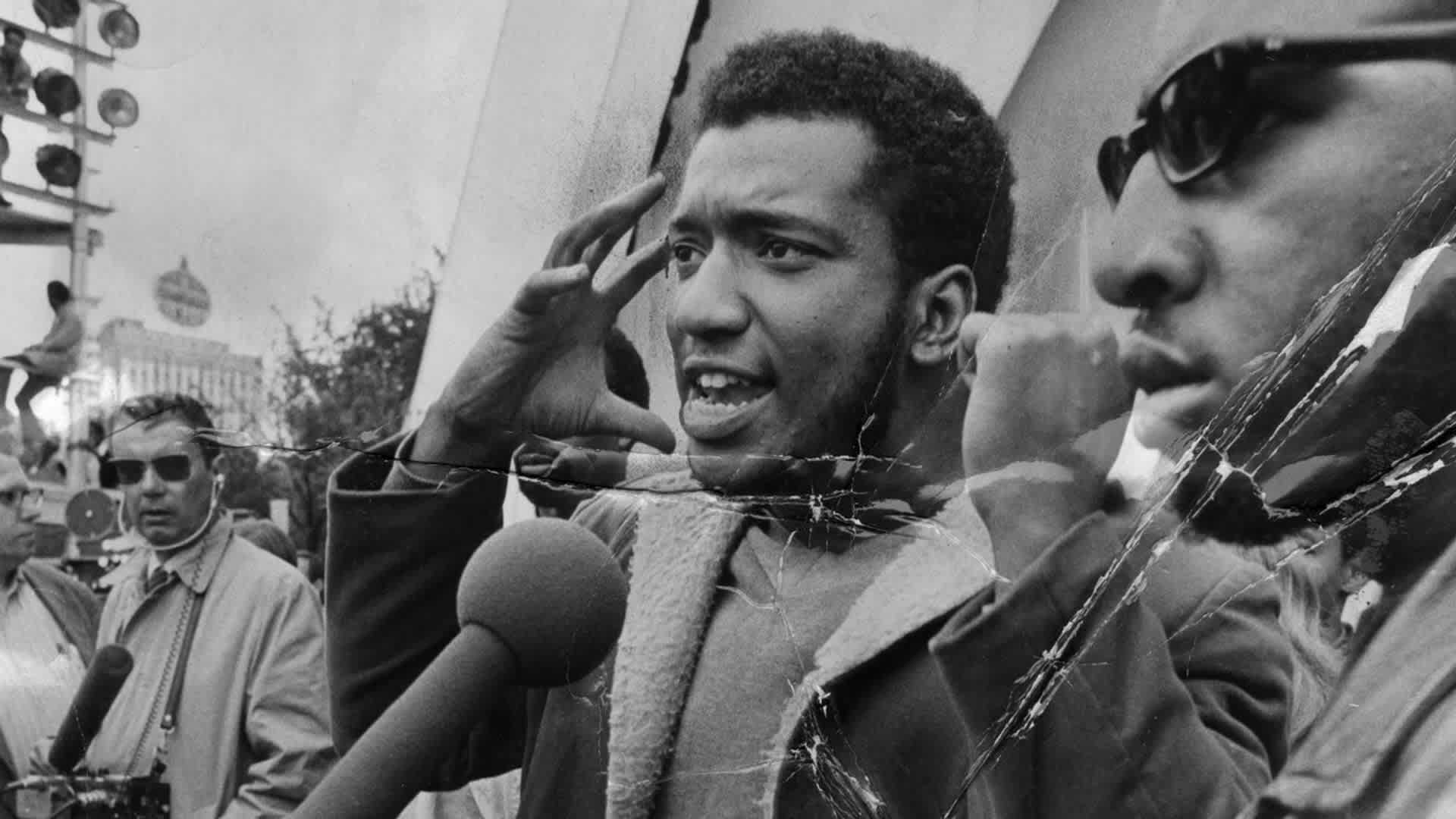
On December 4, 1969, FBI informant William O'Neal drugged 21-year-old Black Panther Chairman Fred Hampton with secobarbital in his Kool-Aid, provided a detailed floor plan of his apartment to the FBI, and received a $300 bonus. At 4:45 AM, 14 Chicago police officers fired 99 rounds into the apartment. Forensic evidence showed only one shot was fired by a Panther — none by Hampton, who was found shot in bed, likely unconscious from the barbiturates. A 1982 civil settlement of $1.85 million was paid by the city, county, and federal government.
“They drugged him, mapped his apartment, sent in a hit squad at 4 AM, fired 99 bullets. His gun was never fired. Then they called it a shootout.”
From “crazy” to confirmed
The Claim Is Made
This is the moment they called it crazy.
On December 4, 1969, fourteen Chicago police officers arrived at a South Side apartment building before dawn. They fired ninety-nine bullets into a second-floor unit in less than fifteen minutes. Inside lay Fred Hampton, the 21-year-old chairman of the Illinois Black Panther Party, shot dead in his bed. The official story was a firefight. The reality was something far darker.
For years, the Chicago Police Department and FBI maintained that the raid was a justified response to armed aggression from Panthers inside the apartment. Officers claimed they returned fire after being shot at first. This account appeared in police reports and was accepted by much of the media at the time. Law enforcement had every institutional incentive to present the operation as lawful self-defense. The Panthers, they suggested, had provoked the violence.
But forensic investigators told a different story. Ballistics evidence revealed that only one shot had been fired from inside the apartment—and it was not fired by Fred Hampton. The young leader lay in his bed, unconscious, likely unaware of the police presence. Tests later showed he had been drugged with secobarbital, a powerful barbiturate that someone had dissolved into his Kool-Aid the night before.
That someone was William O'Neal, an FBI informant embedded within the Chicago Black Panther chapter. O'Neal did not simply provide information to authorities. According to documents that emerged through COINTELPRO investigations, the FBI paid O'Neal to slip the sedative into Hampton's drink. The Bureau also provided him with a detailed floor plan of the apartment—intelligence that would make the predawn raid far more efficient. When it was over, the FBI rewarded O'Neal with a $300 bonus for his role.
Get the 5 biggest receipts every week, straight to your inbox — plus an exclusive PDF: The Top 10 Conspiracy Theories Proven True in 2025-2026. No spam. No agenda. Just the papers they couldn't hide.
You just read "The FBI paid an informant to drug Fred Hampton, provided a f…". We send ones like this every week.
No one's said anything yet. Be the first to drop your take.
Confirmed: They Were Right
The truth comes out. Officially documented.
Confirmed: They Were Right
The truth comes out. Officially documented.
The evidence accumulated slowly. Ballistic tests contradicted police testimony. Medical examiners documented the presence of the drug in Hampton's system. The floor plan matched what O'Neal had provided. Civil rights attorneys built an irrefutable case. In 1982, thirteen years after Hampton's death, the City of Chicago, Cook County, and the federal government agreed to pay his family $1.85 million in a settlement that amounted to an admission of wrongdoing without requiring any officer to face criminal charges.
This was not a marginal claim or conspiracy theory. It was a documented assassination disguised as a police operation, orchestrated by federal intelligence agencies and carried out by local law enforcement. The evidence was overwhelming enough that the government itself acknowledged liability.
What makes this case essential to remember is not merely the injustice to one man, though that alone demands acknowledgment. It reveals how state institutions can coordinate to eliminate political opponents under the cover of routine law enforcement. It shows how informants can be weaponized not just to gather intelligence but to actively enable violence. And it demonstrates that the official narrative—the story told immediately and with institutional authority—can be fundamentally false.
For decades, the Fred Hampton case was marginalized as historical footnote. Today it serves as a reminder that when government agencies claim transparency and accountability, it is worth asking what documents remain classified, what settlements included silence, and whose accounts we accepted without demanding evidence.
Beat the odds
This had a 0.3% chance of leaking — someone talked anyway.
Conspirators
~50Network
Secret kept
12.9 years
Time to 95% exposure
500+ years