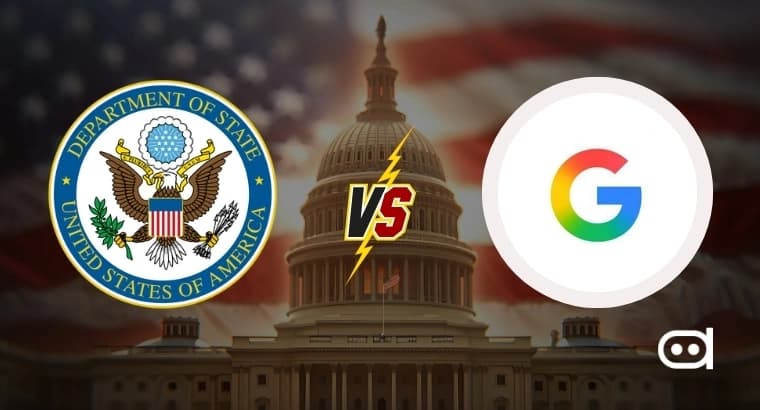
In August 2024, Judge Amit Mehta ruled that Google held monopoly power in search (90% desktop, 95% mobile) and used it illegally to keep competitors out. Google's distribution contracts paid Apple and others billions for default search status, creating such lock-in that an Apple executive testified there was 'no price' Microsoft could offer to preload Bing. Google was also found liable for monopolizing publisher ad server and ad exchange markets, 'substantially harming' publishers. The court imposed behavioral remedies including banning exclusive contracts for Google Search, Chrome, and AI products.
“Google doesn't have the best search engine — they have the most exclusive contracts. They've paid billions to make sure you never even see a competitor.”
From “crazy” to confirmed
The Claim Is Made
This is the moment they called it crazy.
For years, critics argued that Google had become too powerful, using billions in deals to lock competitors out of the search market. The Department of Justice said this wasn't just a complaint—it was illegal monopolization. Most people dismissed it as typical regulatory posturing. In August 2024, Federal Judge Amit Mehta proved them wrong.
The claim wasn't new. Antitrust experts and tech analysts had pointed out for nearly a decade that Google controlled roughly 90 percent of desktop searches and 95 percent of mobile searches, creating a market concentration that would be unthinkable in any other industry. But controlling market share alone isn't illegal. What mattered was how Google allegedly got there and kept its grip.
Google's initial response was straightforward: the company said it dominated search because its product was simply better than alternatives like Bing or DuckDuckGo. If consumers preferred Google, that wasn't anticompetitive—that was just competition working. The company argued its distribution deals with Apple, Samsung, and other device makers were standard business practice. Why wouldn't Apple want to set Google as the default search engine? It was the best option available.
The evidence presented during the trial told a different story. Internal documents showed Google had deliberately designed exclusive contracts that paid Apple alone over 20 billion dollars to prevent Bing from becoming the default search engine on iPhones. An Apple executive testified something remarkable: when asked what price Microsoft could offer to change that arrangement, his answer was "no price." The exclusivity wasn't about which search engine was superior—it was about which one had paid the most.
Judge Mehta found that Google had used its control of Chrome and Android to extend its monopoly power into adjacent markets. Google's ad server and ad exchange services were also found to have harmed publishers through anticompetitive practices. The court documented how Google's exclusive contracts created what economists call "switching costs"—making it so expensive and difficult to change default search providers that competitors couldn't gain ground no matter how good their products were.
Get the 5 biggest receipts every week, straight to your inbox — plus an exclusive PDF: The Top 10 Conspiracy Theories Proven True in 2025-2026. No spam. No agenda. Just the papers they couldn't hide.
You just read "Federal court ruled Google illegally monopolized search with…". We send ones like this every week.
No one's said anything yet. Be the first to drop your take.
Confirmed: They Were Right
The truth comes out. Officially documented.
Confirmed: They Were Right
The truth comes out. Officially documented.
The ruling itself was significant, but the remedy matters more. Judge Mehta imposed behavioral restrictions that will reshape the search industry. Google can no longer sign exclusive contracts requiring devices or platforms to use its search engine. The company also faces restrictions on how it bundles Google Search, Chrome, and its AI products to foreclose competition.
This case matters beyond Silicon Valley spreadsheets. It's about how markets actually function when one company can afford to pay billions just to prevent consumer choice. It's about whether regulatory warnings that were dismissed as overblown actually had merit. For anyone who suspected Big Tech had gotten too comfortable with its dominance, the August 2024 ruling was validation.
What's perhaps most striking is how the claim moved from activist talking points to federal court judgment. The mechanism—using profits from one market to eliminate competition in others—is a straightforward textbook example of how monopoly power can work. Yet it took years, extensive litigation, and internal company documents for it to become undeniable. That gap between the warning and the proof matters for future trust in our institutions' ability to address concentration of power before it becomes entrenched.
Beat the odds
This had a 0.2% chance of leaking — someone talked anyway.
Conspirators
~100Network
Secret kept
3.8 years
Time to 95% exposure
500+ years