NSA documents released in 2005 confirmed the second Gulf of Tonkin attack never happened. Officials knew it was false but used it to justify massive escalation in Vietnam.
“North Vietnamese forces launched unprovoked attacks on US destroyers”
From “crazy” to confirmed
The Claim Is Made
This is the moment they called it crazy.
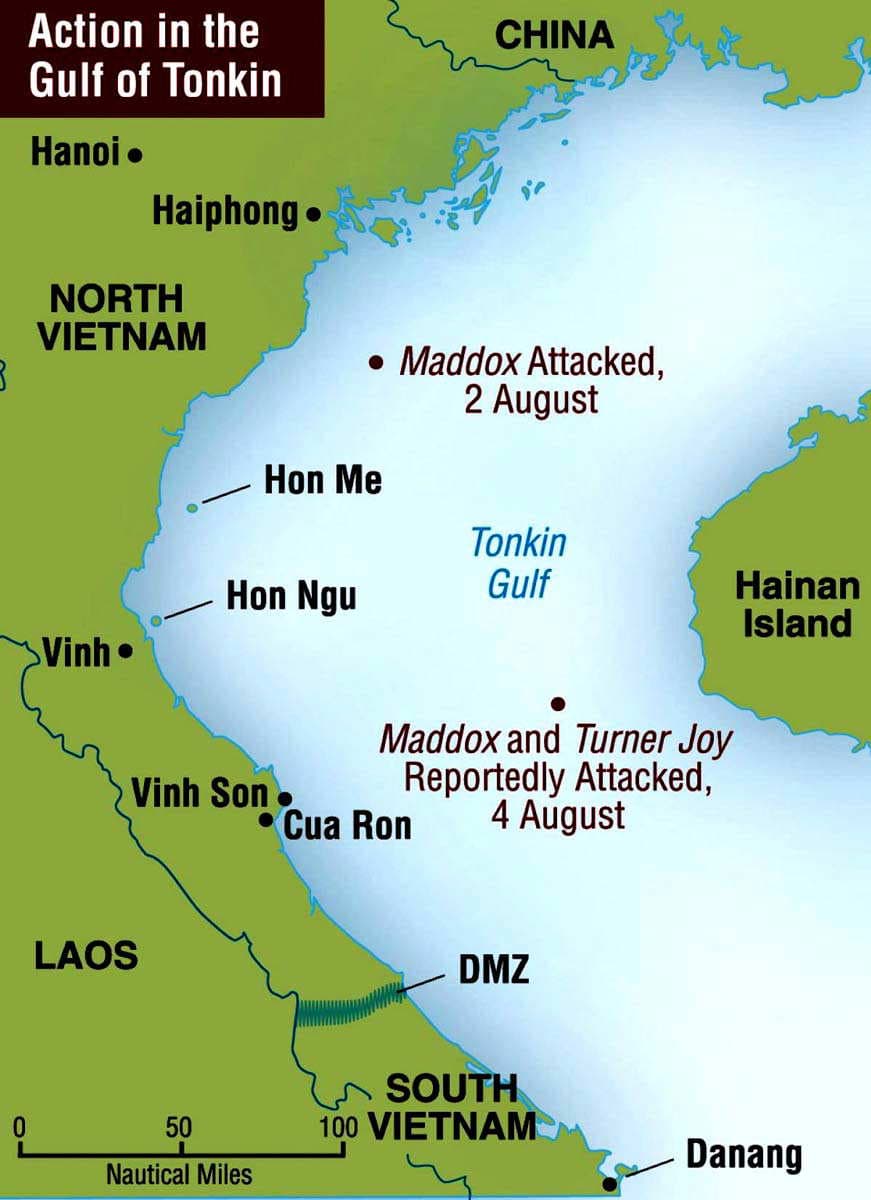
On August 4, 1964, President Lyndon B. Johnson announced to the American public that U.S. destroyers had been attacked twice by North Vietnamese torpedo boats in the Gulf of Tonkin. The second attack, he claimed, was unprovoked and undeniable proof that escalation was necessary. Congress voted overwhelmingly to pass the Gulf of Tonkin Resolution just days later, giving Johnson a blank check to wage war in Vietnam.
The first attack on August 2 almost certainly happened. The USS Maddox engaged with North Vietnamese boats in clear daylight, and the engagement was documented. But the second attack on August 4—the one that justified the entire war—occurred in darkness, in stormy seas, with radar operators squinting at screens filled with false signals. Even then, something didn't add up.
Military officers aboard the destroyers expressed doubt within hours. Sonar operators reported confusing readings. Radio intercepts suggested no actual attack had taken place. But these voices of caution were drowned out by politicians eager to expand American involvement in Southeast Asia. The official narrative held: America had been attacked, and retaliation was justified.
For decades, this second attack remained accepted historical fact. Textbooks taught it. Politicians cited it. Veterans explained the war through its lens. Anyone who questioned whether it actually happened faced skepticism or dismissal. The government's story was official, concrete, and seemingly beyond reproach.
That changed in 2005 when the National Security Agency internal documents about the incident. 's own records revealed what some military officers had suspected 41 years earlier: there was no second attack. The radar signals were false. The torpedo readings were phantom contacts. The whole thing never happened.
Get the 5 biggest receipts every week, straight to your inbox — plus an exclusive PDF: The Top 10 Conspiracy Theories Proven True in 2025-2026. No spam. No agenda. Just the papers they couldn't hide.
You just read "Gulf of Tonkin Incident - NSA Fabricated Second Attack to Ju…". We send ones like this every week.
No one's said anything yet. Be the first to drop your take.
More damning than the fabrication itself was what the documents showed about intent. NSA officials reviewing the incident in real-time knew the evidence didn't support a second attack. They noted the problems. They flagged the inconsistencies. And then they filed reports anyway—reports that made their way up the chain of command and into the president's hands.
Johnson used those reports to justify Operation Rolling Thunder, a bombing campaign that would last three years and drop more tonnage on North Vietnam than was dropped on Japan during World War II. He used them to justify sending 500,000 American troops into a war that would kill 58,000 of them. He used them to justify a conflict that would divide the nation, spark massive protests, and fundamentally alter American politics for a generation.
The Gulf of Tonkin incident matters now for the same reason it mattered in 2005 when the documents emerged: it demonstrates how institutional power can transform false information into action. It shows that even when evidence contradicts official claims, momentum, politics, and institutional interests can override truth.
This isn't about one mistake in 1964. It's about understanding that wars have been started on shakier evidence. It's about recognizing that declassification always comes too late for the people affected by decisions made on false premises. The Gulf of Tonkin taught us that we cannot simply trust official narratives about matters of war and peace—we must demand evidence, and we must be willing to change course when evidence contradicts what we were told.
See also: [Tonkin Gulf Incident: The False Flag That Started a War](/blog/tonkin-gulf-incident-false-flag-declassified) — our deeper breakdown of this topic.
Unlikely leak
Only 21.9% chance this would come out. It did.
Conspirators
~1,000Large op
Secret kept
61.8 years
Time to 95% exposure
500+ years