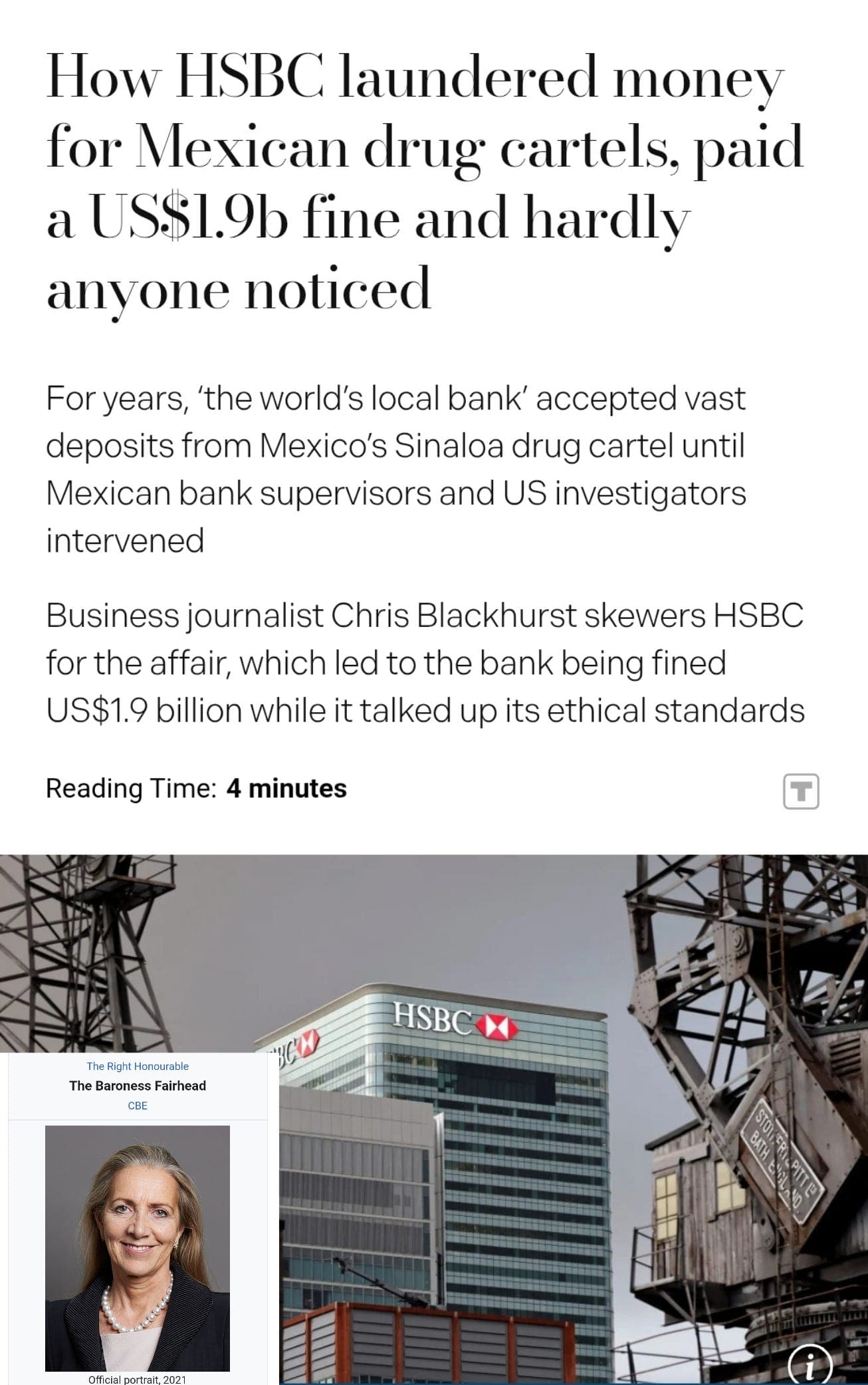
A 2012 Senate investigation found HSBC had laundered at least $881 million for Mexican and Colombian drug cartels, processed transactions for sanctioned nations including Iran and North Korea, and facilitated $15 billion in bulk cash transactions with Mexico. The bank paid a $1.9 billion fine — about five weeks of revenue — and entered a deferred prosecution agreement. No executives were criminally charged, prompting outrage about 'too big to jail.'
“HSBC is laundering money for drug cartels and terrorist-linked states. The biggest banks in the world are criminal enterprises that never face real consequences.”
What they said vs. what the evidence shows
“We accept responsibility for our past mistakes. These failures were in the past and do not reflect the bank we are today.”
— HSBC CEO Stuart Gulliver · Dec 2012
SourceFrom “crazy” to confirmed
The Claim Is Made
This is the moment they called it crazy.
In 2012, a U.S. Senate investigation documented something that financial regulators had either missed or ignored for years: one of the world's largest banks had knowingly processed billions of dollars in drug money and helped nations evade international sanctions. The bank was HSBC, a global financial giant with a reputation for stability and compliance. What happened next raised uncomfortable questions about how the financial system actually works.
The claim emerged from the Senate Permanent Subcommittee on Investigations, which found that HSBC had laundered at least $881 million for Mexican and Colombian drug cartels between 2006 and 2010. The bank's operations in Mexico alone had processed $15 billion in bulk cash transactions—a pattern that should have triggered immediate red flags for money laundering. Beyond the drug cartels, HSBC had also processed transactions for governments under international sanctions, including Iran and North Korea, violating U.S. law.
This wasn't speculation or allegation. The Senate committee had documents. They had transaction records. They had internal emails. The evidence showed that HSBC's anti-money laundering controls were so weak—or deliberately deprioritized—that the bank had essentially become an unwitting or willing conduit for criminal and hostile-nation finance.
When confronted with these findings, HSBC didn't deny them. Instead, the bank agreed to a $1.9 billion settlement in 2012. At the time, that sounded like a massive penalty. It wasn't. The settlement amounted to roughly five weeks of HSBC's annual revenue. The bank paid the fine and moved on. More significantly, not a single executive faced criminal charges.
This is where the original claim connects to a larger reality about institutional power. The expectation—the implicit promise of law enforcement—is that serious financial crimes result in prosecution. When individuals launder money, they go to prison. When banks do it on a billion-dollar scale, their executives receive bonuses. The contrast is not subtle.
Get the 5 biggest receipts every week, straight to your inbox — plus an exclusive PDF: The Top 10 Conspiracy Theories Proven True in 2025-2026. No spam. No agenda. Just the papers they couldn't hide.
You just read "HSBC laundered billions for Mexican drug cartels and sanctio…". We send ones like this every week.
No one's said anything yet. Be the first to drop your take.
Confirmed: They Were Right
The truth comes out. Officially documented.
Confirmed: They Were Right
The truth comes out. Officially documented.
The Senate investigation's report documented specific failures. HSBC had ignored warnings from its own compliance staff. The bank had continued processing suspicious transactions even after being warned by financial regulators. Internal documents showed management choosing business relationships over compliance. Yet when accountability came, it fell on the institution as a whole, not the people who made decisions.
The settlement included a deferred prosecution agreement—essentially a promise that HSBC wouldn't be charged if it improved its practices over a set period. This arrangement is theoretically designed to allow institutions to reform. In practice, it means that by the time the public learns what happened, the opportunity to prosecute the responsible individuals has largely passed.
What matters about this case isn't just that a major bank committed financial crimes. It's what it reveals about the difference between how the financial system treats institutions versus individuals, and about the actual consequences of breaking the law at scale. The HSBC case didn't happen because banking regulations were unknown or ambiguous. It happened because the cost of violation—even when caught—remained lower than the profit of compliance failure.
This documented reality should shape how people understand financial regulation and corporate accountability. The claim that HSBC laundered drug money is verified not because a whistleblower came forward, but because the U.S. Senate documented it. And the claim remains relevant because nothing fundamental changed afterward. The fine was paid. The bank continued operating. The executives retained their positions and compensation. That is the part that matters most.
Beat the odds
This had a 0% chance of leaking — someone talked anyway.
Conspirators
~100Network
Secret kept
0.5 years
Time to 95% exposure
500+ years