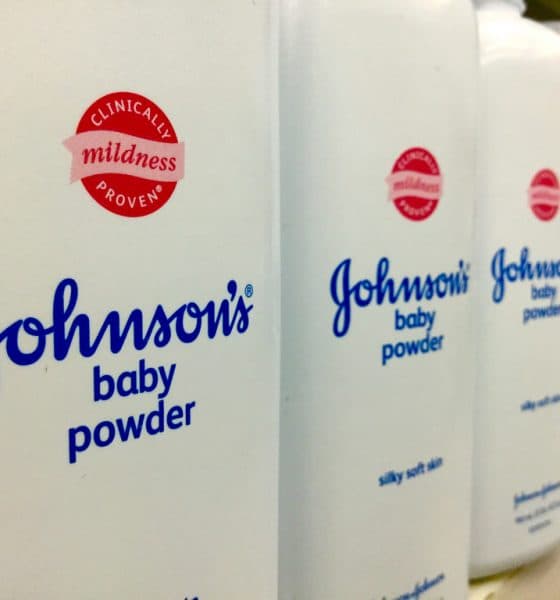
Internal J&J memos from 1971-2000s revealed company executives knew talc in baby powder contained asbestos. They concealed test results showing contamination while marketing products as pure and safe for families.
“Johnson's Baby Powder is safe and asbestos-free and has been so for decades”
From “crazy” to confirmed
The Claim Is Made
This is the moment they called it crazy.
For over a century, Johnson & Johnson's baby powder promised parents peace of mind. The iconic talc product, with its gentle scent and trusted brand heritage, sat on bathroom shelves in millions of American homes. What most consumers didn't know was that company executives were quietly documenting something far darker: their own powder contained asbestos.
The claim that J&J knowingly sold asbestos-contaminated talc wasn't new. Women's health advocates and researchers had raised concerns throughout the 1970s and 1980s. However, the company consistently denied any problem, insisting their talc was safe and pure. Public health officials largely accepted this assurance. After all, this was Johnson & Johnson—one of the world's most trusted healthcare companies.
What changed everything was paperwork. Internal memos and test results, revealed through litigation discovery and investigative reporting, showed that J&J scientists had detected asbestos in their talc supplies since at least 1971. These documents painted a picture not of ignorance, but of deliberate concealment.
The evidence was damning in its specificity. Company researchers documented asbestos fibers in raw talc samples. Internal communications between executives acknowledged the contamination. Rather than alerting consumers or regulators, J&J appears to have made a calculated decision: keep testing results confidential, maintain the marketing narrative, and protect profits.
This wasn't a one-time discovery quickly remedied. The documents spanned decades—from the early 1970s through at least the 2000s. Year after year, the company marketed baby powder as safe for infants while possessing knowledge that contradicted those claims. The strategy worked. Sales remained strong. Trust remained intact.
The human cost became visible only when epidemiologists began connecting dots between talc use and ovarian cancer. Women who had dusted themselves with J&J baby powder for decades began developing malignancies. By the time the litigation started in earnest, thousands of women had been exposed. Some died before seeing justice.
Get the 5 biggest receipts every week, straight to your inbox — plus an exclusive PDF: The Top 10 Conspiracy Theories Proven True in 2025-2026. No spam. No agenda. Just the papers they couldn't hide.
You just read "Johnson & Johnson knew baby powder contained asbestos for de…". We send ones like this every week.
No one's said anything yet. Be the first to drop your take.
What makes this case particularly significant is the institutional nature of the deception. This wasn't a rogue executive or a single bad decision. Multiple levels of the organization—researchers, lawyers, marketing teams, executives—apparently participated in or tolerated a system where safety data was suppressed. The company had the ability to reformulate, to warn consumers, to change course. Instead, internal documents suggest they chose not to.
The lawsuits that followed cost Johnson & Johnson tens of billions of dollars in settlements, though the company continues to deny wrongdoing while discontinuing baby powder sales in some markets. The damage to public trust, however, cannot be quantified in legal settlements.
This case illustrates a recurring pattern in corporate accountability: major health risks often hide in plain sight, known internally but concealed from the public. The mechanisms of deception are typically not dramatic—they're bureaucratic. Memo by memo, decision by decision, a company can choose profit over transparency.
For those who believed they were protecting their babies with a trusted product, the discovery that executives possessed evidence of contamination for decades represents a profound betrayal. It raises an uncomfortable question that extends far beyond talc: what other safety information are major corporations sitting on right now?
Beat the odds
This had a 0.3% chance of leaking — someone talked anyway.
Conspirators
~100Network
Secret kept
7.4 years
Time to 95% exposure
500+ years