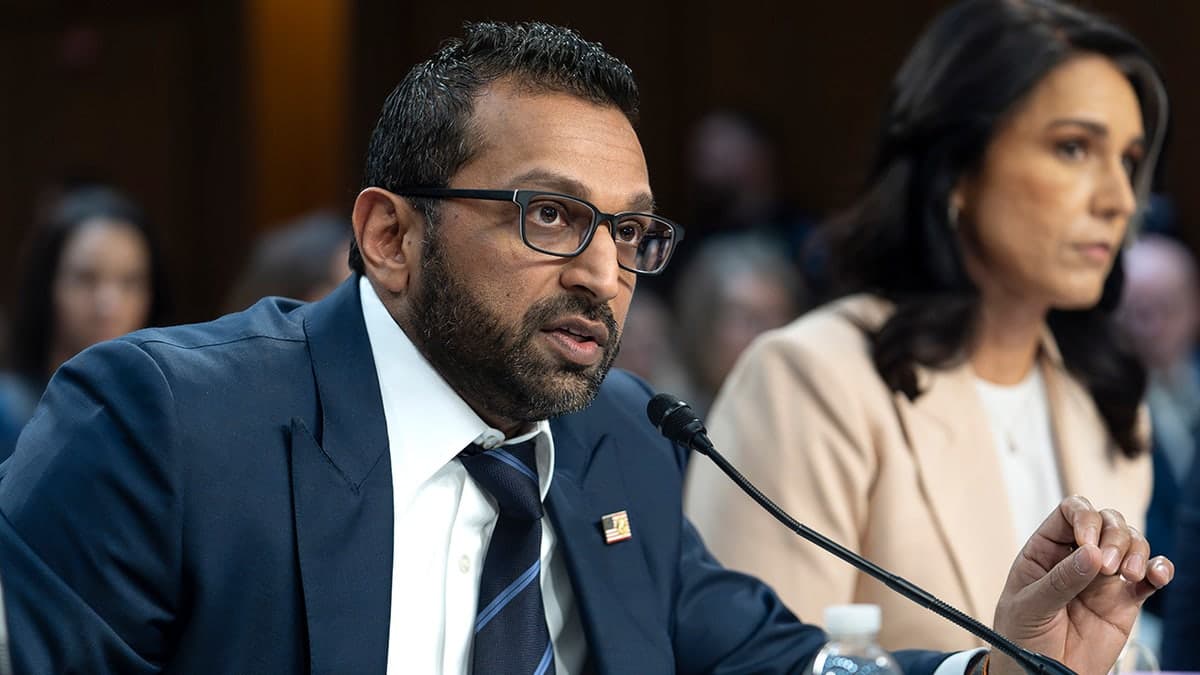
For years, privacy advocates warned that federal law enforcement was circumventing legal restrictions by purchasing Americans' personal information from commercial data brokers instead of obtaining it through warrants. The claim was often dismissed as speculative conspiracy thinking, the kind of paranoid assumption that seemed too invasive to be real government practice. Then Kash Patel, during his role in the Trump administration, essentially confirmed it.
The original concern emerged from a basic legal reality: the Fourth Amendment requires authorities to obtain warrants before conducting surveillance on U.S. citizens. However, there's a technical loophole. If the data is already being sold commercially—location histories, browsing patterns, financial information, phone metadata—the government could theoretically purchase it without warrants since it's not technically conducting the surveillance itself. The intelligence community's interest in exploiting this loophole had been documented by cybersecurity researchers and privacy organizations for years, but remained largely theoretical to the general public.
Official dismissals were predictable. When confronted, government officials either denied the practice entirely or claimed such purchases were limited and properly overseen. Congressional representatives who raised questions received boilerplate responses about appropriate legal review processes. The mainstream narrative suggested that while data brokers existed and sold information, connecting this to FBI operations was connecting dots that didn't actually connect.
Then, in congressional testimony and public statements, Patel acknowledged that does indeed purchase private data on Americans. The admission wasn't dramatic or detailed—it came matter-of-factly, as though stating an accepted practice. This wasn't a revelation or leaked document. It was a government official confirming what critics had been saying all along. The Gizmodo reporting that captured this admission became the documentation that shifted this from "unverified concern" to "confirmed government practice."
Get the 5 biggest receipts every week, straight to your inbox — plus an exclusive PDF: The Top 10 Conspiracy Theories Proven True in 2025-2026. No spam. No agenda. Just the papers they couldn't hide.
You just read "Kash Patel Admits the FBI is Buying Private Data on American…". We send ones like this every week.
No one's said anything yet. Be the first to drop your take.
What makes this significant isn't just that it happened, but that it happened without the public's explicit knowledge or consent. Americans weren't told that their browsing histories, location data, or financial information purchased by corporations could and would be accessed by federal investigators without warrants. The practice operated in a gray zone between what's technically legal and what feels like a violation of the spirit of constitutional protections.
The implications ripple outward. If the FBI is purchasing this data, what about other agencies? ICE, the DEA, NSA, state police departments? Are there any meaningful restrictions on how this purchased data is used or stored? Can it be shared between agencies? The confirmation of one practice opens questions about many others operating under similar legal logic.
This case demonstrates why "they knew" matters as a concept. Legitimate concerns about government surveillance practices were voiced repeatedly by experts and advocates. They were met with denial or dismissal. Only when an official with credibility within the intelligence apparatus confirmed it did the conversation shift. This pattern—experts raise concerns, officials deny them, reality eventually confirms the experts were right—reveals gaps between what government actually does and what the public is told it does.
For citizens trying to understand their government's relationship to their privacy, this serves as a reminder: skepticism about official responses to surveillance concerns isn't paranoia. Sometimes it's just paying attention.
Beat the odds
This had a 0.2% chance of leaking — someone talked anyway.
Conspirators
~200Network
Secret kept
2.4 years
Time to 95% exposure
500+ years