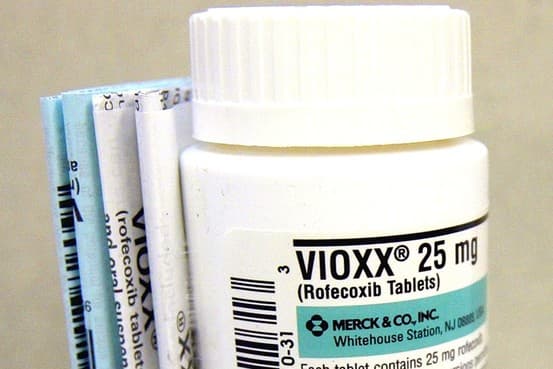
Internal Merck emails showed executives knew Vioxx doubled heart attack risk as early as 1997. The company suppressed studies and attacked researchers who questioned its safety until 2004 withdrawal.
“Vioxx has been proven safe and effective in clinical trials with no increased cardiovascular risk”
From “crazy” to confirmed
The Claim Is Made
This is the moment they called it crazy.
When Merck withdrew Vioxx from the market in September 2004, the company called it a voluntary decision made out of abundance of caution. The painkiller had generated over $2.5 billion in annual sales, making it one of the most profitable drugs in the pharmaceutical industry. Merck's public statement suggested the decision came after new data raised questions about cardiovascular risks. What emerged later told a different story entirely.
Internal company documents revealed that Merck executives had known about Vioxx's heart attack risks far earlier than the public announcement suggested. Email communications and internal research showed that by 1997—seven years before the withdrawal—the company had evidence that the drug doubled users' risk of heart attacks and strokes. This wasn't speculation or preliminary data. This was concrete information sitting in Merck's files while millions of patients continued taking the medication.
The official response from Merck and, to some extent, regulatory authorities, was that the cardiovascular risks were still being studied and understood. The company maintained that Vioxx was safe when used as directed and that any risks were outweighed by benefits for certain patient populations. Regulatory letters and company statements downplayed concerns raised by independent researchers. When academics published studies questioning Vioxx's safety profile, Merck launched aggressive campaigns to discredit them rather than investigate further.
The documented evidence tells another tale. Internal emails obtained through litigation showed executives discussing the cardiovascular data and how to manage the information. Rather than expanding safety monitoring or revising warnings to doctors, Merck pursued a strategy of suppression. The company funded studies designed to minimize findings about heart risks. It pressured medical journals and attacked the credibility of researchers whose work threatened the drug's market position. One researcher, David Graham at the FDA, became a particular target after raising safety concerns publicly.
Get the 5 biggest receipts every week, straight to your inbox — plus an exclusive PDF: The Top 10 Conspiracy Theories Proven True in 2025-2026. No spam. No agenda. Just the papers they couldn't hide.
You just read "Merck concealed heart attack risks of Vioxx painkiller for y…". We send ones like this every week.
No one's said anything yet. Be the first to drop your take.
The timeline matters here. Between 1997 and 2004, approximately 88,000 Americans suffered heart attacks associated with Vioxx use, and roughly half of those proved fatal. Patients who took the drug believing it safe—as millions had been assured it was—paid the price for information the company possessed but chose not to fully disclose. This wasn't a case of corporate negligence or bureaucratic delay. The documents show deliberate knowledge paired with deliberate concealment.
The Vioxx case demonstrates what happens when profit protection supersedes public safety. It reveals how institutional knowledge can be systematically suppressed when incentives align against transparency. The company eventually paid out billions in settlements, but that calculation came only after years of preventable harm.
What makes this case significant for public trust isn't just that Merck knew and didn't tell. It's that the company actively worked to prevent others from learning what it already knew. In doing so, it relied on the assumption that internal communications would remain private and that market forces would ensure safety. They didn't. The documents proved otherwise.
This is why the Vioxx case remains relevant decades later. It established a documented instance where corporate concealment of health risks occurred not through accident but through choice. For anyone trying to understand how institutional incentives can distort the information reaching patients and doctors, Vioxx provides the blueprint.
Beat the odds
This had a 2.5% chance of leaking — someone talked anyway.
Conspirators
~300Network
Secret kept
21.5 years
Time to 95% exposure
500+ years