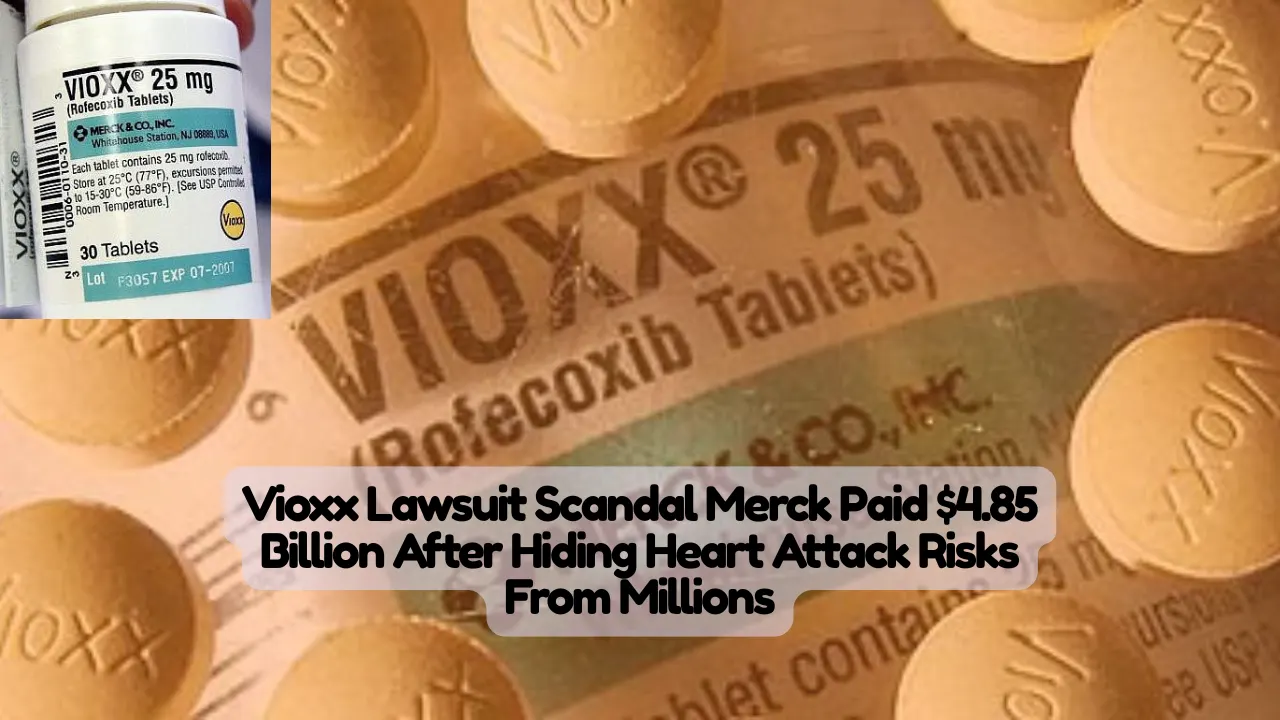
Internal emails showed Merck scientists knew Vioxx increased heart attack risk by 2000 but continued marketing it until 2004 withdrawal.
“Vioxx is safe and effective for arthritis pain relief with no increased cardiovascular risk”
From “crazy” to confirmed
The Claim Is Made
This is the moment they called it crazy.
A painkiller prescribed to millions of Americans concealed a deadly secret. From the late 1990s through 2004, pharmaceutical giant Merck marketed Vioxx as a safer alternative to traditional pain relievers while internal documents showed company scientists had evidence it dramatically increased the risk of heart attacks and strokes. What made this case remarkable wasn't just the deception—it was how thoroughly the company documented its own knowledge of the danger.
Vioxx, the brand name for the drug rofecoxib, was approved by the FDA in 1999 as a treatment for arthritis and acute pain. The company aggressively marketed it to patients and doctors, often emphasizing its cardiovascular safety profile relative to older painkillers. By 2000, Vioxx had become one of the most widely prescribed medications in America, generating over a billion dollars annually in sales. The drug seemed like a genuine medical breakthrough—until it wasn't.
Merck executives and scientists were not confused about the risks. Internal company emails later revealed that by 2000, researchers had identified that Vioxx users faced roughly double the risk of heart attack compared to patients taking a placebo. Some estimates suggested the danger was even greater. Despite this knowledge, the company continued its marketing campaign and downplayed safety concerns to regulators and the public. For four more years, millions of patients took a medication whose manufacturer knew posed serious cardiovascular dangers.
When critics raised concerns about Vioxx's safety profile, Merck dismissed them. The company and some FDA officials argued that the data was inconclusive or that benefits outweighed risks for certain patient populations. Merck funded studies designed to show the drug's safety and supported research that minimized cardiovascular concerns. This wasn't incompetence or genuine scientific disagreement—it was a deliberate effort to manage the narrative around a profitable product.
Get the 5 biggest receipts every week, straight to your inbox — plus an exclusive PDF: The Top 10 Conspiracy Theories Proven True in 2025-2026. No spam. No agenda. Just the papers they couldn't hide.
You just read "Merck hid Vioxx heart attack risks for years while promoting…". We send ones like this every week.
No one's said anything yet. Be the first to drop your take.
The verification came through court discovery. When patients and their families filed lawsuits, they gained access to Merck's internal communications. The New England Journal of Medicine published an analysis of these documents, detailing how company scientists had flagged cardiovascular risks, how these findings were discussed in internal meetings, and how the company's public messaging contradicted what executives knew privately. The evidence was not circumstantial. It was documentary.
Merck finally withdrew Vioxx from the market in September 2004, citing safety concerns. By then, conservative estimates suggested the drug had caused between 88,000 and 139,000 heart attacks in the United States alone. Some of those victims died. The company eventually paid billions in settlements, but no individual executive faced criminal prosecution.
The Vioxx case matters because it demonstrates what happens when pharmaceutical companies prioritize profit over transparency. The FDA, which should have caught this, also failed to protect the public adequately. But perhaps most importantly, the Vioxx story reveals a fundamental problem: when companies control the research and marketing of their own products, and when regulatory oversight is insufficient, corporate knowledge of danger can remain hidden until catastrophic harm has already occurred.
We were supposed to trust them. The documents proved that trust was misplaced.
Beat the odds
This had a 2.6% chance of leaking — someone talked anyway.
Conspirators
~300Network
Secret kept
21.6 years
Time to 95% exposure
500+ years