Police dropped C-4 explosive on MOVE commune house, killing 11 including 5 children and destroying 61 homes. City initially claimed they used only tear gas, but investigation revealed military-grade explosives were dropped from helicopter on residential block.
“Police used only standard crowd control measures and tear gas during the operation”
From “crazy” to confirmed
The Claim Is Made
This is the moment they called it crazy.
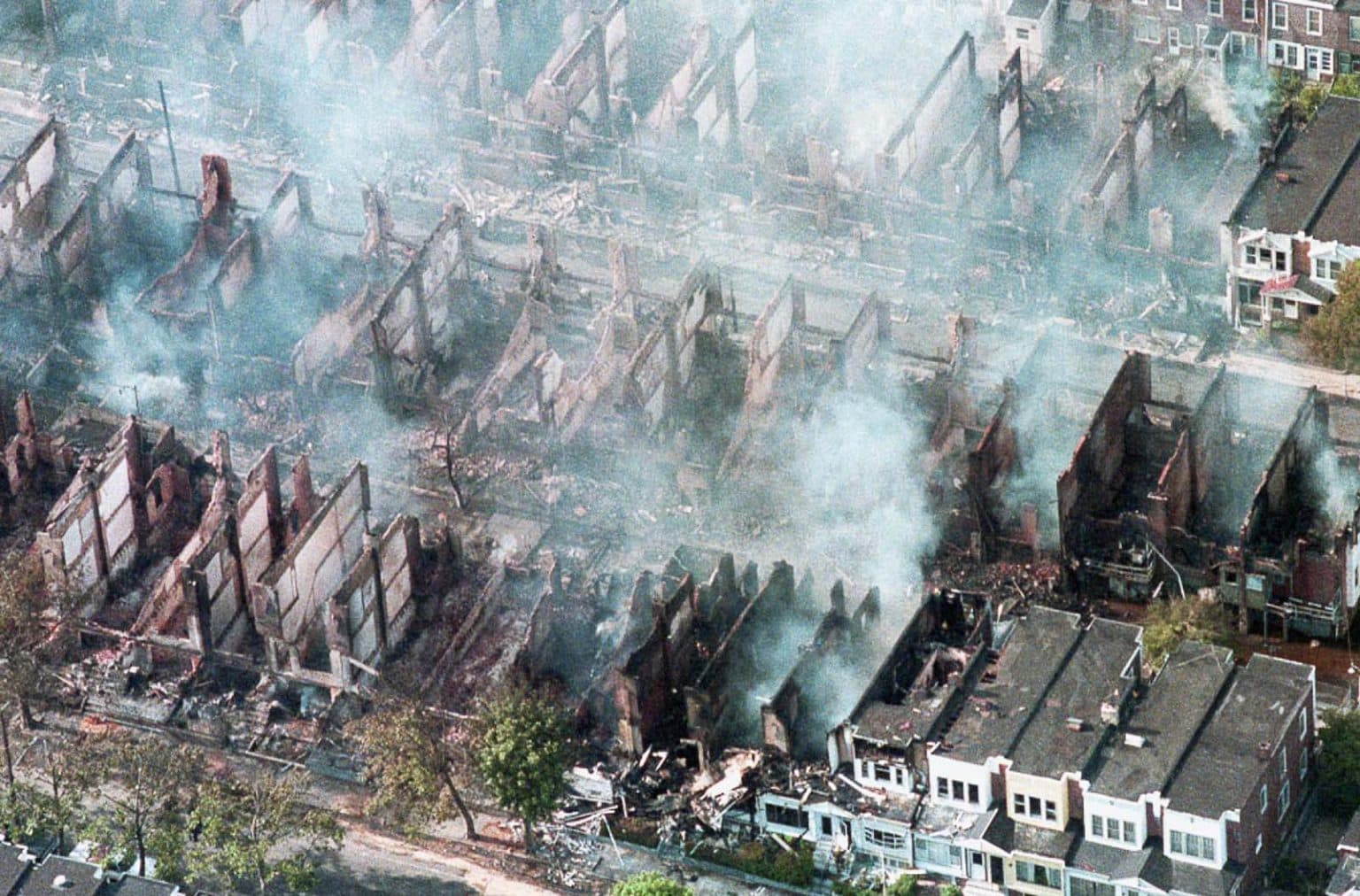
On May 13, 1985, Philadelphia police dropped explosives on a residential neighborhood from a helicopter. Eleven people died, including five children. The story authorities told the public didn't match what actually happened.
The MOVE organization occupied a row house at 6221 Osage Avenue in West Philadelphia. They were an activist group with radical environmental and anti-technology views, known for loud protests and confrontational tactics. The Philadelphia Police Department had long viewed them as a threat to public order. After a standoff lasting weeks, police decided to end the occupation by force.
Police Commissioner Gregore Sambor told the media they used tear gas to drive MOVE members out of the house. The operation, he said, was a controlled police action meant to apprehend suspects inside. The public heard a straightforward account: police deployed standard riot control measures during an arrest operation. For years, this remained the official narrative.
What happened on the ground told a different story. Witnesses reported an explosion that leveled the entire block. Sixty-one homes burned to the ground in the surrounding neighborhood. The destruction was so complete that it looked less like a police operation and more like an aerial bombardment. Survivors described the blast as something they'd never witnessed before.
Subsequent investigations revealed that Philadelphia police had indeed dropped a military-grade C-4 explosive device from a Bell helicopter directly onto the MOVE house. The explosive was approximately two pounds of C-4, a plastic explosive commonly used in military and demolition operations. It wasn't tear gas. It wasn't a standard police tool. It was the kind of ordinance used in warfare.
The city's Fire Marshal later acknowledged that police had dropped incendiary devices as well, which ignited the massive fire that consumed the neighborhood. Internal reviews and independent investigations documented that police knew the consequences of using explosives in a densely populated residential area. They did it anyway.
The death toll included five children: Birdie Africa (age 14), Delbert Africa Jr. (age 14), Little Tree Africa (age 12), Netta Africa (age 11), and Tomás Africa (age 13). Adults killed included MOVE founder John Africa and four other members. All eleven bodies were removed from the rubble and identified.
For years afterward, city officials minimized what had occurred. Some framed it as a tragic accident. Others suggested MOVE members were responsible for the fire. The full acknowledgment of using military explosives on an American city block came only through persistent investigation and public pressure, not through official transparency.
This case matters because it reveals what happens when authorities control the immediate narrative. A military explosive dropped on a residential neighborhood was initially described as tear gas. Eleven dead, including five children, were framed as an unfortunate outcome of a necessary police action. The truth emerged only because people demanded answers.
The MOVE bombing demonstrates why documented verification of controversial claims matters. When government agencies can redefine military strikes as standard police procedure without immediate accountability, the foundation of public trust erodes. What we believe happened and what actually happened had been two entirely different things.
Get the 5 biggest receipts every week, straight to your inbox — plus an exclusive PDF: The Top 10 Conspiracy Theories Proven True in 2025-2026. No spam. No agenda. Just the papers they couldn't hide.
You just read "MOVE bombing saw Philadelphia police drop military explosive…". We send ones like this every week.
No one's said anything yet. Be the first to drop your take.