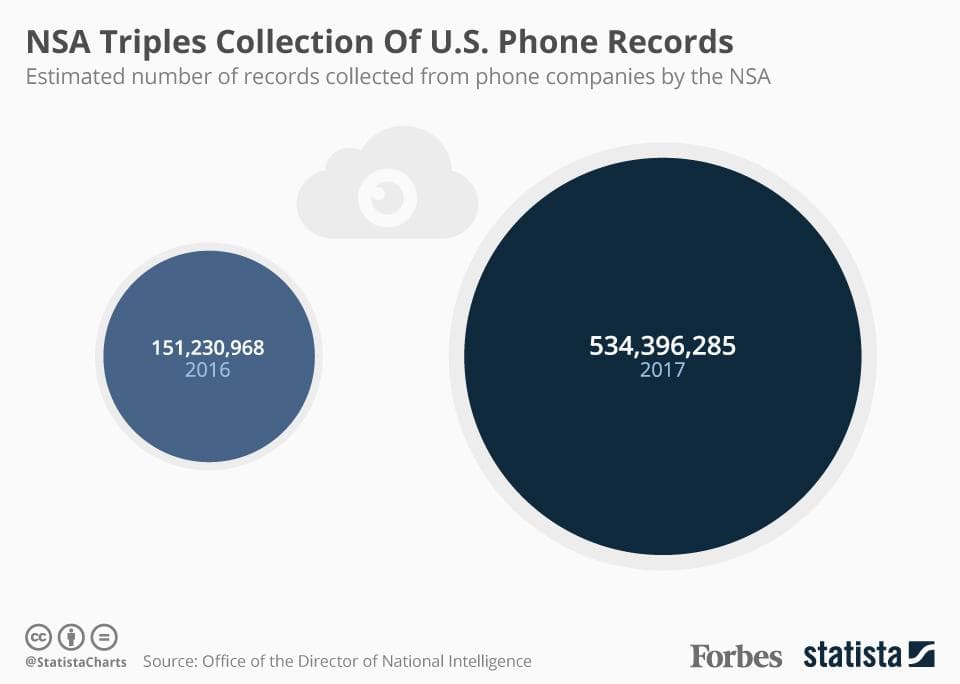
Snowden's first major revelation exposed the NSA's bulk collection of telephone metadata — every call made by every American — under Section 215 of the Patriot Act. A secret FISA court order required Verizon to hand over all call records 'on an ongoing daily basis.' In 2015, a federal appeals court ruled the program was illegal, stating Congress never authorized such sweeping collection. The USA FREEDOM Act of 2015 officially ended bulk collection, but the revelation shattered trust in intelligence oversight.
“The NSA is collecting the phone records of every single American — who you called, when, for how long — every day, from every carrier. This is mass surveillance.”
From “crazy” to confirmed
The Claim Is Made
This is the moment they called it crazy.
When Edward Snowden walked into a Hong Kong hotel room in 2013 with thousands of classified documents, he carried evidence of a surveillance program so vast that even many government officials didn't fully understand its scope. The NSA, he would soon reveal, had been collecting the phone records of virtually every American — not the content of calls, but metadata showing who called whom, when, and for how long. It was a claim so extraordinary that many dismissed it as impossible, even dangerous propaganda.
The initial reaction from officials was swift and dismissive. The government insisted the program was legal, necessary, and carefully overseen. Intelligence leaders testified that bulk collection saved lives and disrupted terrorist plots. Critics were told they didn't understand national security. Defenders argued that without the Patriot Act's Section 215 authorization, investigators couldn't connect the dots needed to protect Americans. The implication was clear: those questioning the program were naive at best, unpatriotic at worst.
But the classified documents Snowden provided told a different story. They showed that the NSA had issued a secret Foreign Intelligence Surveillance Court order requiring Verizon to hand over call records "on an ongoing daily basis." This wasn't surveillance of suspects or foreign agents. This was indiscriminate collection on an industrial scale — metadata on millions of Americans with no connection to any investigation. The ACLU's analysis of these documents revealed the full scope: every call, every connection, every pattern of American life reduced to data points in government servers.
Get the 5 biggest receipts every week, straight to your inbox — plus an exclusive PDF: The Top 10 Conspiracy Theories Proven True in 2025-2026. No spam. No agenda. Just the papers they couldn't hide.
You just read "NSA collected phone records of every American — courts later…". We send ones like this every week.
No one's said anything yet. Be the first to drop your take.
Confirmed: They Were Right
The truth comes out. Officially documented.
Confirmed: They Were Right
The truth comes out. Officially documented.
For two years, the program continued despite the revelations. Then, in May 2015, a federal appeals court issued a decision that vindicated what Snowden had exposed. The court ruled unequivocally that the NSA's bulk collection program was illegal. Congress, the judges wrote, had never authorized such sweeping surveillance. Section 215 of the Patriot Act was meant for targeted investigations, not dragnet collection of an entire nation's communications.
That same year, Congress passed the USA FREEDOM Act, officially ending the bulk metadata program. The legislation acknowledged what the court had declared: the program exceeded legal authority. Yet by then, the damage to public trust was irreversible. Millions of Americans learned that their government had been collecting intimate details of their lives without warrants, without suspicion, and without legal justification.
This case matters because it revealed the gap between what officials claim is necessary and what courts ultimately rule is constitutional. It matters because it showed how classification itself can become a tool of deception — hiding programs from the public while insisting they're properly overseen. And it matters because it demonstrates that institutional checks on power sometimes only work after the fact, after the violation has already occurred.
The Snowden revelations didn't prove the government was lying about intent. But they did prove something perhaps more troubling: that good intentions, national security arguments, and secret court orders are insufficient safeguards against the accumulation of unchecked power. The NSA eventually lost in court, but only after collecting billions of records on Americans who had committed no crime.
Beat the odds
This had a 0% chance of leaking — someone talked anyway.
Conspirators
~150Network
Secret kept
0.5 years
Time to 95% exposure
500+ years