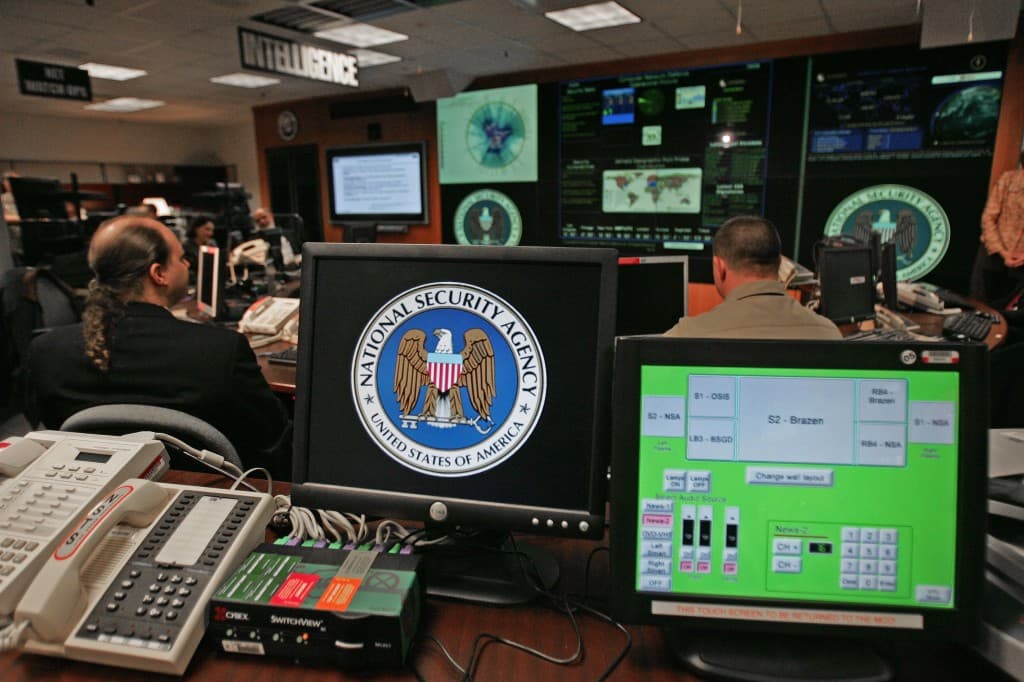
Before Edward Snowden's revelations in 2013, claims that the NSA was monitoring millions of Americans' communications were widely dismissed as paranoid speculation. The PRISM program and bulk metadata collection were confirmed through classified documents leaked by Snowden.
“The NSA has created a surveillance network that has the capacity to reach roughly 75% of all US Internet traffic.”
From “crazy” to confirmed
The Claim Is Made
This is the moment they called it crazy.
For decades, privacy advocates whispered that the government was listening. Intelligence officials smiled and denied it. Then in 2013, a contractor named Edward Snowden turned whispers into undeniable proof.
The claim was straightforward but extraordinary: the National Security Agency was vacuuming up phone records and internet communications from millions of ordinary Americans who had committed no crime and were under no investigation. Whistleblowers and civil liberties groups had made similar charges before, only to be dismissed as paranoid conspiracy theorists peddling science fiction scenarios. The official position from government agencies was consistent: such mass surveillance didn't happen, and even if it did, it would be illegal.
Those denials came from the highest levels. NSA Director Michael Hayden and other officials repeatedly testified to Congress that bulk data collection was not occurring. President George W. Bush's administration maintained that surveillance activities were limited and targeted. The mainstream media often treated surveillance skeptics as fringe figures. After 9/11, the argument went, national security required vigilance—but not the dragnet approach critics described.
Get the 5 biggest receipts every week, straight to your inbox — plus an exclusive PDF: The Top 10 Conspiracy Theories Proven True in 2025-2026. No spam. No agenda. Just the papers they couldn't hide.
You just read "The NSA was conducting mass surveillance on American citizen…". We send ones like this every week.
No one's said anything yet. Be the first to drop your take.
Confirmed: They Were Right
The truth comes out. Officially documented.
Confirmed: They Were Right
The truth comes out. Officially documented.
Then Snowden, working as a contractor for Booz Allen Hamilton, obtained classified documents proving the skeptics had been right all along. The PRISM slides revealed a systematic program that collected internet communications directly from the servers of companies like Google, Facebook, and Microsoft. More damaging still was documentation of a secret FISA Court order requiring Verizon to hand over phone records—not records of suspected terrorists, but metadata on millions of ordinary phone calls made by law-abiding customers.
The evidence was not ambiguous. The declassified FISA court orders showed the scale of the program. A single order from April 2013 required Verizon to provide "all call detail records or 'telephony metadata' created by Verizon for communications (i) between the United States and abroad" or "(ii) wholly within the United States, including local telephone calls." This wasn't targeting. This was industrial-scale collection.
The government's response shifted from denial to justification. Officials acknowledged the programs existed but argued they were necessary, legal under their interpretation of the Patriot Act, and subject to judicial oversight through the FISA court. Congressional investigations followed. Privacy advocates who had been mocked for years suddenly found themselves vindicated, though vindication brought little satisfaction.
What makes this case remarkable is not just that a claim proved true, but that it revealed a fundamental breakdown in oversight and transparency. For years, elected representatives on the intelligence committees didn't fully grasp the scope of what was happening. The classified interpretation of the Patriot Act had drifted so far from the public understanding that there was effectively a hidden legal system justifying activities the public would never have supported.
This matters because public trust in government requires some basic truth-telling. When officials deny something categorically, and those denials turn out to be false, skepticism about other official statements becomes rational rather than paranoid. It also matters because it demonstrated that the machinery for secret surveillance had grown so large and routine that no one—not even the officials running it—could clearly describe its boundaries. The Snowden revelations forced a reckoning. Some reforms followed, though debate continues about whether they went far enough. More importantly, they proved that sometimes the people asking uncomfortable questions weren't crazy. They were simply asking what their government was doing.
Beat the odds
This had a 0.6% chance of leaking — someone talked anyway.
Conspirators
~200Network
Secret kept
7.5 years
Time to 95% exposure
500+ years